Kkakdugi 깍두기 (Cubed Daikon Kimchi)

Kkakdugi 깍두기 (Cubed Daikon Kimchi)

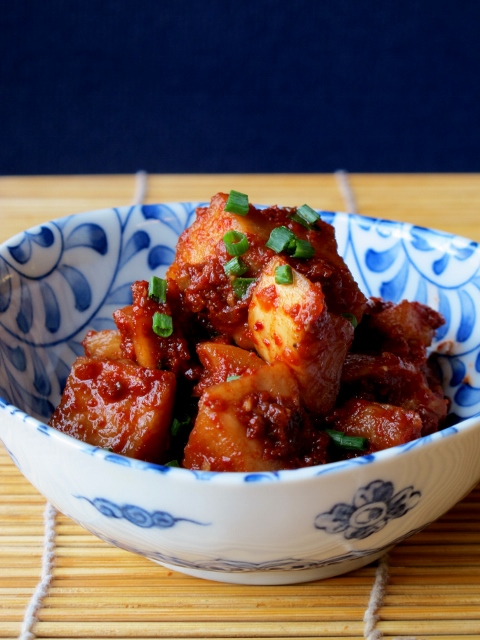
I have an unholy passion for kimchi and I’m not ashamed to admit it! I simply can’t get enough of this spicy Korean delight and it seems I am not alone. Some of my most popular posts to date have been kimchi related, so I thought it was about time I fed our collective obsession and posted another kimchi recipe. So this time around, I’m making one of my favourite types of kimchikkakdugi or cubed daikon kimchi.

Perhaps second only in popluarity to the almighty mak kimchi, kkakdugi is a great addition to any Korean dining experience. As you would expect with any type of kimchi, this version of the Korean staple is wonderfully piquant and highly addictive; though unlike most others, daikon kimchi has a delightful crunch and crispness to it which helps temper the spiciness of the chilli powder.

Personally, I find the process of making kkakdugi marginally less involved than mak kimchi and the fermenting period is also a little bit shorter, meaning you don’t have to wait quite as along to tuck into your kimchi! On the downside, kkakdugi doesn’t seem to fair as well as other kimchis in terms of its shelf-life, however, this may have more to do with my lack of technique and experience than a shortcoming of the dish!

With regard to technique, making any sort of kimchi is a matter of trial and error. Whilst the core process for making kimchi remains similar for each variety, each version has its own quirks and it may take a few attempts before you end up with a kimchi that suits your own tastes and preferences. Making the perfect kkakdugi has, up to now, been particularly vexing for me as I often find the kimchi comes out too watery and the daikon too limp. I have now taken to draining off the excess water as the kimchi ferments and I have also stopped peeling my daikon – both these seemingly minor tweaks to the process has resulted in a far superior end result (at least in my opinion).

For more Korean recipes from The Muddled Pantry, please click here

For tips on stocking a Korean Pantry, please click here
Click here for the recipe

Slow Braised Brisket

Slow Braised Brisket

Ah, slow-braised brisket – could there be a more quintessential culinary expression of Jewish motherly love?

For me, sadly, Jewish food has always been the forbidden fruit of world cuisine, but considering I grew up in a country which doesn’t recognize the state of Israel, it is hardly that surprising that my knowledge of Jewish food isn’t as intimate as I would like it to be!

Unfortunately, like so much in life, what little I do know about Jewish cuisine has been gleaned from that most dubious window into the world: 80s television. As a youngster, I loved nothing more than watching my weekly staple of disapproving 5th Avenue matriarchs and their well-heeled families. Aside from their wonderfully mordant sense of humour, I was always most drawn to the food they ate, marvelling at the mysterious treats they dished up at their vast family gatherings. Matzah balls, brisket, lox and latkes – to my ear they all sounded wonderfully exotic and the characters’ enthusiasm for the food was infectious. Of course, given my complete lack of exposure to all things Jewish at the time, I had no idea that these delightfully brisk people were anything other that well-to-do Americans. The fact that they (and their food) were Jewish was utterly lost on me. I simply assumed that all New Yorkers invariably had amazing apartments, a psychologist in the family and almost always wanted to marry their daughters off to “good boys” and doctors. As a child I did, however, know one thing for sure: more than anything else, I desperately wanted to know what brisket tasted like.

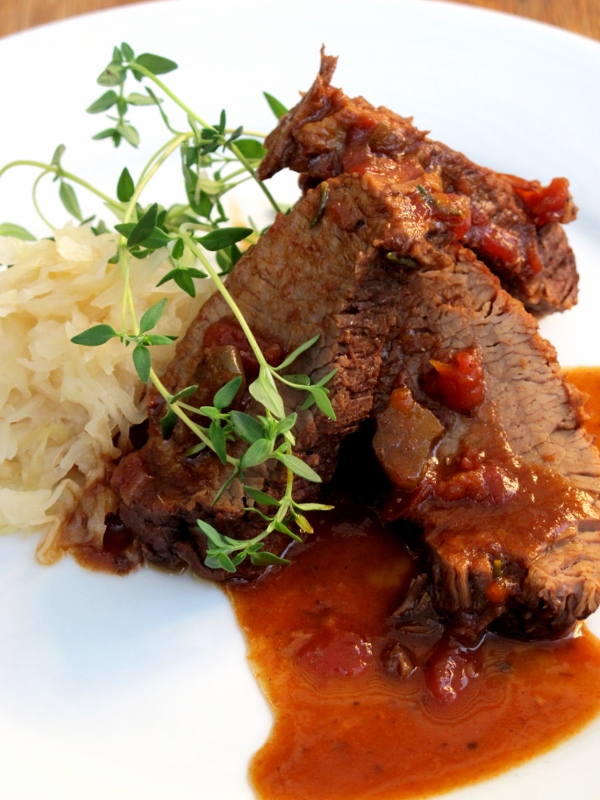
Some 30 years later, I am pleased to say that I have finally tasted the allusive dish and damn it, brisket is as delicious as I had imagined it would be! I was so excited the first time I made brisket, I could scarcely contain myself – 3 hours in the oven is an eternity to wait to taste a childhood dream. Meltingly tender, wholesome and served with a richly flavoured sauce, this is essentially the ultimate pot-roast, but made with a very special cut of meat.

Simple, classic and worthy of its iconic status: whether you know its Rosh Hashanah or not, a good brisket is always worth the wait! 

Click here for the recipe

Waterfall Beef Salad (Neua Naam Tok) น้ำตกเนื้อ

Thai Waterfall Beef Salad (Neua Naam Tok) น้ำตกเนื้อ

Unless you are a Buddhist monk, you are unlikely to ever encounter truly vegetarian food in Asia and like most other regional cuisines, Thai food is no exception. Thai Salads (or “yam” as they are known locally) are often spiked with a sneaky portion of dried shrimps or the meat-to-vegetable ratio is often skewed in favour of the meat.  Ask for a salad in Thailand and chances are you’ll be served something as far removed from what you imagined a salad could, or should, be. That said, yams are utterly delicious and make an essential addition to any Thai-style meal.Aside from my obsession with the classic Som Tam (Green Papaya Salad), one of my favourite yam is Waterfall Beef. Often the first thing people ask about is the dish’s name. “Waterfall” seemingly conjures up evocative images of cascading falls in a topical paradise. Sadly, however, the truth is far less poetic, as the “waterfall” actually refers to beef juices that drip from the meat as it is cooked over hot charcoal. Traditionally Waterfall Beef is eaten with sticky rice, but it also offers a wonderful counter-balance to other, richer Thai flavours, especially when paired with a classic Thai curry like  mussaman or green curry.

Whilst simple to make, Waterfall Beef is not without its pitfalls. Firstly, the steak must never be done past medium-rare and must be afforded enough time to rest before being thinly sliced. Secondly, the salad must be served immediately as the acidity of the dressing will “cook” the beef if left to stand too long. Another thing to consider is the ratio of herbs to meat in the dish. Don’t be shy with the herbs as they are what makes this is a salad – they are not there as a token garnish. Aim for a 40/60 ratio in favour of the beef.

For more great Thai recipes from The Muddled Pantry, please click here

If you would like tips on stocking your Thai Pantry, please click here.

Click here for the recipe

Red-braised Pork Hock 紅燒蹄

Red-braised Pork Hock 紅燒蹄

I love food that you can just throw in a pot, forget about for a few hours and it still comes out tasting like heaven? Thankfully, Asian food is abound with such dishes, particularly so in Chinese cuisine.

Whilst synonymous with the much hackneyed “stir-fry”, Chinese food does love a jolly good braise. Beef ribs, pork belly, chicken feet – it would seem that the Chinese maxim is clear: if you have a pot big enough for it, then it’s good for a braise. Thankfully, it seems, pork hock fits both the maxim and the pot!

Richly flavoured, red-braised pork hock is an old school Chinese classic and is the perfect way to cook an otherwise troublesome cut of meat. Slowly simmered in what is essentially a classic master stock, the meat and fat is rendered meltingly soft – so much so, one can “cut” through it with just a chopstick. Stained a redish brown from the dark soya sauce, the silky sweet meat is tempered with depth, whilst the aromatic sauce is enriched with the rendered juices from the braised pork.

Admittedly, however, like most home-style Chinese cooking, braised pork hock isn’t the most aesthetically appealing dish. Resembling something of a gelatinous heap of meat, skin and bone, it is hardly a feast for the eyes. Rest assured, however, once you’ve taken your first bite you will quickly forget what it looks like.

Indeed, this dish is a triumph of flavour over style.

Note: the stock quantities may initially seem excessive, but the Master Stock can be kept indefinitely and develops depth of flavour each time it is reused. Simply strain the stock and store in the freezer until needed. Add a fresh set of aromatics to the stock and you are good to go.

For more Chinese recipes from the Muddled Pantry, please follow the link here.

For tips on stocking a Chinese pantry, please follow the link here.

Click here for the recipe

Makhani Murgh (Butter Chicken)

Makhani Murgh (Butter Chicken)

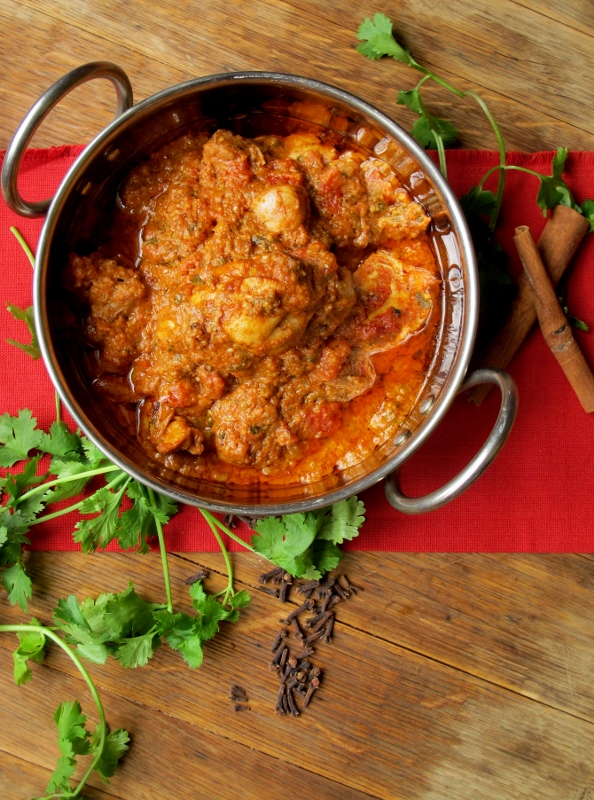
The chances are, this recipe is nothing like the butter chicken you’ve ordered countless times from your local Indian takeaway. I too have ordered it more times than I care to admit, so I know what passes for butter chicken these days and most of it is pretty dismal. So much so, I have actually stopped ordering it altogether, for fear it would put me off Indian food completely.

As you might have gathered, I’m somewhat disillusioned about the state of butter chicken these days – especially when I consider what a wonderful dish it truly is! Unfortunately, this venerable dish has largely been reduced to being the poster-child for unimaginative and pedestrian Indian fare. When made well, however, butter chicken undoubtedly deserves its place amongst the great Indian classics. Rich, decadent and wonderfully spiced, this dish is a real winner and should feature in any Indian feast.

As tasty as it is, the real appeal of butter chicken is how easy it is to make! Primarily cooked in the oven, the dish frees up valuable stove space – a godsend when you’re trying to juggle up to six dishes on a 4 plate hob! Like most curries, butter chicken can also be made in advance and gently reheated before serving. In the case of butter chicken though, it should be placed under a grill to be heated through and lightly browned, rather than on a hob.

Note: Please do not ever be tempted to make butter chicken with anything other than chicken thighs, especially not breast meat, which will come out completely dry and taste terrible.

For more of my top picks for an Indian feast, please click here, or for more great Indian recipes from The Muddled Pantry, please click here

Click here for the recipe

Minestrone

Minestrone

So down here in the Southern Hemisphere winter is almost upon us and this heralds the perennial popularity of two things in South Africa: Wimbledon and soup!

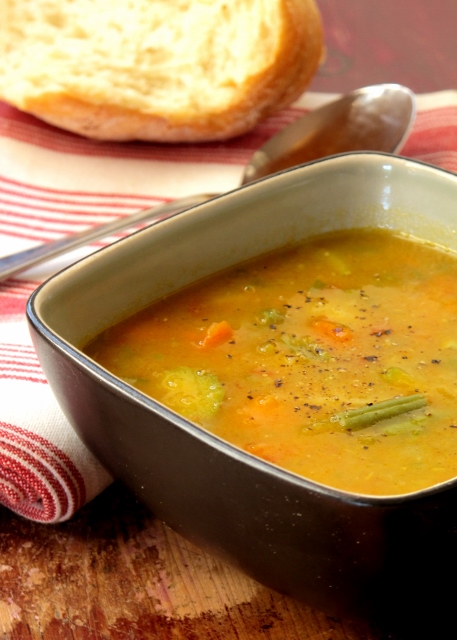
Roger vs. Djokovic aside, in our house winter has always been a season defined by your preference in soup. Generally speaking I have always lent towards bowls of a refined nature, filled silky smooth soups without a suggestion of rustic charm, but in typical spousal aberrance my partner has always championed the opposite. Chunky, vegetarian and woefully wholesome, his soup of choice is invariably the same every winter: minestrone.

Ah, minestrone – how I’ve loathed thee.

In tennis terms, ’tis the Murray of soups: interminably unlikable. However, culinary speaking I have always considered this simple Italian classic to be my ultimate soup nightmare; watery, insipid and chock-full of vegetables and beans, what’s not to hate?

So with that said, it should come as little surprise that minestrone was the last recipe I expected to be talking about on my blog, but oh how things have changed. Quite unexpectedly I’ve made peace with my brothy nemesis and I find myself enamoured with this classic soup.

So what’s changed? In a word, consistency. It turns out that the devil wasn’t in the details (i.e. the vegetables), it was in the viscosity. It seems that with just a bit of tweaking and fiddling, even the most dreaded dishes can find redemption through a few pulses of a hand blender. Okay, so I’ve also ditched the traditional additions of rice and beans in favour of pasta, but beyond that this recipe remains quite true to its classic origins.

Note: I recommend adding some lightly browned chorizo as part of the final garnish, far from authentic I know, but damn, it tastes good.

Click here for the recipe

Spanish Pork Casserole with Chorizo & Butter Beans

Spanish Pork Casserole with Chorizo & Butter Beans

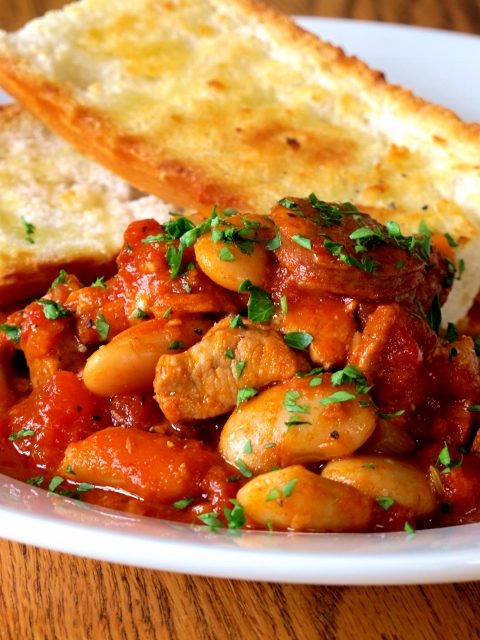
A true one-pot wonder, this simple Spanish inspired casserole is big on flavour and refreshingly light on effort. Other than the initial stages of browning the ingredients, this dish pretty much takes care of itself and rewards with a tasty family friendly meal that can be adapted to cater to almost all tastes and preferences.

Now I have to be honest, this wonderful casserole is probably as Spanish as chow mien is Chinese or California rolls are Japanese, but these days cultural authenticity is hardly an impediment to being the poster child of world cuisine. The modern maxim seems to be, “If a dish tastes good, who cares?” and rightfully so. After all, when the results are this tasty, I’m all about the muddled.

So whilst only vaguely Spanish, this simple dish is nevertheless brimming with classic Iberian flavours and, for a change, all the ingredients are perennial pantry staples. Admittedly I take it for granted that my larder resembles an over-stocked cornucopia of random ingredients, but this isn’t the sort of dish that calls for long forgotten packets of shrimp paste, bamboo leaves and jellyfish (yes, I do actually have the latter lurking in the depths of my fridge!). I digress, however.

Thankfully, significantly less exotic pantry staples are required for this dish, namely tins of butter-beans, chopped tomatoes, chorizo and smoked paprika. Admittedly smoked paprika isn’t necessarily a staple pantry item, but is readily available at most supermarkets or it can be substituted with regular paprika and a pinch of chilli powder or flakes. You can also use chickpeas instead of the butter beans and the fennel seeds can be omitted if you don’t have any…like I said, this recipe is nothing if not adaptable.

Note: As with most stews and casseroles, this dish will be all the better from a night chilling in the fridge.

Click here for the recipe

Chilli con Carne

Chilli con Carne Nachos

Believe it or not, but there was a time when I was completely at sea when it came to cooking and Chilli con Carne was my only lifeline!

Admittedly back in my university days, my Chilli’s “secret ingredient” was a packet of Knorr Chilli con Carne flavouring, but given the dish was also made with cheap soya mince, the dubious origins of its flavour-base was the least of its problems! That said, my Chilli was still the stuff of legend in my digs and its fame wasn’t without merit. In spite of its shortcomings it still tasted pretty damn good, but given my only real competition was marmite on toast, my culinary supremacy was pretty much a given!

Mercifully, my cooking has improved somewhat since those dark days and my Chilli con Carne has since had a much needed makeover. Rather unsurprisingly, the soya mince and glorified packets of MSG have fallen to the wayside and have been replaced with more natural ingredients, but don’t be fooled – this is still good eating, just on a slightly improved budget!

Aside from the exclusion of various e-numbers and MSG, key to the elevation of my Chilli from student fare to tex-mex bliss is the inclusion of some dark chocolate. By simply adding a bit of chocolate, this dish develops a depth of flavour that is hard to beat…give the Chilli sufficient time to mellow and you’ll have an overnight sensation!

There are many ways to eat Chilli. You can simply serve it with some plain white rice, topped with a spoonful of sour cream and snipped chives or you can use it as a filling for burritos by wrapping it up in a tortilla with salad and guacamole.

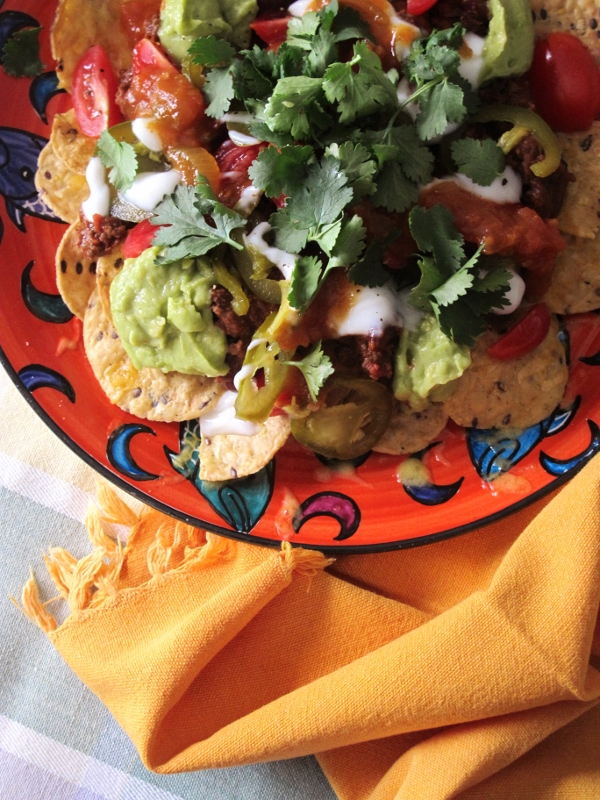
These days, however, my favourite way to eat Chilli is by making nachos! Simply add the chilli to a pile of tortilla chips, sprinkle with all your favourite toppings and voilà: nachos’fantastico!

Click here for the recipe

Korean Grilled Chicken 매운닭구이

Korean Spicy Grilled Chicken 매운닭구이

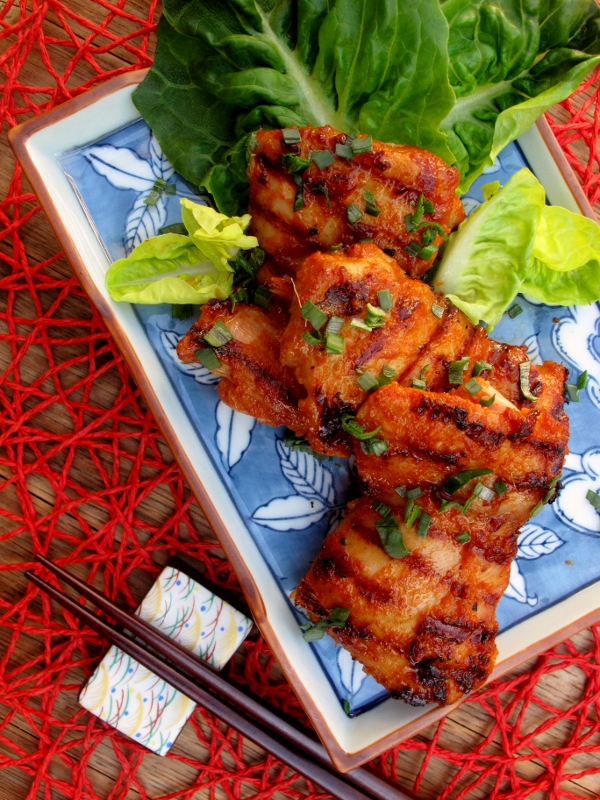
As I’ve mentioned previously, Koreans love to braai and they do so quite brilliantly. Whilst galbi is the undisputed star of any Korean Barbecue, there are plenty of other yummy options vying for space on your grill – this tasty recipe being chief among them.

This simple recipe is an absolute barbecue wonder and, as with most Korean marinates, has a transformative effect on the chicken, especially if left overnight. Whilst you can get away with marinating your meat for less time, ideally this marinate needs at least 12 to 18 hours to work its magic.

This marinate also works perfectly well with other cuts of chicken, particularly spatchcocked chicken, but obviously you will have to adjust the cooking time accordingly (35 to 40 minutes on a low-medium barbecue)

For more Korean recipes, please click HERE

To find out more about how to stock a Korean Pantry, please click HERE

For more braai/barbecue recipes from The Muddled Pantry, please click HERE

Click here for the recipe

Miso Butter

Broccoli with Red Pepper and Miso Butter

Broccoli with Red Pepper and Miso Butter

Okay, so I have confession. I can hide it no longer: I’m a closet Banting/LCHF dieter.

At least I’m trying to be.

Admittedly, I’m not yet a complete high-fat convert – I’m sorry, but butter in tea?!? Seriously, I’m not a Tibetian yak herder; so thanks, but no thanks. I have, however, taken to a reduced carb diet and have developed a new obsession as a result of an increased fat intake – miso butter!

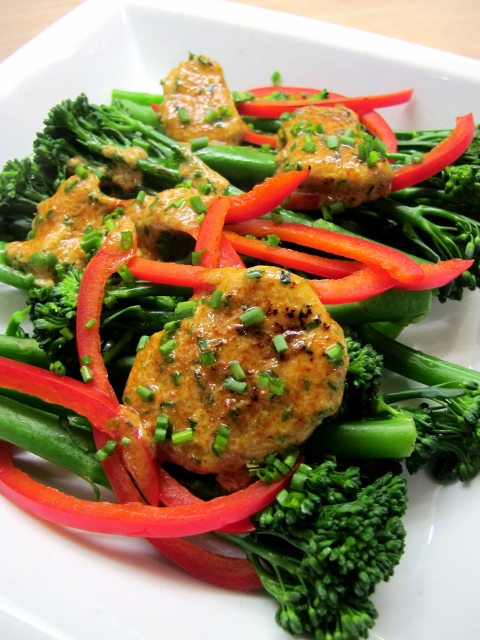
Simple and insanely tasty, miso butter is a must-have staple in everybody’s freezer – whether you subscribe to Banting or not. Quick to make, the miso butter ‘log’ can sit in your freezer almost indefinitely. Not that it will last that long as you will probably end up eating it with everything!

Great on grilled steaks, vegetables, grilled chicken and burgers – miso butter will perk up virtually any meal.

Click here for the recipe