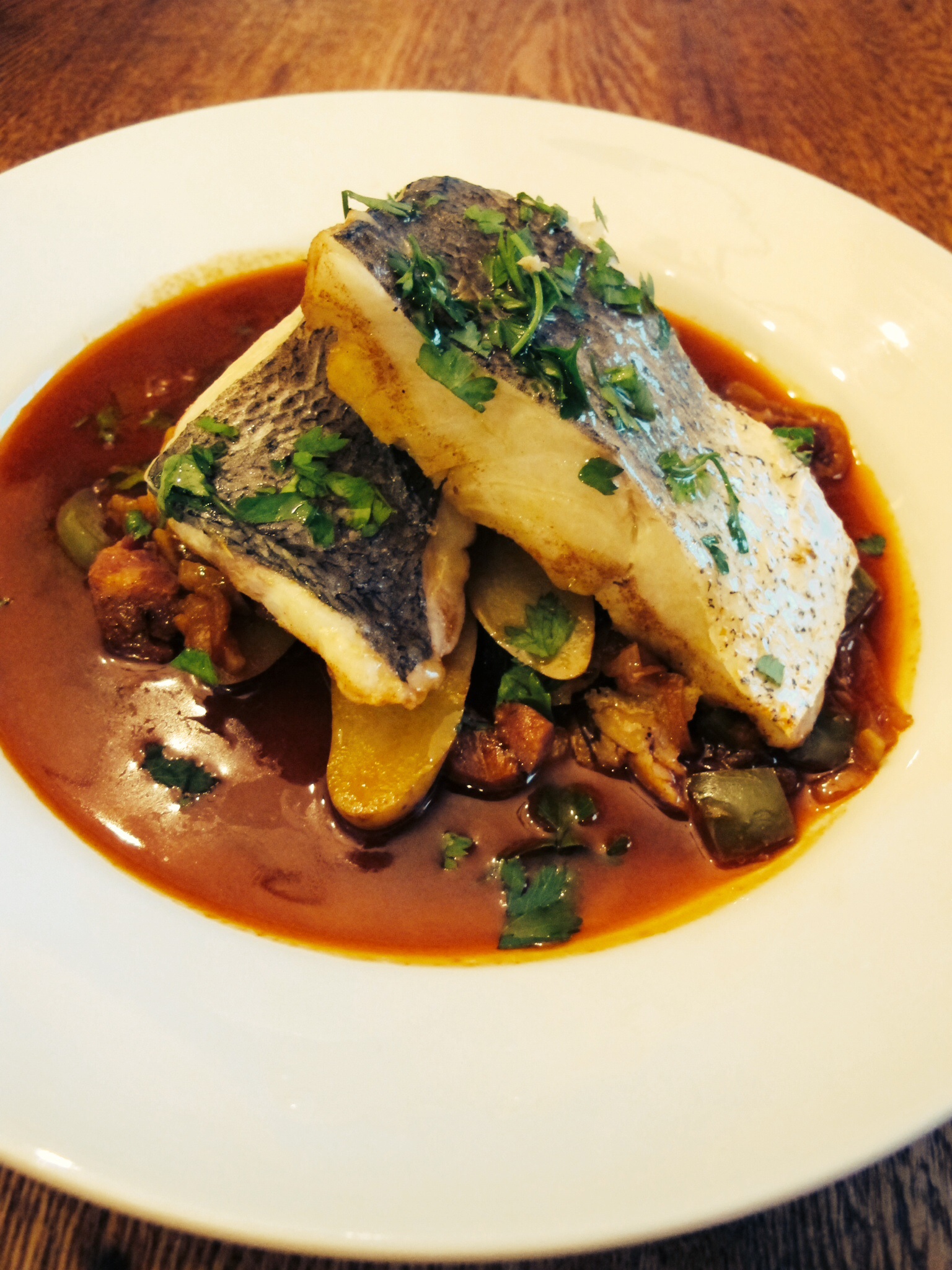
Merluza à la Gallega (Spanish Hake and Chorizo)

imageOn the face of it, South African and Spanish cuisines have virtually nothing in common, except for one thing – both countries consume a staggering amount of hake!

Know as merluza in Spain and often referred to as stockfish in South Africa, hake is a staple in both countries. Sadly, hake in South Africa is usually relegated to being given the “fish ‘n chips treatment”, which is a shame as its light and delicate flavour deserves so much more. Generally considered an every-man’s fish, when it comes to more complex dishes, South Africans tend to pass over hake in favour of classier fish like kob or kingklip. In Spain, however, hake is viewed with slightly more reverence than it is afforded in South Africa and, as a result, it benefits from a greater appreciation of its true potential.

My favourite way of sprucing up a piece of hake, Merluza à la Gallega is a revelation to all hake loving South Africans! Quick, tasty and relatively cheap to make, this dish is a true one-pot wonder. I love to serve this dish with some day-old ciabatta, drizzled with some olive oil and lightly grilled – it is the perfect way to mop up the smoky broth!

Trust me, you will never see the humble hake in quite the same way ever again. Impossibly good.

Click here for the recipe

Khao Phad Gai (Thai Chicken Fried Rice)

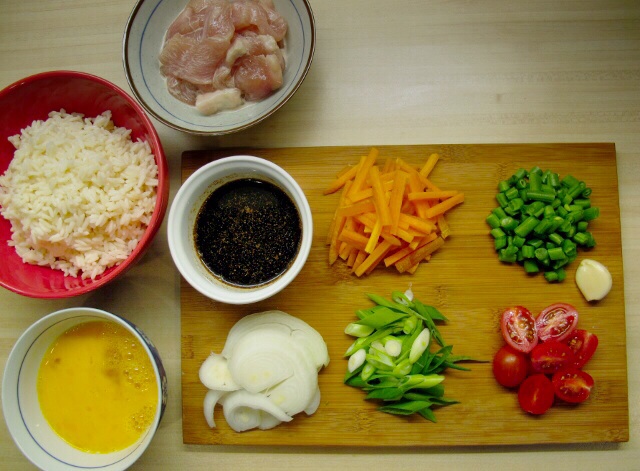
Khao Phad Gai (Chicken Fried Rice)A perennial takeaway favourite in our household, Thai-style Chicken Fried Rice (Khao Phad Gai) is one of the few dishes that both my partner and I enjoy eating, albeit with a few differences in our taste preferences. Naturally I like mine hot and spicy, whereas my partner’s is a somewhat more muted affair without any chilli or garlic. To my mind, the lack either of these elements seems like an affront to Thai cooking, but each to their own, I guess.

Along with an obligatory side order of Tom Yum Goong, Khao Phad Gai has a special place in my recent food history. It may be a simple meal, but this takeaway (along with a lot of red wine) was an absolute Godsend during a particularly stressful house-move – something I will forever be grateful for. Ordered almost every other night, we would sit, wine in hand, in amongst our half-packed boxes watching episodes of “Orange is the New Black”, tucking into our Khao Phad. None of it may have been very classy, but for a short while at least, this became our new normal.

Almost a year later, we don’t order Khao Phad as often as we did back then, but we still enjoy eating it now and again. After a rather disappointing order, though, I decided to try my hand at making it myself. Personally I prefer my own efforts, but my partner thinks otherwise. Apparently my version is “too flavoursome” for his delicate tastes – in my book that can never be a bad thing! As I said before, each to their own.

imageAs with most Asian food, the key to success is preparation…and a hot wok. Typically, 90% of any Asian stir-fry is prep-work, as the actual cooking usually takes just a few minutes – so make sure you have all you ingredients chopped and ready to go. Stir-frying can be fast and furious, and you don’t want to be faffing around with a carrot while your onions burn!

For more delicious Thai recipes please click here, or if you need tips on stocking your Thai Pantry please click here.

Click here for the recipe

Asia: The Fried Rice Miracle

Everybody loves fried rice and, for once, this actually includes my partner!

Frankly, given his flavour-phobic nature, the fact that he will even consider eating fried rice is a miracle in itself, and has saved us from many a Happy Meal whilst travelling through Asia. China, Malaysia, Thailand or Indonesia – it doesn’t matter where we are in the world, I always breathe a sigh of relief when I find fried rice on the menu! Whether it be called Khao Phad Gai in Phuket, Nasi Goreng in Java or  炒饭 in Sichuan, fried rice has been an absolute lifesaver on our travels!

However, as with all miracles, there is a strict criteria that must be adhered to before it can be fully realised: no prawn, no chilli, no garlic, no funny stuff. Wheter these “condiment commandments” are delivered verbally or on a printed card (thank God for Google Translate), these are instructions that have been communicated in a babel of tongues whilst on our many travels. Admittedly, “no funny stuff” is often lost in translation; but subsequent to the “Great Powdered Beef Floss Calamity” of ’07 in Beijing (which ruined a perfectly good plate of fried rice), this particular commandment has become almost as important as “no garlic”! For the likes of Brian it seems the world is filled with culinary pitfalls and devious chefs, just waiting to impart flavour upon their unsuspecting diners. Generally though, we seem to muddle through the minefield that is feeding Brian.

Sadly, his pedantic ordering instructions are not limited to ordering fried rice – even his beloved Big Macs are fraught with food dangers and require deconstruction. Typically the conversation goes something like this:

Me: “Please, wouldn’t you rather just have nuggets?”

Brian: “No, I fancy a Big Mac”

Me: Sigh

McD: “Next!”

Brian: “I would like a medium Big Mac Happy Meal please”

McD: “Okay. And to drink?”

Brian: “Coke Light. Okay, now on the Big Mac, I don’t want any cheese, gherkin, sauce…or mayo”

McD: “There is no mayo in a Big Mac, sir”

Brian: “That’s fine, I just want to make sure they don’t add any mayo”

McD: “Err, okaaayyy sir. So you just want the bread, meat and lettuce then?”

Brian: “Definitely, none of that other crap”

This exchange would be mortifying at the best of times…now imagine this entire conversation taking place in Japan! Ordering food has never been a highpoint of our travels.

Thankfully, through perseverance and experimentation, we’ve slowly been able to expand his list of edible foods abroad. And although still far from possessing a global palette he has, nevertheless, come a long way. Of course, the “condiment commandments” still apply to these new dishes, but we are no longer confined just to the Golden Arches or to the Colonel’s Secret Recipe! In Tokyo he ate Japanese Curry almost exclusively for 2 weeks, and in Malaysia he now merrily scoffs down roti canai (but only with sugar) and murtabak…even Banana Leaf Curry has recently been given the thumbs up.

But when all else fails, we can always rely on the tried and tested “Fried Rice Miracle”…just as long as they don’t try to add any of that “funny stuff”!
Ingen no goma-ae いんげんのごま (Green Beans in Sesame Dressing)

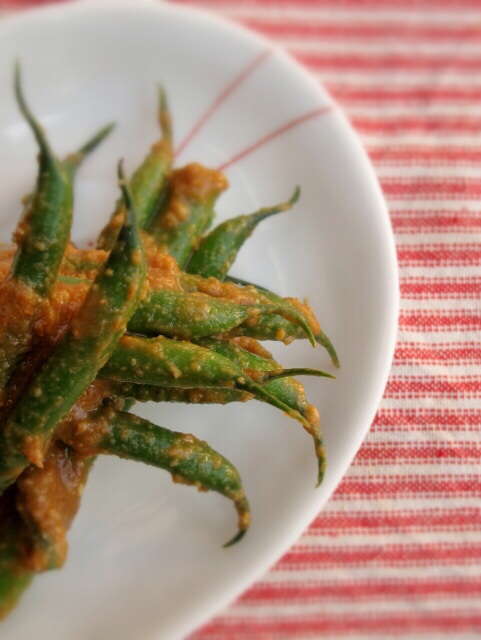
This is one of my favourite Japanese ways to serve vegetables – it is simple, quick to make and utterly delicious!

imageThe key to the dish is toasting the sesame seeds, this adds a taste and aroma that marries perfectly with the sweetness of the dressing. Just be careful not to burn the seeds, as this will make the dish bitter. Of course, this dressing can also be used with other types of vegetables, like tender-stem broccoli, asparagus or even carrots to name just a few. Whatever your preferred vegetable though, it is vital that you cook them until just al dente.

Variations: Half a tablespoon of miso paste can also be added to the sesame dressing, however I would reduce the amount of soya sauce, as the miso will make the dish saltier.

Note: The sesame dressing makes a great onigiri filling, especially if you’ve added the miso paste!

For more Japanese recipes, please click HERE or to find out more about how to stock a Japanese Pantry, please click HERE

Click here for the recipe

Tonkatsu Sauce とんかつソース

There is a lot to be said for living in Cape Town, most of which is unequivocally positive; the setting is stunning, the weather is perfect and the people are lovely. However, when it comes to sourcing Asian products, it can be described as trying at the best of times.

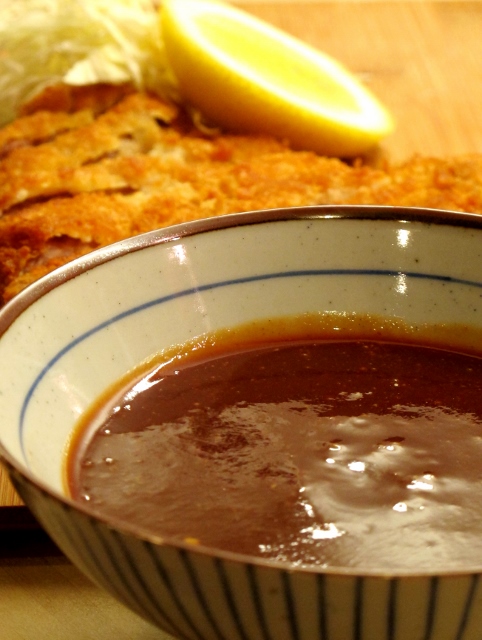
Tonkatsu SauceDon’t get me wrong, things have improved dramatically in the last decade, but inconsistency is still the bane of the local Asian food market. Items that were readily available one year, are suddenly nonexistent the next – it can be very frustrating to say the least! Japanese goods, in particular, seem to fall victim to this fickle approach to supply; making it hard to replenish an ever diminishing pantry.

So what do you do when you’ve finish your last bottle of store-bought Tonkatsu Sauce? If you’re me, you’d try to make your own of course! Now I would never bother making my own Tonkatsu Sauce if it was readily available to buy, but it isn’t, so I have to improvise. This recipe isn’t quite perfect, but it is a very passable approximation. If you can, however, source it locally, stop reading this recipe immediately. Go buy a bottle and count yourself lucky!

Note: Tonkatsu Sauce is a Japanese condiment that is traditionally served with Tonkatsu (Crumbed Pork Cutlet) or Chicken Katsu (Crumbed Chicken) with steamed rice and salad. It can also be used as a substitute for Okonomi Sauce for Okonomiyaki, if unavailable.

For more Japanese recipes, please click HERE or to find out more about how to stock a Japanese Pantry, please click HERE

Click here for the recipe

Nori Tamagoyaki (Rolled Omelette with Nori)

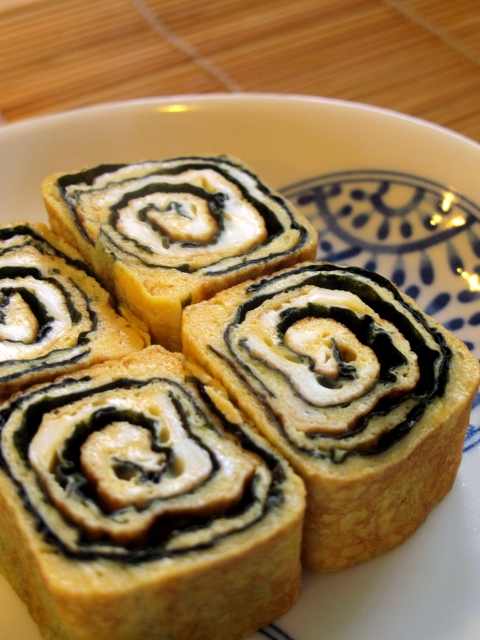
A variation on the traditional Japanese Rolled Omelette (tamagoyaki), Nori Tamagoyaki is as visually appealing, as it is delicious!

As with all tamagoyaki, this version is also normally cooked in a makiyakinabe, a rectangular pan specifically designed to churn out perfectly formed rolled omelettes. While it is possible to make it in a regular omelette pan, it will be a little harder to achieve the desired shape. However, with a bit of creative trimming, you may still be able to approximate the perfect tamagoyaki!

When it comes to the technique of rolling your nori tamagoyaki, the same principles apply as when rolling a plain tamagoyaki. A calm head and timing are essential. As with a regular tamagoyaki, you need to start rolling the omelette whilst the egg is still a little wet. However, when you layer the nori onto the wet egg, you need to leave a small gap around the perimeter of the egg mixture otherwise the layers will not stick together when you start rolling.

For more Japanese recipes, please click HERE or to find out more about how to stock a Japanese Pantry, please click HERE

Click here for the recipe

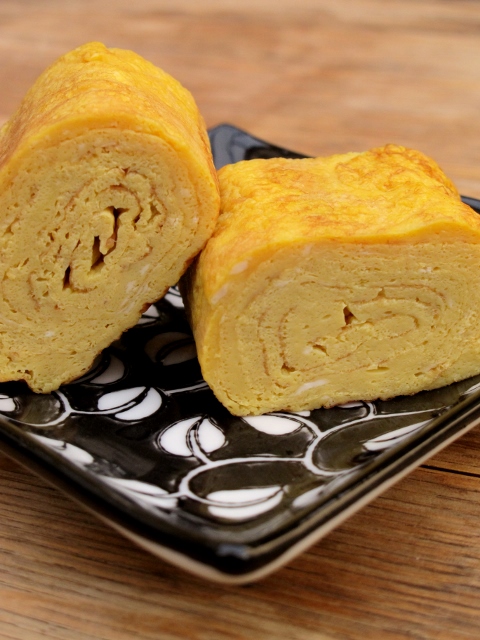
Tamagoyaki 卵焼き (Rolled Omelette)

Tamagoyaki 卵焼き (Rolled Omelette)Only the Japanese could complicate something as simple as an omelette!

In a food culture that values aesthetics almost as much as taste, it’s not entirely surprising that even the humble omelette fell foul of an extreme Japanese makeover. Thankfully though, tamagoyaki’s impressive presentation isn’t at the expense of its flavour!

Eaten throughout Japan, tamagoyaki’s appeal lies in its versatility, both in terms of its taste and uses. Because the omelette is served at room temperature, it makes the ideal addition to bento boxes and makes a great nigiri sushi topping. More commonly though, tamagoyaki is eaten as part of a Japanese breakfast. While typically served plain, tamagoyaki often have a “filling” in the centre – salmon/tuna flakes, fish roe or blanched spinach are all popular choices. Torn-up sheets of nori can also be added, these are layered on the egg mixture as it sets. This not only tastes great, but it also looks very impressive! Whilst all versions of tamagoyaki contain some sugar, some are very sweet – it is really up to you how much sugar you want to use.

Tamagoyaki are usually cooked in a rectangular pan called a makiyakinabe. While it is possible to make it in a regular pan, the finished product will be less than perfect. With a bit of trimming though, you should be able to approximate the desired shape. It does take a while to “master” the technique of rolling the omelette, but with a calm head and a bit of patience, you’ll get the hang of it in no time. Timing is key, you need to start rolling the omelette whilst the egg is still a little wet, otherwise the “layers” won’t stick together. You’ll have a few mishaps along the way, but you’ll get it right soon enough. There is something immensely satisfying about making your own tamagoyaki, even if it’s not perfect!

For more Japanese recipes, please click HERE or to find out more about how to stock a Japanese Pantry, please click HERE

Click here for the recipe

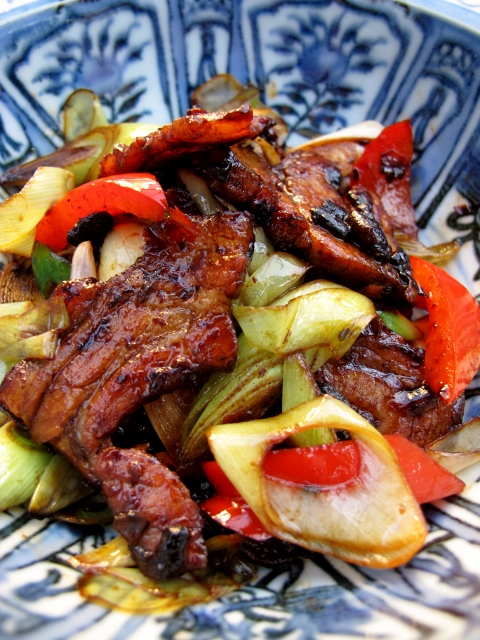
Twice-Cooked Pork 回鍋肉

Twice-Cooked Pork 回鍋肉A true classic, Twice-Cooked Pork is everything you’d expect from Sichuanese cuisine: fragrant, spicy and utterly moreish! Served as part of a banquet or with just some plain rice and a fried egg, this is simple Chinese cooking at its best.

Pre-cooking the pork may initially seem like a bit of a faf, but don’t let this put you off. It’s definitely worth the effort, as the resulting pork is meltingly tender! Once the pork has been cooked and cooled, the dish takes mere minutes to put together – from wok to mouth in a matter of minutes!

For more Chinese recipes, please click HERE or to find out more about how to stock a Chinese Pantry, please click HERE

Click here for the recipe

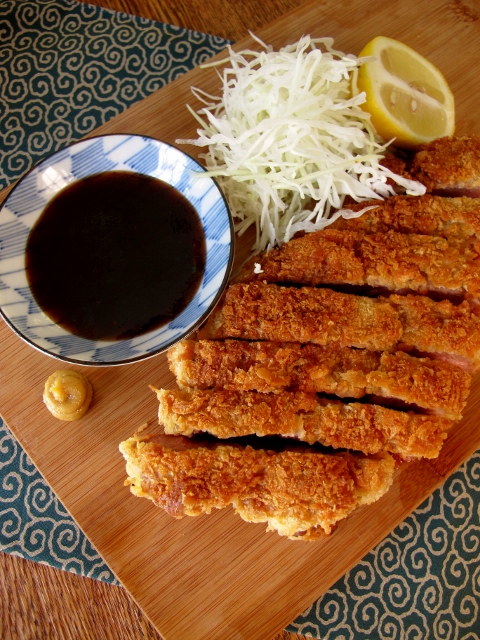
Tonkatsu トンカツ (Crumbed Pork Cutlet)

Tonkatsu トンカツ (Crumbed Pork Cutlet)It may surprise many to learn that not all Japanese food is healthy and Tonkatsu is a case in point. What is effectively a crumbed, deep-fried pork cutlet, tonkatsu is actually one of Japan’s favourite dishes.

A hallmark of youshoku cuisine (Japanese-style Western cuisine), tonkatsu is a very Japanese take on a Western schnitzel. In fact, other than the use of panko breadcrumbs, there is very little difference between the two! However, what really sets tonkatsu apart from its Western counterpart is how it is served. There are 3 traditional ways to enjoy tonkatsu (although there are, of course, other ways too). It can be served with just rice, shredded cabbage, mustard and tonkatsu sauce, it can be added to Japanese Curry Sauce to make katsu-karē or it can be used as a donburi topping called Katsudon. My personal favourite, katsudon is the epitome of Japanese comfort food, but no matter how you choose to eat it, tonkatsu is always delicious!

For more Japanese recipes, please click HERE or to find out more about how to stock a Japanese Pantry, please click HERE

Click here for the recipe

Chikenkatsu チキンカツ (Crumbed Chicken Cutlet)

Almost identical to its porkier cousin, chikenkatsu is, rather unsurprisingly, a chicken version of the Japanese deep-fried delight that is tonkatsu. As part of youshoku cuisine (Japanese-style Western cuisine), chikenkatsu literally means “chicken cutlet”, and is the Japanese interpretation of the chicken schnitzel.

As with tonkatsu, there are a number of ways chikenkatsu can be eaten. It can be served with just rice, shredded cabbage, mustard and the ubiquitous Tonkatsu Sauce, it can be added to Japanese Curry Sauce to make katsu-karē or it can be used as a chicken alternative to the donburi classic, Katsudon.

For more delicious Japanese recipes, please click HERE

Click here for the recipe