Recipes

Khao Phad Gai (Thai Chicken Fried Rice)

Khao Phad Gai (Chicken Fried Rice)A perennial takeaway favourite in our household, Thai-style Chicken Fried Rice (Khao Phad Gai) is one of the few dishes that both my partner and I enjoy eating, albeit with a few differences in our taste preferences. Naturally I like mine hot and spicy, whereas my partner’s is a somewhat more muted affair without any chilli or garlic. To my mind, the lack either of these elements seems like an affront to Thai cooking, but each to their own, I guess.

Along with an obligatory side order of Tom Yum Goong, Khao Phad Gai has a special place in my recent food history. It may be a simple meal, but this takeaway (along with a lot of red wine) was an absolute Godsend during a particularly stressful house-move – something I will forever be grateful for. Ordered almost every other night, we would sit, wine in hand, in amongst our half-packed boxes watching episodes of “Orange is the New Black”, tucking into our Khao Phad. None of it may have been very classy, but for a short while at least, this became our new normal.

Almost a year later, we don’t order Khao Phad as often as we did back then, but we still enjoy eating it now and again. After a rather disappointing order, though, I decided to try my hand at making it myself. Personally I prefer my own efforts, but my partner thinks otherwise. Apparently my version is “too flavoursome” for his delicate tastes – in my book that can never be a bad thing! As I said before, each to their own.
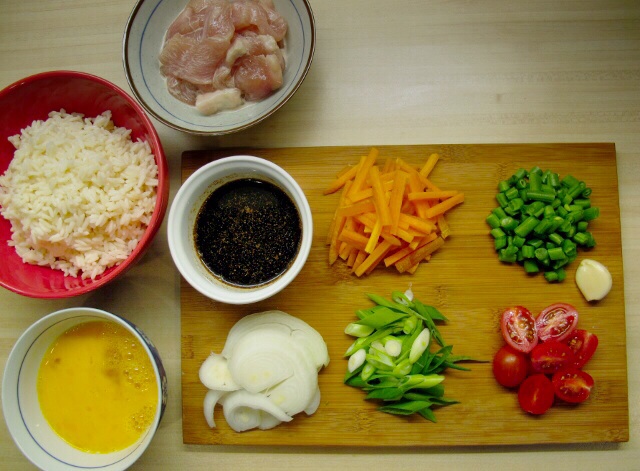
imageAs with most Asian food, the key to success is preparation…and a hot wok. Typically, 90% of any Asian stir-fry is prep-work, as the actual cooking usually takes just a few minutes – so make sure you have all you ingredients chopped and ready to go. Stir-frying can be fast and furious, and you don’t want to be faffing around with a carrot while your onions burn!

For more delicious Thai recipes please click here, or if you need tips on stocking your Thai Pantry please click here.
Click here for the recipe

Ingen no goma-ae いんげんのごま (Green Beans in Sesame Dressing)

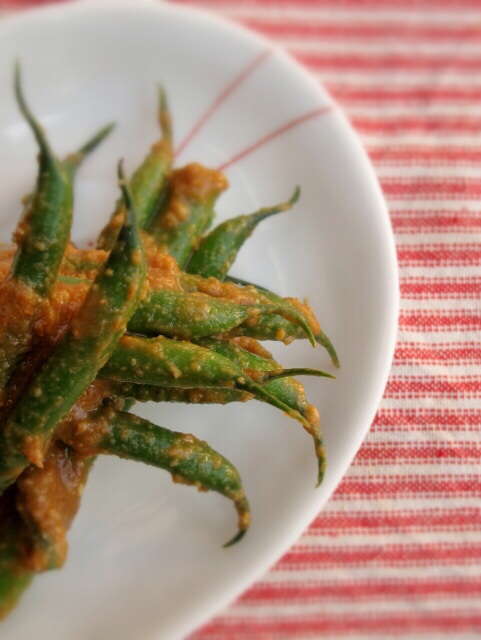
This is one of my favourite Japanese ways to serve vegetables – it is simple, quick to make and utterly delicious!

imageThe key to the dish is toasting the sesame seeds, this adds a taste and aroma that marries perfectly with the sweetness of the dressing. Just be careful not to burn the seeds, as this will make the dish bitter. Of course, this dressing can also be used with other types of vegetables, like tender-stem broccoli, asparagus or even carrots to name just a few. Whatever your preferred vegetable though, it is vital that you cook them until just al dente.

Variations: Half a tablespoon of miso paste can also be added to the sesame dressing, however I would reduce the amount of soya sauce, as the miso will make the dish saltier.

Note: The sesame dressing makes a great onigiri filling, especially if you’ve added the miso paste!

For more Japanese recipes, please click HERE or to find out more about how to stock a Japanese Pantry, please click HERE

Click here for the recipe

Tonkatsu Sauce とんかつソース

There is a lot to be said for living in Cape Town, most of which is unequivocally positive; the setting is stunning, the weather is perfect and the people are lovely. However, when it comes to sourcing Asian products, it can be described as trying at the best of times.

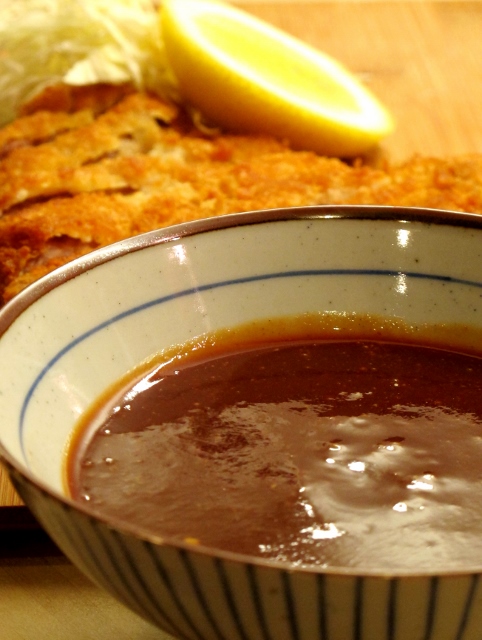
Tonkatsu SauceDon’t get me wrong, things have improved dramatically in the last decade, but inconsistency is still the bane of the local Asian food market. Items that were readily available one year, are suddenly nonexistent the next – it can be very frustrating to say the least! Japanese goods, in particular, seem to fall victim to this fickle approach to supply; making it hard to replenish an ever diminishing pantry.

So what do you do when you’ve finish your last bottle of store-bought Tonkatsu Sauce? If you’re me, you’d try to make your own of course! Now I would never bother making my own Tonkatsu Sauce if it was readily available to buy, but it isn’t, so I have to improvise. This recipe isn’t quite perfect, but it is a very passable approximation. If you can, however, source it locally, stop reading this recipe immediately. Go buy a bottle and count yourself lucky!

Note: Tonkatsu Sauce is a Japanese condiment that is traditionally served with Tonkatsu (Crumbed Pork Cutlet) or Chicken Katsu (Crumbed Chicken) with steamed rice and salad. It can also be used as a substitute for Okonomi Sauce for Okonomiyaki, if unavailable.

For more Japanese recipes, please click HERE or to find out more about how to stock a Japanese Pantry, please click HERE

Click here for the recipe

Nori Tamagoyaki (Rolled Omelette with Nori)

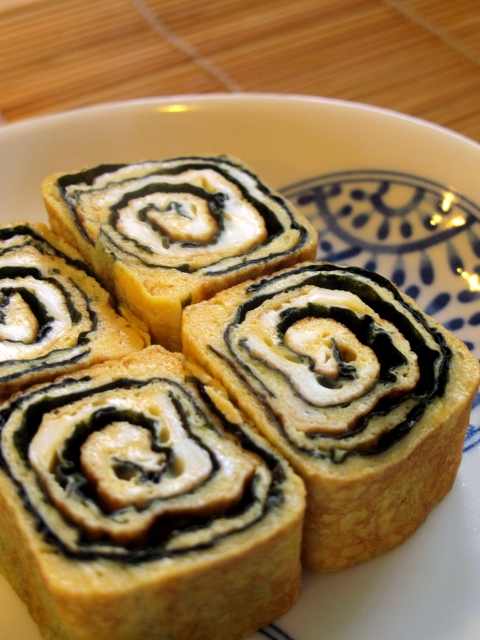
A variation on the traditional Japanese Rolled Omelette (tamagoyaki), Nori Tamagoyaki is as visually appealing, as it is delicious!

As with all tamagoyaki, this version is also normally cooked in a makiyakinabe, a rectangular pan specifically designed to churn out perfectly formed rolled omelettes. While it is possible to make it in a regular omelette pan, it will be a little harder to achieve the desired shape. However, with a bit of creative trimming, you may still be able to approximate the perfect tamagoyaki!

When it comes to the technique of rolling your nori tamagoyaki, the same principles apply as when rolling a plain tamagoyaki. A calm head and timing are essential. As with a regular tamagoyaki, you need to start rolling the omelette whilst the egg is still a little wet. However, when you layer the nori onto the wet egg, you need to leave a small gap around the perimeter of the egg mixture otherwise the layers will not stick together when you start rolling.

For more Japanese recipes, please click HERE or to find out more about how to stock a Japanese Pantry, please click HERE

Click here for the recipe

Tamagoyaki 卵焼き (Rolled Omelette)

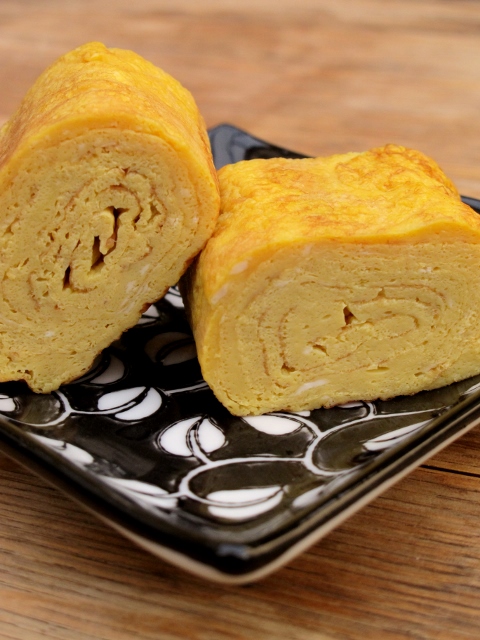
Tamagoyaki 卵焼き (Rolled Omelette)Only the Japanese could complicate something as simple as an omelette!

In a food culture that values aesthetics almost as much as taste, it’s not entirely surprising that even the humble omelette fell foul of an extreme Japanese makeover. Thankfully though, tamagoyaki’s impressive presentation isn’t at the expense of its flavour!

Eaten throughout Japan, tamagoyaki’s appeal lies in its versatility, both in terms of its taste and uses. Because the omelette is served at room temperature, it makes the ideal addition to bento boxes and makes a great nigiri sushi topping. More commonly though, tamagoyaki is eaten as part of a Japanese breakfast. While typically served plain, tamagoyaki often have a “filling” in the centre – salmon/tuna flakes, fish roe or blanched spinach are all popular choices. Torn-up sheets of nori can also be added, these are layered on the egg mixture as it sets. This not only tastes great, but it also looks very impressive! Whilst all versions of tamagoyaki contain some sugar, some are very sweet – it is really up to you how much sugar you want to use.

Tamagoyaki are usually cooked in a rectangular pan called a makiyakinabe. While it is possible to make it in a regular pan, the finished product will be less than perfect. With a bit of trimming though, you should be able to approximate the desired shape. It does take a while to “master” the technique of rolling the omelette, but with a calm head and a bit of patience, you’ll get the hang of it in no time. Timing is key, you need to start rolling the omelette whilst the egg is still a little wet, otherwise the “layers” won’t stick together. You’ll have a few mishaps along the way, but you’ll get it right soon enough. There is something immensely satisfying about making your own tamagoyaki, even if it’s not perfect!

For more Japanese recipes, please click HERE or to find out more about how to stock a Japanese Pantry, please click HERE

Click here for the recipe

Twice-Cooked Pork 回鍋肉

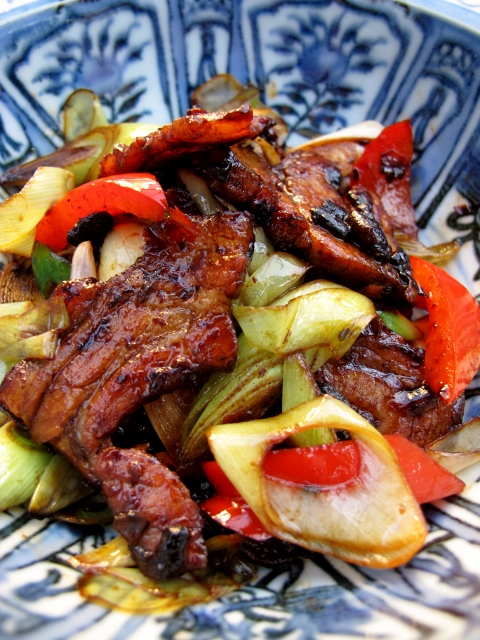
Twice-Cooked Pork 回鍋肉A true classic, Twice-Cooked Pork is everything you’d expect from Sichuanese cuisine: fragrant, spicy and utterly moreish! Served as part of a banquet or with just some plain rice and a fried egg, this is simple Chinese cooking at its best.

Pre-cooking the pork may initially seem like a bit of a faf, but don’t let this put you off. It’s definitely worth the effort, as the resulting pork is meltingly tender! Once the pork has been cooked and cooled, the dish takes mere minutes to put together – from wok to mouth in a matter of minutes!

For more Chinese recipes, please click HERE or to find out more about how to stock a Chinese Pantry, please click HERE

Click here for the recipe

Tonkatsu トンカツ (Crumbed Pork Cutlet)

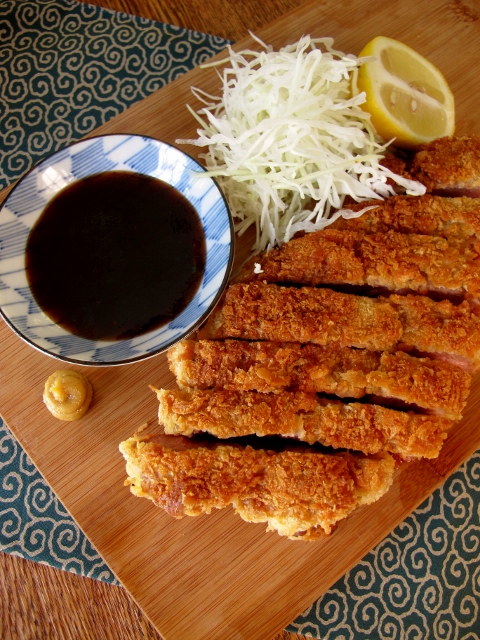
Tonkatsu トンカツ (Crumbed Pork Cutlet)It may surprise many to learn that not all Japanese food is healthy and Tonkatsu is a case in point. What is effectively a crumbed, deep-fried pork cutlet, tonkatsu is actually one of Japan’s favourite dishes.

A hallmark of youshoku cuisine (Japanese-style Western cuisine), tonkatsu is a very Japanese take on a Western schnitzel. In fact, other than the use of panko breadcrumbs, there is very little difference between the two! However, what really sets tonkatsu apart from its Western counterpart is how it is served. There are 3 traditional ways to enjoy tonkatsu (although there are, of course, other ways too). It can be served with just rice, shredded cabbage, mustard and tonkatsu sauce, it can be added to Japanese Curry Sauce to make katsu-karē or it can be used as a donburi topping called Katsudon. My personal favourite, katsudon is the epitome of Japanese comfort food, but no matter how you choose to eat it, tonkatsu is always delicious!

For more Japanese recipes, please click HERE or to find out more about how to stock a Japanese Pantry, please click HERE

Click here for the recipe

Chikenkatsu チキンカツ (Crumbed Chicken Cutlet)

Almost identical to its porkier cousin, chikenkatsu is, rather unsurprisingly, a chicken version of the Japanese deep-fried delight that is tonkatsu. As part of youshoku cuisine (Japanese-style Western cuisine), chikenkatsu literally means “chicken cutlet”, and is the Japanese interpretation of the chicken schnitzel.

As with tonkatsu, there are a number of ways chikenkatsu can be eaten. It can be served with just rice, shredded cabbage, mustard and the ubiquitous Tonkatsu Sauce, it can be added to Japanese Curry Sauce to make katsu-karē or it can be used as a chicken alternative to the donburi classic, Katsudon.

For more delicious Japanese recipes, please click HERE

Click here for the recipe

Chicken Katsu with Warm Fennel & Almond Salad and Sichuan Chilli Oil

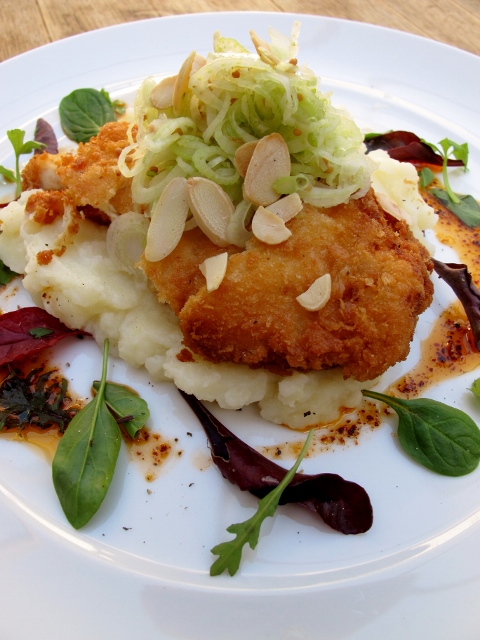
Chicken Katsu with Warm Fennel Salad and Sichuan Chilli OilInspiration is occasionally born out of apathy and the origins of this tasty meal were no different.

Feeling particularly uninspired one evening, I decided to forgo my usual practice of preparing two completely separate meals for dinner and instead decided to do the unthinkable – eat the same dinner as my partner! Now please bear in mind that this dining-convergence doesn’t happen often in my kitchen, very rarely in fact. We have wildly different tastes and normally I’m happy to make us different dinners every night, but there are occasions when I justifiably just think, “sod it” and we end up with the same meal. At least almost exactly the same, I always have to tart my own meal up, just a little!

So, “Chicken Schnitzel with mash” for two it was then! Now I must confess that the very first time I made this dish it was with some horrendous ready-made Chicken Schnitzels, wrestled from the frozen depths of my freezer. Indeed I had sunk so low, but like I said, “apathy = inspiration”.

But even in this heightened state of disinterest, I still needed something to spruce up this dire meal, so I set about rummaging through the fridge. I was looking for quick fixes and I found some; leftover pickled fennel that I had made for Kimchi Tacos – sorted! Things were starting to look up. It was only then that the inspiration started to kick-in; some toasted almond flakes were added to the fennel and Sichuan Chilli Oil, leftover from when I last made Dan-Dan Noodles, found its way onto the plate! Whilst this was fast turning into an inspired concoction, the addition of these two ingredients turned out to be culinary-dynamite! With just a few simple twists this meal went from turgid to terrific!

Note: The chicken in this dish has since morphed into Japanese Chicken Katsu, but there is nothing wrong with using good old chicken schnitzel instead (homemade or otherwise). For all extents and purposes Chicken Katsu and schnitzel are pretty much the same thing, but my need to complicate things for myself is, sadly, inherent and overwhelming.

Click here for the recipe

Karē Sōsu カレーソース (Japanese Curry Sauce)

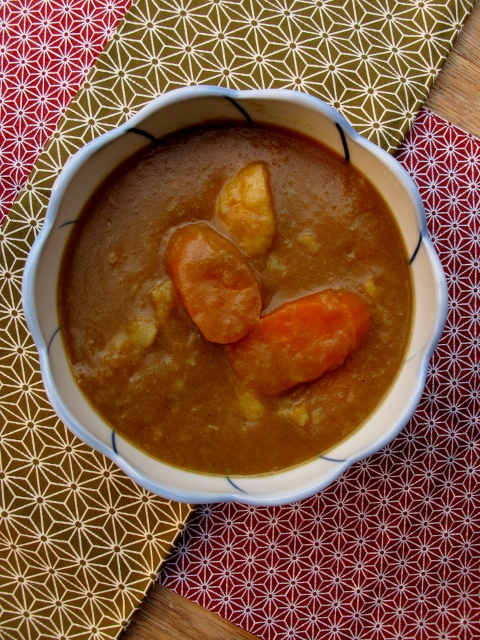
Karē (Japanese Curry Sauce)Reminiscent of those dreadful British school-dinner curries of the 80s and akin to the sort of curry sauce that is poured over chips in the UK or currywurst in Germany, at first glance Japanese curry is mild, bland and, to some at least, inoffensive to the point of being offensive. That may all seem a tad harsh, but the comparison is far from unjustified, especially when you consider that curry was first introduced to Japan by the British (of all people) in the early 1900s! With that in mind however, it is all too easy to be unduly disparaging about Japanese curry and you shouldn’t, as it is actually quite delicious.

Generally speaking, in Japan karē is served as a sauce (sōsu) rather than a curry made with meat, so you are unlikely to find a chicken or beef curry per se. You are of course welcome to add some meat to the curry sauce as it cooks, but I prefer to pour it over a crisp crumbed cutlet (tonkatsu/chikenkatsu) or add it to a pile of gyūdon. Typically eaten with rice or udon noodles, karē is so popular it is considered one of Japan’s national dishes and is readily available throughout the country, both at specialist restaurants or as an option on menus at most gyūdon or noodle joints.

What sets karē apart from other curries is the fact that it is made with a roux, which enriches and thickens sauce. There are a wide range of Japanese curry/roux cubes available at most Asian supermarkets and these are well worth the expense as they are really the only specialist ingredient in the karē sōsu. Alternatively, you can use Japanese curry powder instead. If, however, neither of these are available you can just use a mild curry powder, but the flavour won’t be as authentic.

For more Japanese recipes, please click HERE or to find out more about how to stock a Japanese Pantry, please click HERE

Click here for the recipe