Cape Malay Mince Curry

A quick and easy to make, Cape Malay Mince Curry is one of the most commonly eaten curries in South Africa.

Typically eaten with rice, mince curry is also often used as a filling in rotis and vetkoeks or eaten on toast with eggs for breakfast; making this curry as versatile as it is tasty! Mince curry is also a popular choice when feeding large groups of people as it is relatively cheap to make and a little goes a long way. The addition of peas and boiled eggs is common, although far from essential. Personally, I prefer to make mine with peas as it makes for a more nutritionally-rounded meal.

As humble as it may be, mince curry deserves to be called a Cape classic!

Click here for the recipe

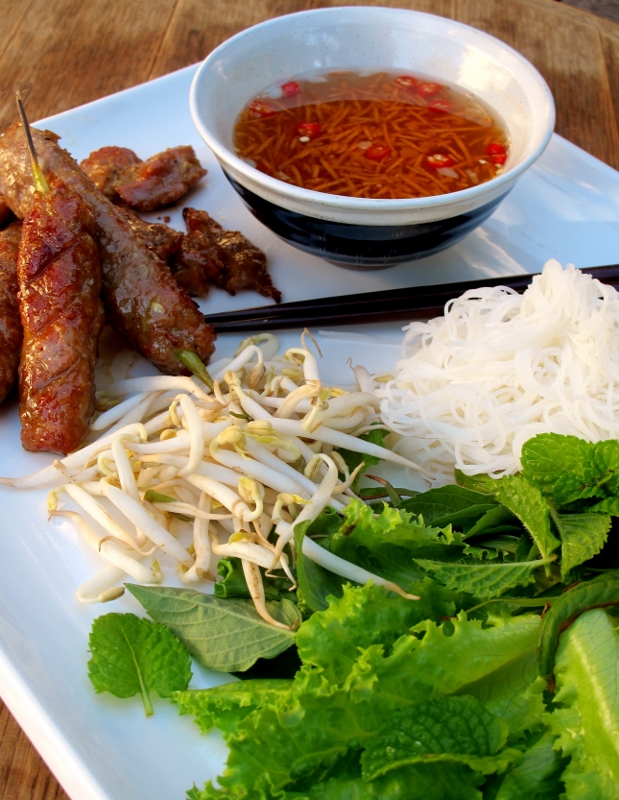
Bún Chả (Vietnamese Grilled Pork, Salad & Noodles)

Bún Chả (Vietnamese Grilled Pork, Salad & Noodles)As I have mentioned previously, I found eating in Vietnam a very frustrating affair, with the best Vietnamese food largely inaccessible to the average tourist. Sadly most tourists (who find themselves on the almost inescapable tourist trail that runs from Hồ Chí Minh City to Hạ Long Bay) leave the country with a scant appreciation of the full potential of Vietnamese cuisine, having being fed on an uninspired diet of spring rolls and, if you were lucky, some mediocre phở. These lacklustre experiences are especially tragic to those tourists who seek out new food experiences. Considering authentic Vietnamese food has such a wealth of flavour, it is a shame that there isn’t more of it on offer to the willing tourist! Coming from a South East Asian food culture where authentic street-food is accessible and transparent, I found the Vietnamese surprisingly guarded about their food – often openly discouraging you from joining them for a simple bowl of noodles on the side of the road, preferring to usher you back to the tourist cafés with their English menus and homogenised Vietnamese food.

Which is why I love Bún Chả! Tasty, cheap and satisfying, Bún Chả makes for a great meal, but above all, Bún Chả is relatively accessible to foreigners on the prowl for some authentic street-food. It has been said that on the streets of Hanoi, “where there is smoke, there is Bún Chả!” and even if you only end up ordering it in a tourist café, it is still tasty and fun to eat!

Second only to the almighty and omnipresent Phở Bò, Bún Chả is perhaps one of Vietnam’s most popular dishes, especially in the North of the country where it is thought to have originated from. Made up of a plate of grilled pork, salad, a dipping sauce and bún noodles (rice vermicelli), Bún Chả is a complete meal in itself. Traditionally the meat takes the form of patties made up of pork mince, but I like to add some sliced pork to the dish as it adds an extra dimension to the overall meal.

Whilst I am unsure of the exact etiquette for eating Bún Chả, I have taken to soaking the meat in the dipping sauce, adding a bit of the noodles, followed by some of the salad. Then, using chopsticks, everything gets shoved into my mouth. It certainly isn’t elegant, but it is damn tasty!

For more braai/barbecue recipes from The Muddled Pantry, please click HERE

Click here for the recipe

Japanese Pickles (Tsukemono 漬物)

Pickles are an integral part of Japanese cuisine. Eaten with virtually every meal, pickles provide balance of flavour or are used as a palate cleanser, as is the case when eating sushi. Also considered a key element to maintaining a healthy diet, it should come as not surprise that the Japanese are somewhat fanatical about their pickles!

Commonly referred to as tsukemono, there is seemingly no end to what the Japanese will pickle or preserve! Often eaten as a side dish or as a garnish, virtually no vegetable is safe from being salted and preserved, but daikons, carrots, cucumbers and Chinese (napa) cabbage are firm favourites. The Japanese’s love of pickles is not limited to their own, Korean staples such as kimchi are also readily served as part of a Japanese meal, although such spicy preserves are a departure from your typical tsukemono.

In terms of tsukemono as a condiment or garnish, beni shoga is perhaps the most commonly eaten pickle in Japan. Made by pickling ginger in red umeboshi brine, it is almost always used as a garnish on okonomiyaki, gyūdon and yakisoba. Outside of Japan though, the most likely form of tsukemono you’ll encounter is gari, which is ubiquitous with sushi and sashimi, although you are unlikely to find the lumo-pink version in Japan, where gari is normally a less alarming beige.

Whilst a bewildering array of tsukemono can be readily bought in Japanese supermarkets, many Japanese still go to the effort of making their own. Thankfully, making your own tsukemono it is actually quite straightforward, usually all you need is some salt and time. Typically the preserving process can take quite a while to complete, however, mercifully, some Japanese pickles take considerably less time to make. Known as asazuke, these pickles can be ready to eat in a matter of hours, if not less. Often less salty than tsukemono that have been fully preserved, these “shallow” pickles are actually more palatable to Western tastes.

With that in mind, here are some of my favourite, must-have, Japanese pickles (please follow the links for the recipes):
Quick Cucumber & Ginger Pickle
Quick Cucumber & Ginger Pickle

Beni Shoga
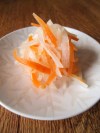
Daikon & Carrot Pickle
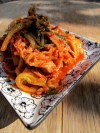
Napa Cabbage Kimchi
Napa Cabbage Kimchi

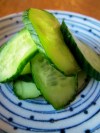
Wasabi-pickled Cucumbers


Whilst all of the above recipes are relatively quick and easy to make, with pickling times ranging from an hour to a few days, all would make worthy additions to any Japanese meal. Whether it be a full-on feast or a humble bowl of gyūdon, no true Japanese meal would be complete without just a small nibble of tsukemono!

For more great Japanese recipes from The Muddled Pantry, please click here

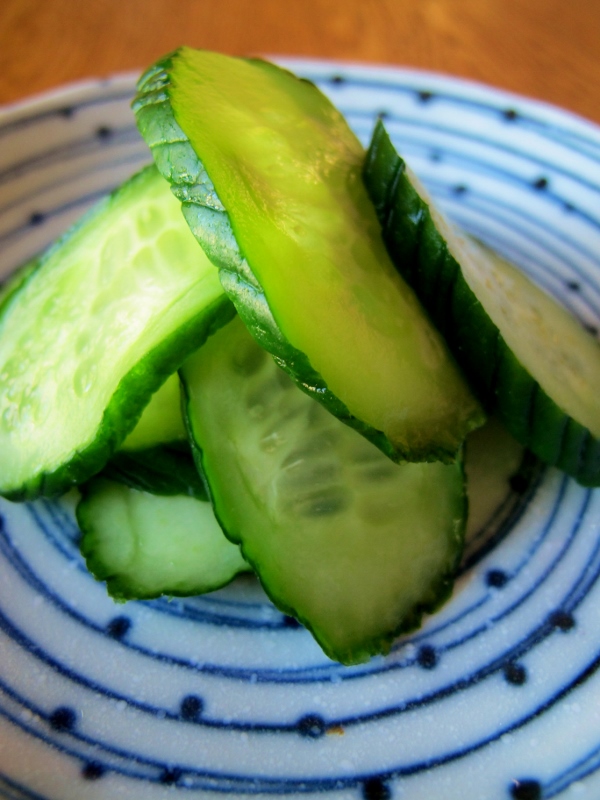
Wasabi-pickled Cucumber

This a quick and simple Japanese pickle which makes a great addition to any Japanese meal. You can either use gherkin, Israeli, Kirby or small Mediterranean cucumbers for this recipe, but not the English variety as it is too watery.

Feel free to add more wasabi if you like it hot!

For more great Japanese recipes from The Muddled Pantry, please click here
Click here for the recipe

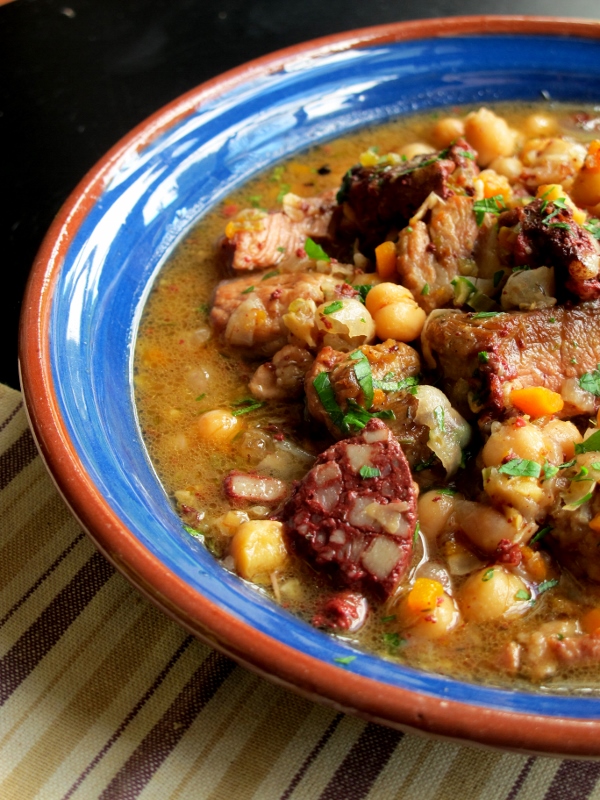
Pork, Chickpea & Black Pudding Stew

As I’ve mentioned in previous posts, I have a real soft spot for a good old slice of black pudding!

A grim stalwart of a true Full English, black pudding has for many years been perceived as being one of the more unpalatable progeny of British cuisine. Along with the likes of jellied eels and winkles, black pudding harks back to an era when Britain was not unfairly considered the culinary backwater of Europe. Mercifully though, the tide has long since turned and thanks to an army of parading TV chefs, there is a renewed appreciation of local produce and food traditions in the UK. As a result, British cuisine has witnessed an unprecedented renaissance and thankfully, winkles not withstanding, the likes of black pudding have come along for the ride. Unfortunately, the reality is that few ingredients can transcend disgusting to de rigueur, but black pudding is slowly making its way back into the mainstream of British cuisine.

In nearby Spain, however, black pudding has had a far easier time of it. Known as morcilla or blood sausage, the Spanish seem to have none of the hang-ups about eating it that typically plauge its British cousin. Whether it be simply fried and served with bread or used to add depth and flavour to stews and soups, morcilla remains popular throughout Spain, if not the entire Spanish-speaking world.

Which brings me to this delightfully hearty stew!

On the face of it, this is just another typical Spanish stew, but what sets this recipe apart is, of course, the addition of black pudding. One of the last ingredients to be added, the black pudding has a transformative effect on the dish and is an absolute flavour-masterstroke – especially if the stew is afforded an evening to mature in the fridge. First fried and then added at the final stage of cooking, the black pudding melds with the sauce as it simmers, adding a depth and richness that elevates this humble stew to new, delicious, heights! 

For more great one-pot wonders from The Muddled Pantry, please click here
Click here for the recipe

Duck Fat Roast Potatoes

Roast PotatoesLife’s too short to suffer bad roast potatoes, but thankfully I wouldn’t know because mine are pretty awesome!

A tad conceited perhaps, but my roast potatoes almost never fail to come out golden, delicious and with that all important “crunch”!

Unfortunately, there isn’t a lone “trick” to making the perfect roast potato, but rather a series of simple, yet essential, steps that yield the desired result. Parboiling the potatoes in heavily salted water is a vitally important part of the recipe, so don’t be tempted to skip it.

Arguably the most important factor in making your roast potatoes is, however, the fat you chose to cook them in. There are a variety of options out there, but I prefer using duck fat. Healthy and relatively easy to source, duck fat makes for great results!

Click here for the recipe

Mapo Tofu 麻婆豆腐

With the exception of the most amazing Peking Duck I’ve ever eaten, I was disappointed to discover that Chinese food in China is a rather dull affair. Roasted locust and the occasional snake-on-a-stick not withstanding, bland soups and mediocore dumplings seem to be the order of the day on the streets of Beijing.

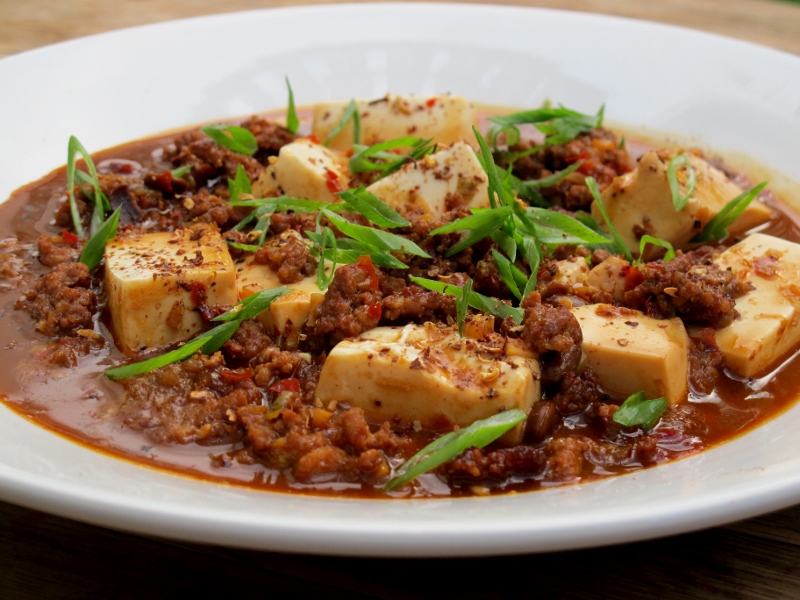
After spending the best part of a week eating possibly the dullest Asian food on earth, we chanced upon a massive subterranean food-court that specialized in regional food from all over China. It was here, in this overcrowded and windowless basement, that we finally discovered some of that allusive “Chinese flavour” in China – we had found Sichuanese food or more specifically, mapo tofu! Little did I know that I stumbled upon what would possible become one of my favourite Chinese dishes of all time.

Mapo Tofu 麻婆豆腐

Loosely translating to “grandmother’s pockmarked tofu”, this colorfully named dish has all the hallmarks of a true Sichuanese classic. Spicy, stastifiying and, above all, “numbing”, mapo tofu has got it all! Packed full of flavour, it is a great dish to introduce the uninitiated to the unsung delights of tofu. The soft, silky texture of the tofu plays beautifully against the fiery sauce, resulting in a “cooling” contrast to the intensity of the dish.

Easy to make and always tasty, mapo tofu is the epitome of Chinese home-style cooking and makes for fantastic meal on its own with just some rice. Equally, though, mapo tofu makes a great addition to a larger Chinese banquet as it can be made ahead of time and then gently reheated before serving (something of a rarity in Chinese cooking).

Click here for the recipe

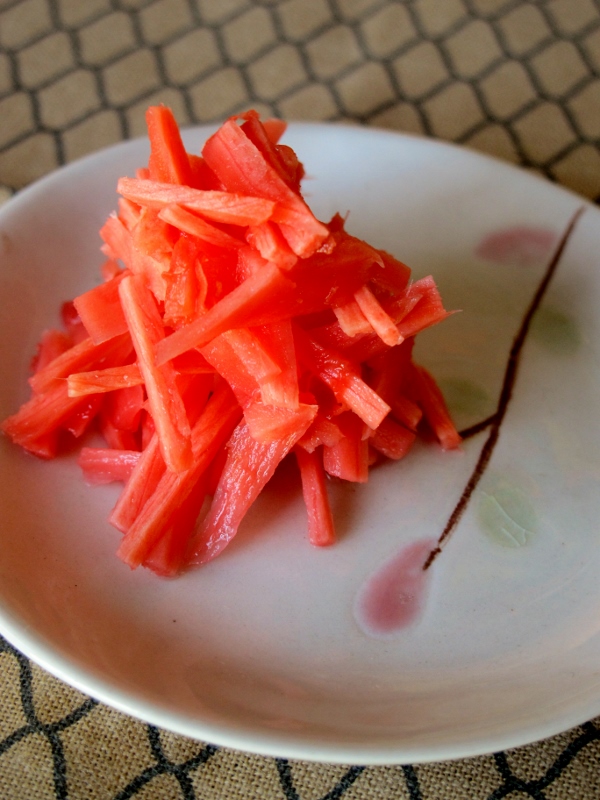
Beni Shōga (Red Ginger Pickle) 紅生姜

Beni ShogaPopularly served with donburi (rice-bowls) such as gyūdon and katsudon, beni shōga is perhaps one of the most common pickles found in Japan.

Unlike most other Japanese pickles, beni shōga is, in fact, eaten more like a condiment than a side dish. Much like one would expect to find an obligatory bottle of ketchup on a table in the Western-style dinner, many Japanese eateries have bowls of beni shōga for their patrons to pile onto their donburi. It is so readily available throughout Japan, these slithers of red ginger are (to my mind at least) synonymous with a wide range of my favourite Japanese dishes, so much so, none of which taste the same without it. Unfortunately, beni shōga is very hard to find outside of Japan – something that I find deeply frustrating given its integral role in so many Japanese dishes.

My irritation with the lack of authentic Japanese ingredients available in the rest of the world is compounded, in part, by the continued popularity of the lumo-pink version of gari that has become a plague upon Japanese cuisine in the West. Not only is our beloved “garish-gari” a pickled aberration not found in Japan (where it’s a considerably less alarming beige), it has also served to limit our appreciation and expectations of the diversity of Japanese food. Next time you top your sushi with that Barbie-pink slice of ginger, please give a pause to consider the other amazing taste experiences that have been side-lined in the attempt to repackage and homogenise Japanese food for Western tastes. Our ever developing palettes deserve diversity and until we put down our salmon nigiri and demand better, simple delights like beni shōga will forever be beyond our common reach.

With all that said, what’s a man to do? Well if you are me, you’ve just got to make your own beni shōga, of course!

After resolving to take my pickle-destiny into my own hands, I discovered that making my own beni shōga may not seem as impossible as I first assumed. Other than the standard pickling liquid, the lay-men’s  recipe really just has two ingredients – ginger and umeboshi (pickled Japanese plums). Luckily, umeboshi also features in Chinese cuisine and is therefore relatively easy to source locally. Pickled red from the juices of the Japanese plum (ume), the ginger does take a bit of time to take on the colour from the plums, but the end result is a pretty close approximation to the real thing. It may not be perfect, but given the scarcity of beni shōga outside Japan, who would really know the difference anyway!

For more great Japanese recipes from The Muddled Pantry, please click here
Click here for the recipe

Japanese Daikon & Carrot Pickle

Daikon & Carrot PickleNo Japanese meal would be complete without a pickle (or two), and this classic asazuke (quick pickle) will make a great addition to any meal.

Incredibly tasty and ready to eat in just under an hour, daikon & carrot pickle is sure to become a regular household staple.

For more great Japanese recipes from The Muddled Pantry, please click here

Click here for the recipe

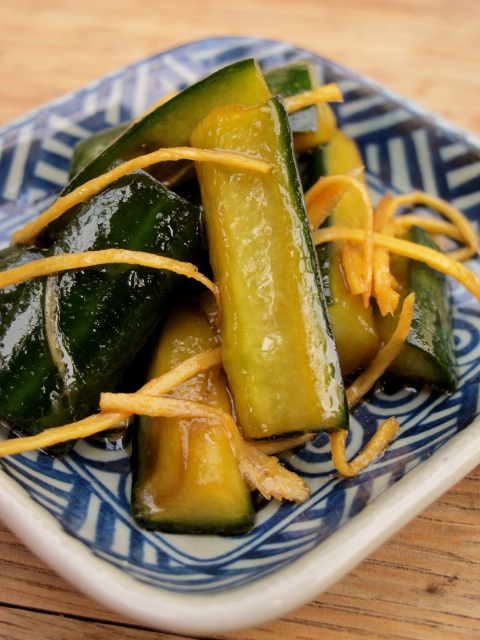
Quick Cucumber & Ginger Pickle

Quick Cucumber and Ginger Pickle

Sweet and crunchy, this pickle is quick and easy, complimenting just about any Japanese meal.

The pickle takes at least a couple of hours in the fridge to work its magic, but after that it should keep for at least a few days before losing its texture and crunch.

For more great Japanese recipes from The Muddled Pantry, please click here
Click here for the recipe