Main Meals

Khao Phad Gai (Thai Chicken Fried Rice)

Khao Phad Gai (Chicken Fried Rice)A perennial takeaway favourite in our household, Thai-style Chicken Fried Rice (Khao Phad Gai) is one of the few dishes that both my partner and I enjoy eating, albeit with a few differences in our taste preferences. Naturally I like mine hot and spicy, whereas my partner’s is a somewhat more muted affair without any chilli or garlic. To my mind, the lack either of these elements seems like an affront to Thai cooking, but each to their own, I guess.

Along with an obligatory side order of Tom Yum Goong, Khao Phad Gai has a special place in my recent food history. It may be a simple meal, but this takeaway (along with a lot of red wine) was an absolute Godsend during a particularly stressful house-move – something I will forever be grateful for. Ordered almost every other night, we would sit, wine in hand, in amongst our half-packed boxes watching episodes of “Orange is the New Black”, tucking into our Khao Phad. None of it may have been very classy, but for a short while at least, this became our new normal.

Almost a year later, we don’t order Khao Phad as often as we did back then, but we still enjoy eating it now and again. After a rather disappointing order, though, I decided to try my hand at making it myself. Personally I prefer my own efforts, but my partner thinks otherwise. Apparently my version is “too flavoursome” for his delicate tastes – in my book that can never be a bad thing! As I said before, each to their own.
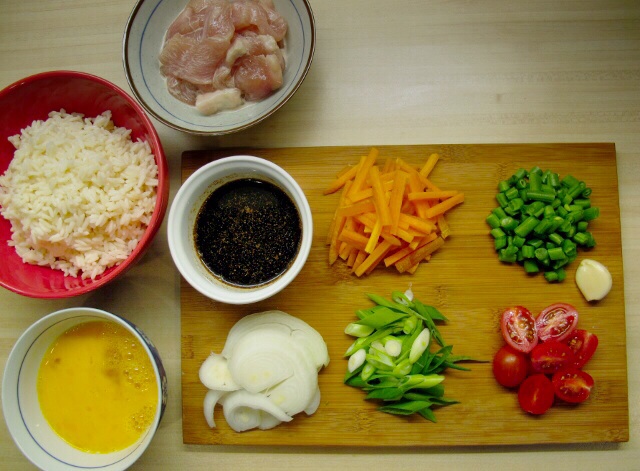
imageAs with most Asian food, the key to success is preparation…and a hot wok. Typically, 90% of any Asian stir-fry is prep-work, as the actual cooking usually takes just a few minutes – so make sure you have all you ingredients chopped and ready to go. Stir-frying can be fast and furious, and you don’t want to be faffing around with a carrot while your onions burn!

For more delicious Thai recipes please click here, or if you need tips on stocking your Thai Pantry please click here.
Click here for the recipe

Twice-Cooked Pork 回鍋肉

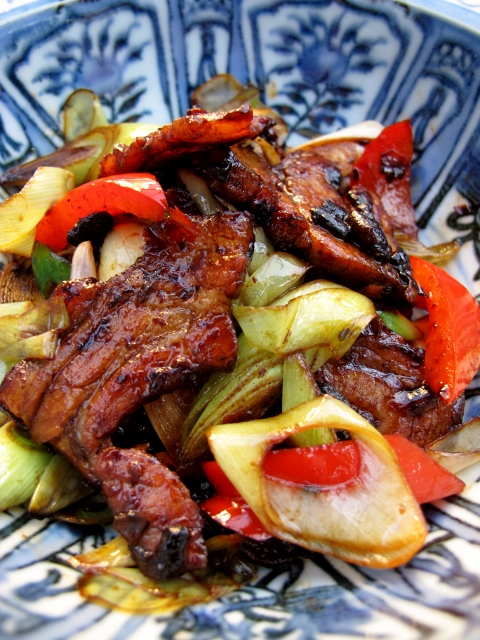
Twice-Cooked Pork 回鍋肉A true classic, Twice-Cooked Pork is everything you’d expect from Sichuanese cuisine: fragrant, spicy and utterly moreish! Served as part of a banquet or with just some plain rice and a fried egg, this is simple Chinese cooking at its best.

Pre-cooking the pork may initially seem like a bit of a faf, but don’t let this put you off. It’s definitely worth the effort, as the resulting pork is meltingly tender! Once the pork has been cooked and cooled, the dish takes mere minutes to put together – from wok to mouth in a matter of minutes!

For more Chinese recipes, please click HERE or to find out more about how to stock a Chinese Pantry, please click HERE

Click here for the recipe

Tonkatsu トンカツ (Crumbed Pork Cutlet)

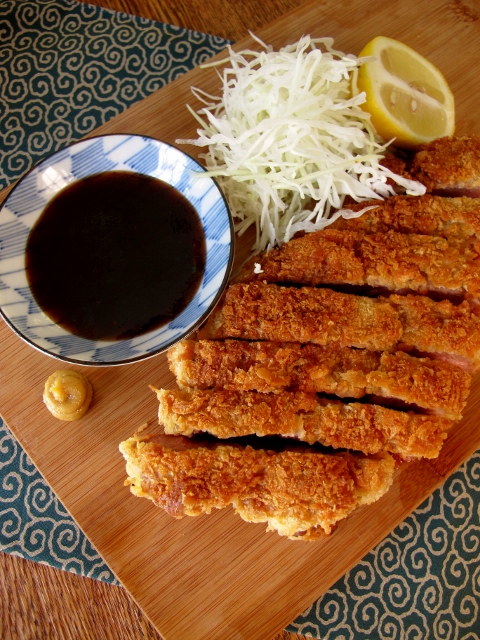
Tonkatsu トンカツ (Crumbed Pork Cutlet)It may surprise many to learn that not all Japanese food is healthy and Tonkatsu is a case in point. What is effectively a crumbed, deep-fried pork cutlet, tonkatsu is actually one of Japan’s favourite dishes.

A hallmark of youshoku cuisine (Japanese-style Western cuisine), tonkatsu is a very Japanese take on a Western schnitzel. In fact, other than the use of panko breadcrumbs, there is very little difference between the two! However, what really sets tonkatsu apart from its Western counterpart is how it is served. There are 3 traditional ways to enjoy tonkatsu (although there are, of course, other ways too). It can be served with just rice, shredded cabbage, mustard and tonkatsu sauce, it can be added to Japanese Curry Sauce to make katsu-karē or it can be used as a donburi topping called Katsudon. My personal favourite, katsudon is the epitome of Japanese comfort food, but no matter how you choose to eat it, tonkatsu is always delicious!

For more Japanese recipes, please click HERE or to find out more about how to stock a Japanese Pantry, please click HERE

Click here for the recipe

Chikenkatsu チキンカツ (Crumbed Chicken Cutlet)

Almost identical to its porkier cousin, chikenkatsu is, rather unsurprisingly, a chicken version of the Japanese deep-fried delight that is tonkatsu. As part of youshoku cuisine (Japanese-style Western cuisine), chikenkatsu literally means “chicken cutlet”, and is the Japanese interpretation of the chicken schnitzel.

As with tonkatsu, there are a number of ways chikenkatsu can be eaten. It can be served with just rice, shredded cabbage, mustard and the ubiquitous Tonkatsu Sauce, it can be added to Japanese Curry Sauce to make katsu-karē or it can be used as a chicken alternative to the donburi classic, Katsudon.

For more delicious Japanese recipes, please click HERE

Click here for the recipe

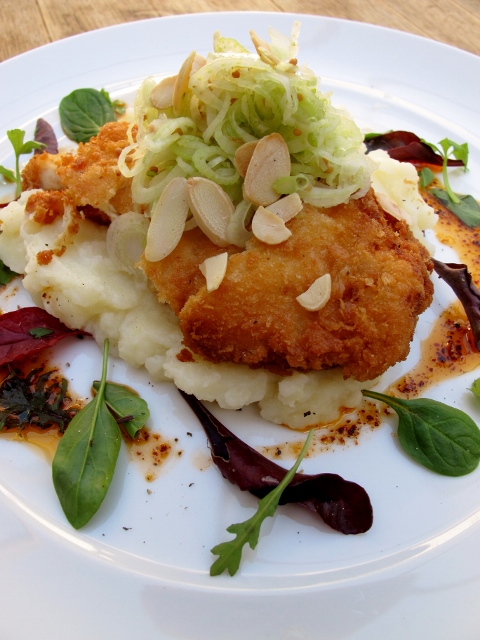
Chicken Katsu with Warm Fennel & Almond Salad and Sichuan Chilli Oil

Chicken Katsu with Warm Fennel Salad and Sichuan Chilli OilInspiration is occasionally born out of apathy and the origins of this tasty meal were no different.

Feeling particularly uninspired one evening, I decided to forgo my usual practice of preparing two completely separate meals for dinner and instead decided to do the unthinkable – eat the same dinner as my partner! Now please bear in mind that this dining-convergence doesn’t happen often in my kitchen, very rarely in fact. We have wildly different tastes and normally I’m happy to make us different dinners every night, but there are occasions when I justifiably just think, “sod it” and we end up with the same meal. At least almost exactly the same, I always have to tart my own meal up, just a little!

So, “Chicken Schnitzel with mash” for two it was then! Now I must confess that the very first time I made this dish it was with some horrendous ready-made Chicken Schnitzels, wrestled from the frozen depths of my freezer. Indeed I had sunk so low, but like I said, “apathy = inspiration”.

But even in this heightened state of disinterest, I still needed something to spruce up this dire meal, so I set about rummaging through the fridge. I was looking for quick fixes and I found some; leftover pickled fennel that I had made for Kimchi Tacos – sorted! Things were starting to look up. It was only then that the inspiration started to kick-in; some toasted almond flakes were added to the fennel and Sichuan Chilli Oil, leftover from when I last made Dan-Dan Noodles, found its way onto the plate! Whilst this was fast turning into an inspired concoction, the addition of these two ingredients turned out to be culinary-dynamite! With just a few simple twists this meal went from turgid to terrific!

Note: The chicken in this dish has since morphed into Japanese Chicken Katsu, but there is nothing wrong with using good old chicken schnitzel instead (homemade or otherwise). For all extents and purposes Chicken Katsu and schnitzel are pretty much the same thing, but my need to complicate things for myself is, sadly, inherent and overwhelming.

Click here for the recipe

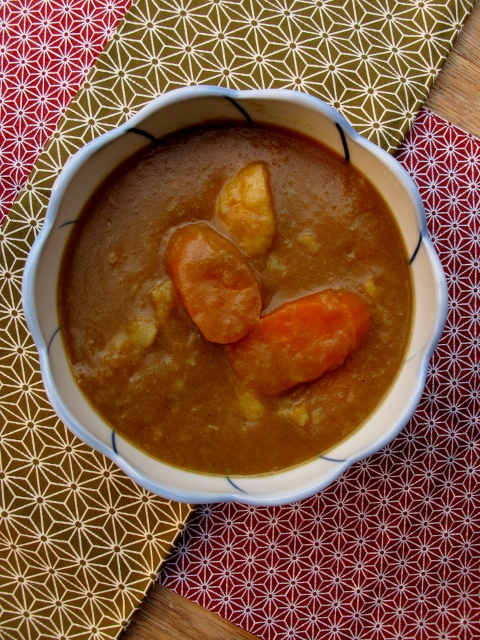
Karē Sōsu カレーソース (Japanese Curry Sauce)

Karē (Japanese Curry Sauce)Reminiscent of those dreadful British school-dinner curries of the 80s and akin to the sort of curry sauce that is poured over chips in the UK or currywurst in Germany, at first glance Japanese curry is mild, bland and, to some at least, inoffensive to the point of being offensive. That may all seem a tad harsh, but the comparison is far from unjustified, especially when you consider that curry was first introduced to Japan by the British (of all people) in the early 1900s! With that in mind however, it is all too easy to be unduly disparaging about Japanese curry and you shouldn’t, as it is actually quite delicious.

Generally speaking, in Japan karē is served as a sauce (sōsu) rather than a curry made with meat, so you are unlikely to find a chicken or beef curry per se. You are of course welcome to add some meat to the curry sauce as it cooks, but I prefer to pour it over a crisp crumbed cutlet (tonkatsu/chikenkatsu) or add it to a pile of gyūdon. Typically eaten with rice or udon noodles, karē is so popular it is considered one of Japan’s national dishes and is readily available throughout the country, both at specialist restaurants or as an option on menus at most gyūdon or noodle joints.

What sets karē apart from other curries is the fact that it is made with a roux, which enriches and thickens sauce. There are a wide range of Japanese curry/roux cubes available at most Asian supermarkets and these are well worth the expense as they are really the only specialist ingredient in the karē sōsu. Alternatively, you can use Japanese curry powder instead. If, however, neither of these are available you can just use a mild curry powder, but the flavour won’t be as authentic.

For more Japanese recipes, please click HERE or to find out more about how to stock a Japanese Pantry, please click HERE

Click here for the recipe

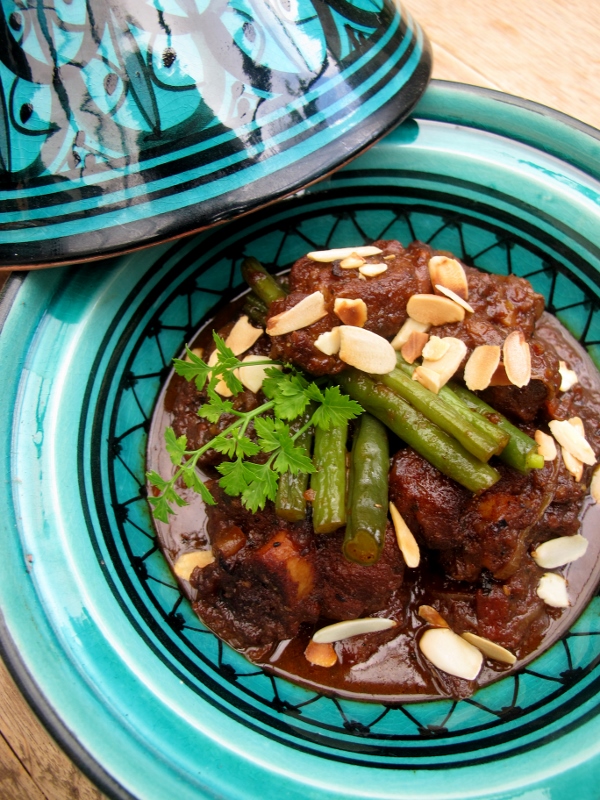
Lamb Tagine with Dates

Lamb Tagine with DatesA firm family favourite, this tagine is sweet and intensely spiced.

So much so, I rarely make this dish for anybody else other than my partner. Not because it isn’t utterly delicious, but because it is almost bludgeoning in its intensity and is not for the fainthearted; this is real stick-to-your-ribs type cooking!

On the few occasions I have served it to others it has always gone down a treat, I just make sure that the friends I make it for like this style of cooking. The trick to getting away with serving a dish packed with this much flavour is to pair it with a simple side dish like plain couscous or a zingy lemon-soaked tabbouleh…or, if you are my partner, some plain white rice! And whilst I despair at the latter, it is a miracle that my partner likes this dish at all so I don’t push the matter, but I normally discourage such pandering and recommend couscous as the appropriate accompaniment.

For more delicious Moroccan recipes please click here or if you would like to read more about tagines please click here

Click here for the recipe

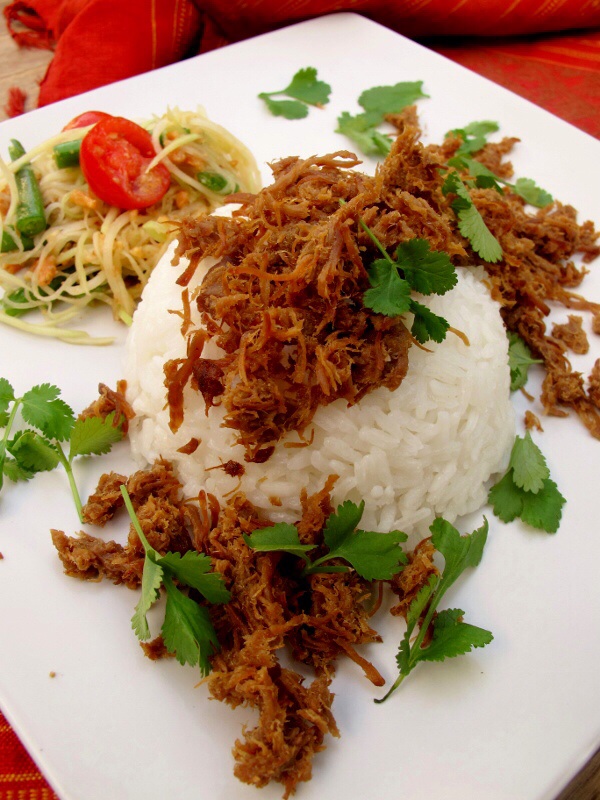
Thai Candied Pork (Moo Wan), Green Papaya Salad (Som Tam) & Coconut Rice

There are some dishes that are just meant to be eaten together, their combined flavours amounting to something akin to culinary kismet – this is such a meal. Eaten on its own Moo Wan is almost unpalatably sweet, but when served with som tam (green papaya salad) the results are nothing short of stellar! Add coconut rice to the mix and you simply have heaven-on-a-plate.

imageAs with so many Thai classics, the key to the success of the overall meal is the balance each individual element strikes when combined. The sweet moo wan counters the tang of the salad, the coconut rice envelopes the fierce chilli kick of the som tam, whilst the salad adds texture and bite; every element has its own role to play in creating the perfect balance, resulting in an almost perfect Thai meal.

Whilst the idea of making the three separate dishes for this meal may seem daunting, the truth is that individually they are actually pretty easy. The trick to preparing multiple dishes for any Asian meal is preparation and timing. The moo wan will keep in the fridge for a good few days, so I would make this in advance if possible. You should start cooking the coconut rice at least 40 to 50 minutes before serving, as it will benefit from being allowed to stand for half an hour after cooking. The som tam must be prepared just before serving, so I recommend prepping your ingredients in advance. However, the papaya should only be shredded just before using. To find out how to make som tam (green papaya salad), please click here to find the recipe.

For more delicious Thai recipes please click here, or if you need tips on stocking your Thai Pantry please click here.
Click here for the recipe

Rendang Daging (Beef Rendang)

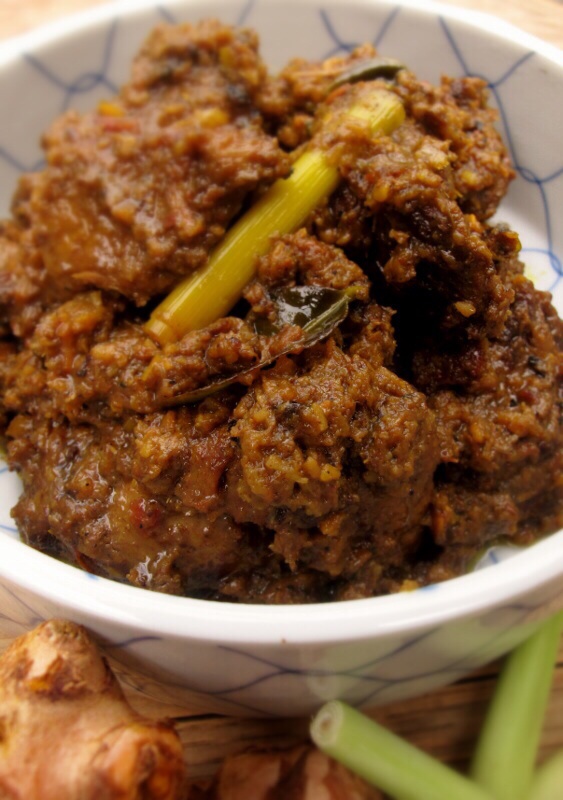
Beef RendangSome mornings I wake up with one word in mind: “rendang!”. I think it’s probably just a Malaysian thing, but this is a dish I literally dream about.

Beef Rendang is perhaps the most beloved Malay meal and is often the go-to main dish for many a family feast or special occasion. With its origins rooted in Indonesia, rendang is popluar throughout South East Asia, especially amongst the Malays in Malaysia and Singapore. Although not widely known outside the region, a 2011 online poll by CNN International chose rendang as the number one dish of their ‘World’s 50 Most Delicious Foods’. Yes, rendang really is that good!

Rendang, however, seems to appeal the most to expat Malaysians. In spite of its long cooking time, rendang is relatively easy to make and can withstand a certain degree of adaptation – something that is vital given the inherent difficulties in stocking a Malay pantry abroad. On a deeper level, though, cooking up a batch of rendang can sometimes feel like an affirmation of our shared cultural identity; a reconnection to our collective culinary memories, through taste. This is the real reason for rendang’s enduring popularity; for many of us it, quite simply, tastes of home.

Ostensibly a curry, rendang is in fact what is known as a dry-curry. Cooked over an extended period, the aromatic coconut sauce is reduced to the point until it clings to the tender beef. This prolonged reduction creates an intensity of flavour that can only be described as explosive. As with all curries, a rendang benefits immensely from being made the day before serving; a night in the fridge gives the flavours time to develop and mellow. Your rendang will be all the better for your patience.

To discover other delicious Malaysian recipes from The Muddled Pantry, please click here

Click here for the recipe

Kari Kapitan (Nyonya Chicken Curry Kapitan)

This Malaysian Classic was my late father’s favourite curry and with good reason, it is simply delectable!

The überkind of Nyonya cuisine, Kari Kapitan is the prefect confluence of traditional Malay and Chinese flavours. My version of this curry is a loose adaptation of that of the reigning queen of Nyonya food, Pearly Kee. Nyonya cuisine is the epitome of what makes Malaysian food great; inclusivity, and Pearly is a true vanguard of this culinary heritage. The result of a marriage of Malay and Chinese ingredients and flavours, Nyonya style cooking is unique to Malaysia and is, perhaps, one of the most underrated cuisines in the World.

A Malaysian take on a traditional Indian Chicken Curry, Kari Kapitan is the result of a thorough Nyonya makeover. Along with the classic additions of lemongrass, lime and galangal, the chief Nyonya element is belachan. Ubiquitous to Malaysian cuisine, belachan is a fermented shrimp paste and is one of the hallmarks of Nyonya cooking. Whilst best described as ‘pungent’, belachan mellows when added to a curry, imparting a depth of flavour to the finished dish like no other.

One of my happiest childhood memories is going on a family outing to the local waterfalls; virtually the entire Clan was there – grandparents, aunts, uncles and a full gaggle of cousins. After hours of slip-sliding through the falls, it was finally lunchtime! As we gathered for our picnic, my grandmother presented us with a massive white Tupperware, filled to the brim with leftover Kari Kapitan. Armed with anticipation and slices of fresh white bread, we all tucked in; what bliss! Perched on those boulders, surrounded by my army of screaming cousins, with the cool waters rushing between my toes and my fingers stained yellow from the Kari Kapitan; it was the perfect childhood memory, matched with the perfect meal.

Universally, all curries benefit from a day of rest before being served, but this is especially true of Kari Kapitan. Whilst still delicious when eaten on the day of cooking, a bit of patience reaps its own reward. Such is its plethora of flavours, Kari Kapitan needs time to find its balance, to develop and mature. As a result, Kari Kapitan makes for amazing leftovers…and memories.

To discover other delicious Malaysian recipes from The Muddled Pantry, please click here

Click here for the recipe