Author: The Muddled Pantry

Born out of a passion for the food I love to eat, feed and share, The Muddled Pantry is about satisfying a global palette with limited ingredients

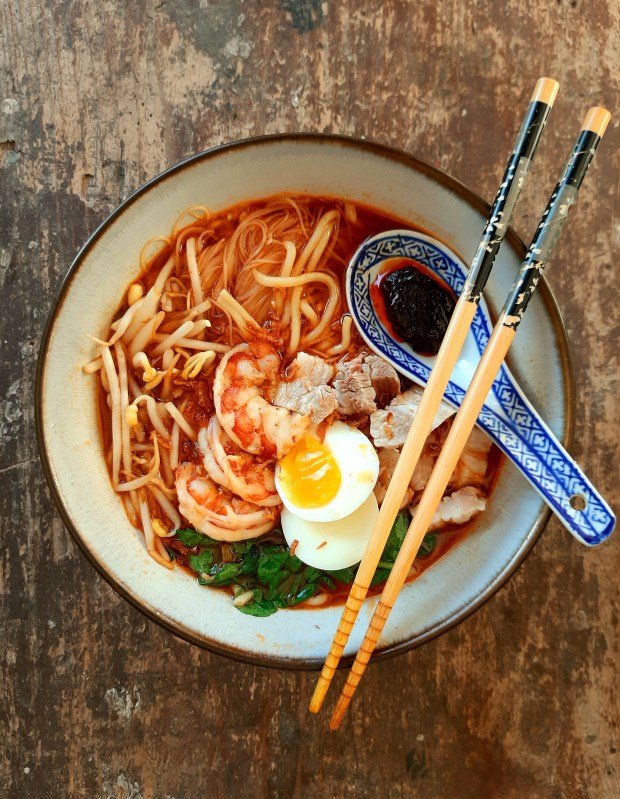
Penang Hokkien Mee/Har Mee (Prawn Noodles)

When I eventually rule the world, one of my first decrees would be to outlaw throwing your prawn shells away – to do so should be nothing short of criminal! Along with pork and chicken bones, prawn shells are the humble building blocks of that lifeblood of cooking: stock.

A prolific and self-confessed Bone Collector, I freeze every scrap that comes my way; and reckon any home-cook would be remiss if they didn’t have at least one bag of bones lurking in their deep-freeze! For all my boney odds and ends, by far my most prized is my horde of prawn shells.

Pure crustacean gold, these precious cast-offs are where the flavour is really at, and are the foundation of one of my all time favourite dishes – Penang Hokkien Mee. Also known as Har Mee in the rest of Malaysia, this simple prawn noodle dish is a masterstroke of hawker food. Made with a combination of bee hoon (rice vermicelli) and yellow noodles, Penang Hokkien Mee is actually all about the broth.

Made with a base of fried prawn shells and heads, the stock is then lightened with either pork or chicken stock. Add to that a dollop of sambal goreng for kick, and crispy shallots for depth, the broth is almost akin to a bouillabaisse on Asian crack, and its just as addictive!

Like all good stocks, the broth takes its time; but other than that, Penang Hokkien Mee is a surprisingly easy meal to make at home. Though the ingredient list may seem intimidatingly exotic, the dish is actually achievable with even a limited Asian pantry,      I was able to reconstruct this hawker classic without needing any specialist ingredients. Other than substituting the traditional topping of kangkong with watercress, the only challenge you might have is the sambal goreng, but this can easily be made at home. There was a time when crispy shallots/onions were difficult to find in South Africa, but thankfully these days they can be found at Woolworths, saving us the effort of frying our own. The hokkien noodles can be sourced from Checkers, but if you can’t find them, feel free to just use the rice vermicelli on its own.

Aside from that, I suggest you start collecting as many prawn shells and heads as soon as you can – because once you’ve tasted Penang Hokkien Mee, there’s no going back!

To discover other delicious Malaysian recipes from The Muddled Pantry, please click here

For other noodles recipes from The Muddled Pantry, please click here
Click here for the recipe

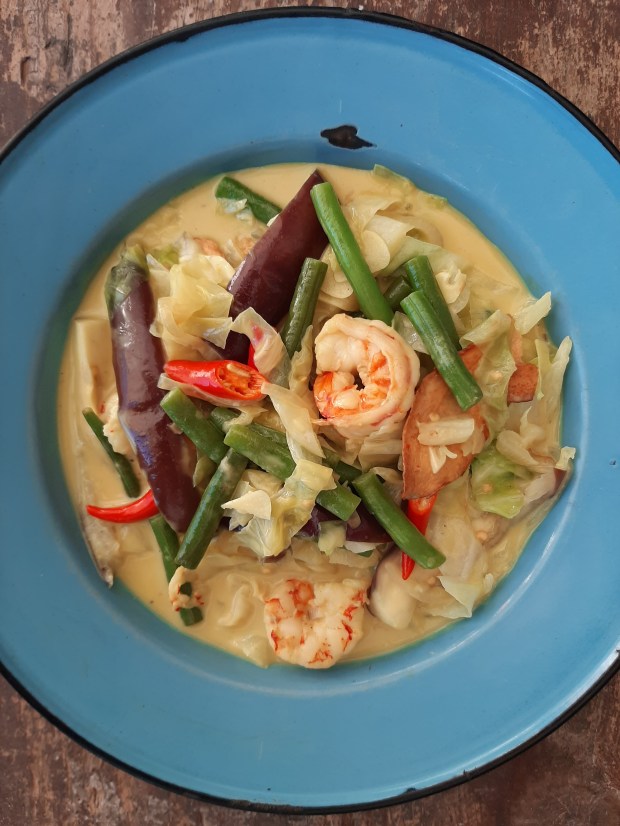
Sayur Lodeh (Vegetables in Coconut Milk)

Ah, the classic conundrum of Malaysian vegetable dishes. 

A perennial quirk of the cuisine, the vegetable dishes of Malaysia are rarely actually vegetarian, with the omnipresent threat of the odd bit of dried shrimp turning up in your plate of veggies. To many Malaysians, a dish’s vegetarian credentials are entirely a matter of meat to vegetable ratio – making dinner a meaty-minefield for those of a vegetarian persuasion!

Unfortunately, Sayur Lodeh (Vegetables in Coconut Milk) is no different.

Popular in both Malaysia and Indonesia, Sayur Lodeh is often  considered a “safe” vegetable option as it is mild enough not to inflame younger, or foreign, palates. Simply flavoured with galangal, turmeric, and (unsurprisingly) a sprinkling of prawns, this coconut milk sauce works well with almost any other Malay dish. 

Traditionally eaten with lontong (banana leaf rice cake), sayur lodeh also works well with regular rice. As it is very mild, it is best to pair it with something spicy like Ayam Lada Hitam (Pepper Chicken) and, of course, some sambal belacan

To discover other delicious Malaysian recipes from The Muddled Pantry, please click here
Click here for the recipe

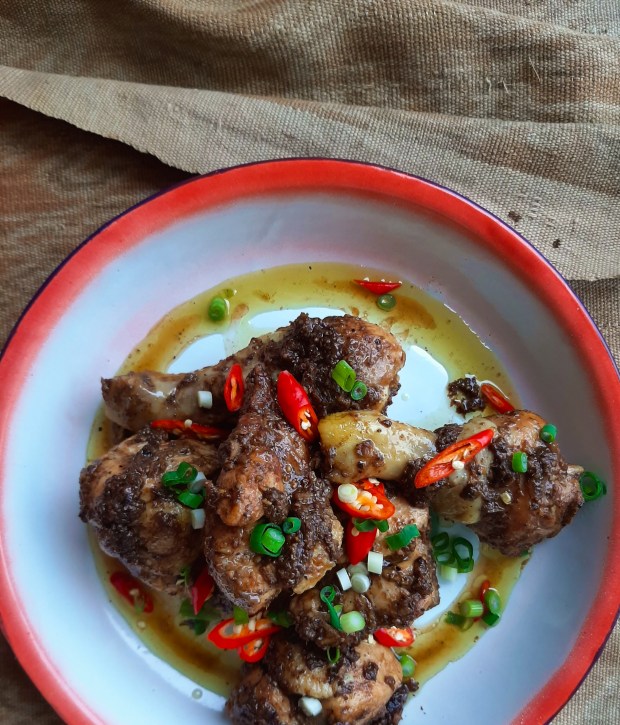
Ayam Lada Hitam (Malaysian Pepper Chicken)

For better or worse, sometimes you can smell your dinner a mile away, as is certainly the case with Ayam Lada Hitam (Malaysian Pepper Chicken)!

Fragrant, fiery, and flavoured to the extreme, Asian pepper dishes are often divisive; with most of us either loving or loathing it. Deployed sparingly as a form of seasoning, the use of pepper in Western cooking is actually quite limited – perhaps a relic of the days when the spice was highly valued, and its use judicious. At its abundant source, however, pepper can be added with abandon and is often used to add heat to a dish, instead of just being a seasoning to enhance flavour. Unlike the heat produced from chilies, pepper’s burn is slower, deeper, and more aromatic – adding a pervasive undertone to a dish that chili does not. Personally I’m an avid fan, but I have to admit that when it comes to pepper, you can easily have too much of a good thing. Like most things in life and cooking, balance is key and in this recipe that is somewhere in-between the toasted spiced oil and the heat of the pepper.

Adapted from an early recipe from my Aunt, the acclaimed food writer Rohani Jelani, Ayam Lada Hitam is old-school Malaysian cooking at its best. Packed with flavour and simple to make, this dish doesn’t require any specialist Asian ingredients – making it a great option for those of us with limited access to such.

Ayam Lada Hitam remains a home-cooking classic, albeit one that is rarely mentioned in the culinary lexicon of modern Malaysia. It’s a shame really, as this spicy dish is worthy of its place at the table, and easily holds its own against stalwarts such as beef rendang and curry kapitan. Best served alongside a mild vegetable dish like sayur lodeh, or something sweet like kari nenas (Pineapple Curry), Ayam Lada Hitam makes a great addition to any Malaysian meal.

A word of warning though: come makan-time, just be prepared for a knock at the door, as your whole neighbourhood will have smelt what’s cooking for dinner!

To discover other delicious Malaysian recipes from The Muddled Pantry, please click here

Click here for the recipe

Prawn & Ginger Egg Foo Young

I never thought I would say this, but omelettes aren’t just for brunch!

As perfect as they may be for soaking up bubble-heavy mimosas, or stilling those flat-white morning jitters, these eggy envelopes deserve so much more than the standard fare we stuff them with. Quick and versatile, an omelette can pretty much be anything you want it to be, and this is especially true when they are cooked Chinese-style!

Egg Foo Young (Chinese Omelette) is a dish most of us know from our local takeaway, but very few of us realise how easy it is to make at home. If you can make an omelette, the chances are you can make this classic Cantonese dish too! Though similar in almost every way, Chinese “omelettes” are, in terms of flavour, a world apart from their western counterparts. Added to very hot oil, Egg Foo Young is crispy and, as such, benefits from that elusive wok hei (‘breath of a wok’). Add to that an umami laden sauce, and their irresistible flavour is almost complete…

But, of course, what’s an omelette without fillings?

The options for filling your Egg Foo Young are virtually endless, and go way beyond the generic takeaway options you are probably used to seeing. Seasoned with a dash of soy sauce instead of the usual salt and pepper, the egg mix is the perfect foil for anything from the classic char siew (Chinese BBQ Pork) to julienned vegetables. 

For this recipe I’m pushing the boat out and using prawns. It might seem like a waste to use them in something like an omelette, but rest assured it’s not. I love the sweet meatiness of the prawns with the fresh bite of the gingery eggs – its a classic combination and makes the perfect addition to a larger meal, or (if you want to spoil yourself) just have it on its own with some plain rice.

For more Chinese recipes from the Muddled Pantry, please follow the link here.

For tips on stocking a Chinese pantry, please follow the link here. Click here for the recipe

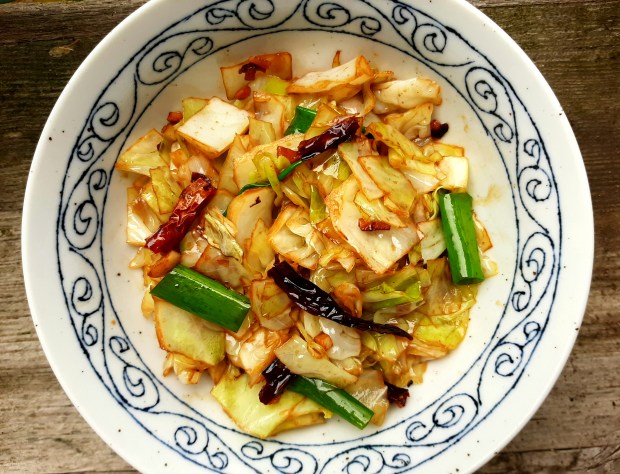
Sichuan Stir-Fry Cabbage 炝炒圆白菜

This may seem like a strange thing to admit, but I’m in love with cabbage.

Yes, it’s true; I’m in a lock-down love affair with arguably the most mundane vegetable out there. Perhaps it’s the prolonged period of isolation talking, but aside from some flatulence, what’s not to love about the humble cabbage?

Cheap and readily available, this cruciferous charmer is a true veggie-hero; albeit one that is too often maligned, and sadly, unsung. Aside from its incredible shelf life, green cabbage is also one of the most versatile vegetables out there. Whether it be fermented into sauerkraut, or sautéed then added to a buttery colcannon, cabbage is the star of countless recipes from across the globe, and is ripe for a comeback!

Typically most of us don’t associate a bog-standard “western” cabbage with Asian cooking; instead, we tend to think of exotics such as bok choy and napa cabbage as the staples of such cuisines. Nothing could be further from the truth! From being a key component in Sayur Lodeh (Malaysian Vegetable in Coconut Milk), and a traditional accompaniment to Phad Thai Noodles, green cabbage is a surprisingly common ingredient in many Asian dishes. In fact, if you have a wedge of cabbage lurking at the back of the fridge, you are actually halfway to making some amazing, and authentic, Asian meals.

Which brings me to this little gem of a dish! 

From wok to plate in just a few minutes, Sichuan Stir-Fry Cabbage is a true “lifesaver” recipe for when you are in a pinch and need to make a small amount of food go far – without compromising on flavour. Satisfyingly spicy and reassuringly comforting, this simple meal has all the hallmarks of a classic home-cooked Chinese dish.

This is a thoroughly adaptable recipe, please feel free to add a protein of your choice if desired. Thinly sliced pork works amazingly well and would be my preferred addition, but chicken is also a good option. Again, a little goes a long way and a small portion of meat can be stretched to feed many. Prefer a vegetarian or vegan version? Not a problem, simply leave out the meat altogether. With or without meat, this tasty and affordable recipe is cheap and nutritious, and delivers a lot of Sichuanbang for your buck, as it it were. 

Now that’s a dish worth gassing about. 

For more Chinese recipes from the Muddled Pantry, please follow the link here.

For tips on stocking a Chinese pantry, please follow the link here. Click here for the recipe

Lai Yao Kei 奶油鸡 (Malaysian Butter Chicken)

Butter Chicken, but not as most of us know it!

Now obviously I’m a tad biased, but when I fancy some Butter Chicken it typically isn’t the Indian variety I’m hankering after. More often than not, what I’m really craving is actually something altogether different.

Indeed, Lai Yao Kei (Malaysian Butter Chicken) is about a million miles away from what most of us imagine when we think of Butter Chicken. In fact, I’d go so far as arguing this wonderful Malaysian dish, is in a league of its own. Unlike the oft mangled classic that is Indian butter chicken, the Malaysian version is an altogether different beast.

Unlike the Indian alliteration, there are no overnight or penetrative marinates here. Instead, flavoured morsels of chicken are ready for the deep-fryer in less than an hour, and smothered in a super quick creamy aromatic sauce. Infused with the unmistakable aroma of fresh curry leaves, and spiked with the heat from fresh chilies, the sauce itself is actually very simple and comes together in minutes.

Though you’d think the butter would be the star of the show here, it is actually the evaporated milk that steals the limelight. Admittedly, evaporated milk is probably the last ingredient you’d expect to find in a savoury sauce, but trust me, it works a treat and will blow your mind!

To discover other delicious Malaysian recipes from The Muddled Pantry, please click here
Click here for the recipe

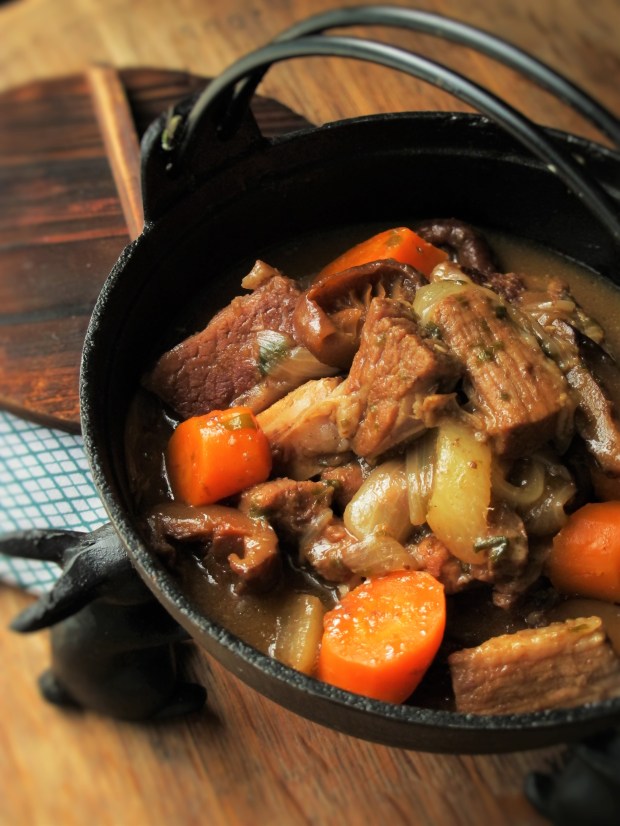
Galbi-jjim 갈비찜 (Korean Beef Short-rib Stew)

Winter is almost upon us here in South Africa, and with that fresh North-westerly blowing through the valley, comes the knowledge that it’s time to start thinking about bowls of stew in front of the fireplace again.

Unlike most people I know, I revel in colder climes, loving the darker days and promise of icy rains. With that in mind, it’s hardly surprising to know that I enjoy nothing more than spending such days fussing over a bubbling pot of hearty concoctions. Epitomising winter food for so many of us, the humble stew is perhaps arguably the most universal form of cooking. Across the globe, from Inuit blubber stew to the Seychellois fruit bat civet de chauve souris, almost every culture has a stew or two in their collective repertoire.

Though typically regarded as fermenters and grill masters, Koreans are no exception with an array of stews designed to get them through their harsh winters.  Dak-dori-tang (spicy chicken) and kimchijjigae (pork & kimchi) are both classics examples and a bowl of either would warm you right up. Their spicy nature, however, isn’t to everyone’s taste. Traditionally milder in flavour, galbi-jjim is no less hearty, but without the heartburn.

Sweet, rich, and savoury, galbi-jjim is traditionally made with beef short ribs, which are braised till fork-tender and the beef has rendered its flavour into the sauce. Simply served with a bowl of steaming rice and some aged mak kimchi on the side, this stew is a cure for even the darkest winter-blues.

It may be true to say that both dak-dori-tang and kimchi-jjigae ignite a fire in your belly, but equally galbi-jjim is like finding a hot water bottle at the bottom of a chilly bed.

Now to my mind, that’s my ultimate winter-bliss – Korean-style.

For more Korean recipes from The Muddled Pantry, please click here.

For tips on stocking a Korean Pantry, please click here

Click here for the recipe

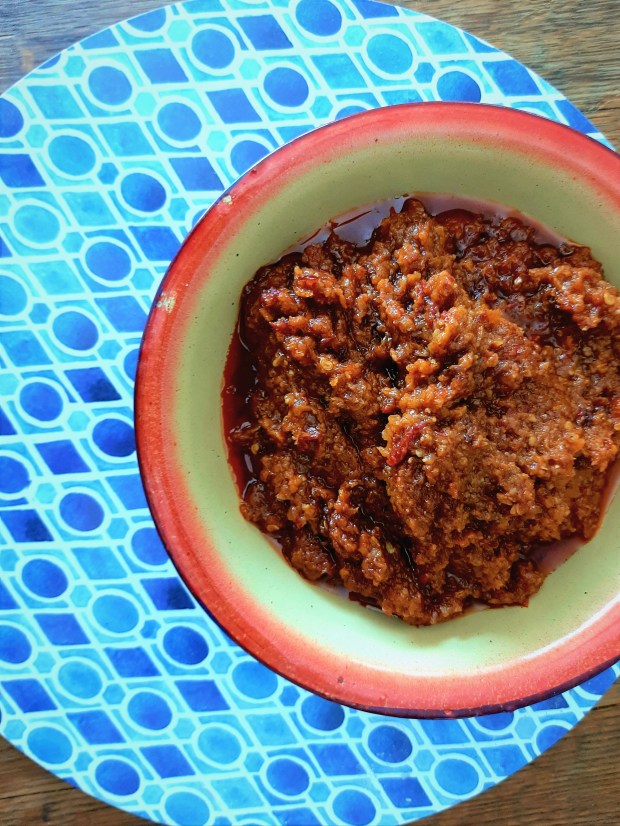
Sambal Goreng (Fried Chili Sambal)

An everyday sambal with a myriad of uses, sambal goreng is as common in Malaysia as ketchup is in the West. From nasi lemak to Penang Hokkien Mee, this essential sambal adorns and flavours many of our favourite meals, and is the ideal condiment to a wealth of dishes.

Simple to make, adaptable and easily replicated at home, this handy sambal can also be used as a marinate for any meat destined for the grill. It can also be used as a stir-fry sauce for just about anything – simply add a splash of water and you’ll be good to go.

With a shelf-life of a couple of weeks, this tangy classic is bound to become a pantry favourite!

To discover other delicious Malaysian recipes from The Muddled Pantry, please click here

Click here for the recipe

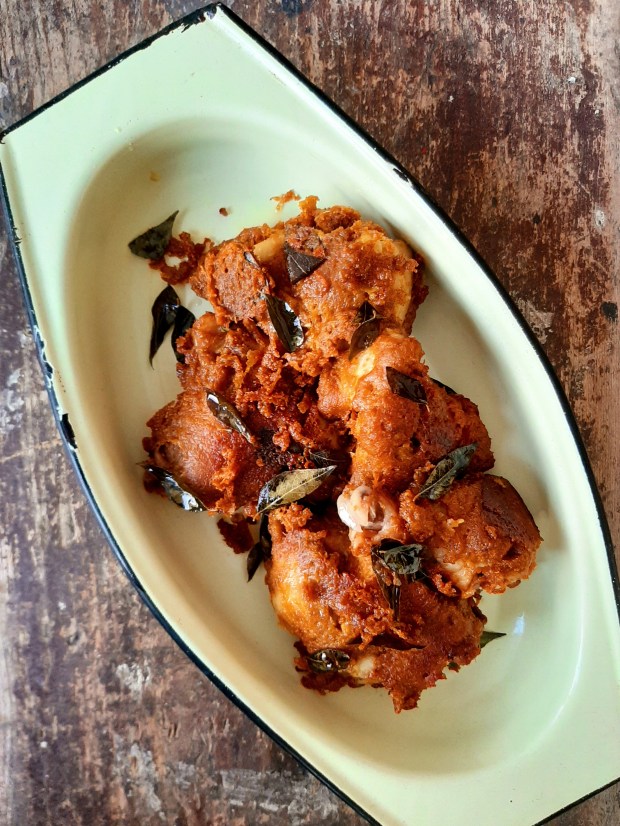
Ayam Goreng Berempah (Spicy Malaysian Fried Chicken)


For better or worse, I have recently found myself an avid fan of deep frying.

In the space of a Lockdown I have gone from fretting about the obvious detriments of cooking this way, to deep frying with rather worrying abandon! Battered sausages, onion rings, and of course, an attempt at D.I.Y. KFC – all have found their way into my sizzling cauldron…and onto my ever expanding hips. Of course, the best part about my newfound love of fried foods is that I can finally bring myself to make some of my favourite dishes at home – specifically, Ayam Goreng Berempah.

Often served alongside nasi lemak and drenched with sambal goreng, this spicy deep fried chicken dish is a crispy and irresistible delight. Marinated overnight in a heady blend of spices and fragrant curry leaves, the chicken is literally bursting with flavour. Unlike many other deep fried chicken recipes, ayam goreng berempah‘s marinate actually doubles up as the batter, meaning less mess!

The “secret” to getting the chicken’s crust crispy is the addition of cornflour into the mix. It’s important to get the ratio between the wet and dry ingredients correct – too wet and the batter/marinate may not remain adhered to the chicken when fried. Personally I like to give my marinated pieces a second dredging of cornflour, a couple of minutes before cooking – just in case! Remember to add a few fresh curry leaves to the sizzling oil beforehand to infuse it with extra aroma and flavour.

Simply irresistible!

Note: it is absolutely vital that the oil not be too hot, as it will burn the crispy coating long before the chicken pieces are cooked through. Ideally you want the temperature to be around 165 to 175°c. It is also important that the meat is at room temperature before cooking.

To discover other delicious Malaysian recipes from The Muddled Pantry, please click here
Click here for the recipe

Nasi Lemak (Malaysian Coconut Rice)


It perhaps goes without saying, but we Asians do love our rice. From fried to steamed, fermented to ground; we work everyday miracles from this most humble grain.

Naturally my native Malaysia is no exception; in fact, in addition to an array of odes to rice, we have even concocted rice dishes of every colour and hue, covering the spectrum from a mellow yellow all the way to an alarming blue. The variety and choice are, frankly, dizzying. Nevertheless, ask a Malaysian what their favourite rice dish is and the most likely answer would be – nasi lemak!

Most commonly associated with breakfast, nasi lemak is arguably the nation’s favourite way to start the day. Fragrant with heady aromatics such as pandan leaf, this coconut enriched rice is the perfect soothing foil to the spicy condiments which are traditionally served alongside it.

At its most basic, nasi lemak bungkus (take-away) comes portioned into small mounds of rice, which are then topped with either a prawn, egg, or ikan bilis (dried anchovy), sambal. Each portion is then expertly wrapped up in a banana leaf and magicked into a three-sided dome – making for the ultimate Malaysian breakfast on-the-go. Aside from its simplistic bungkus variety, nasi lemak can also be an altogether extravagant affair. Served up each morning to queues of customers, a good nasi lemak place comes with a multitude of side dishes, from the classic beef rendang to assam prawns, and almost everything else in-between!

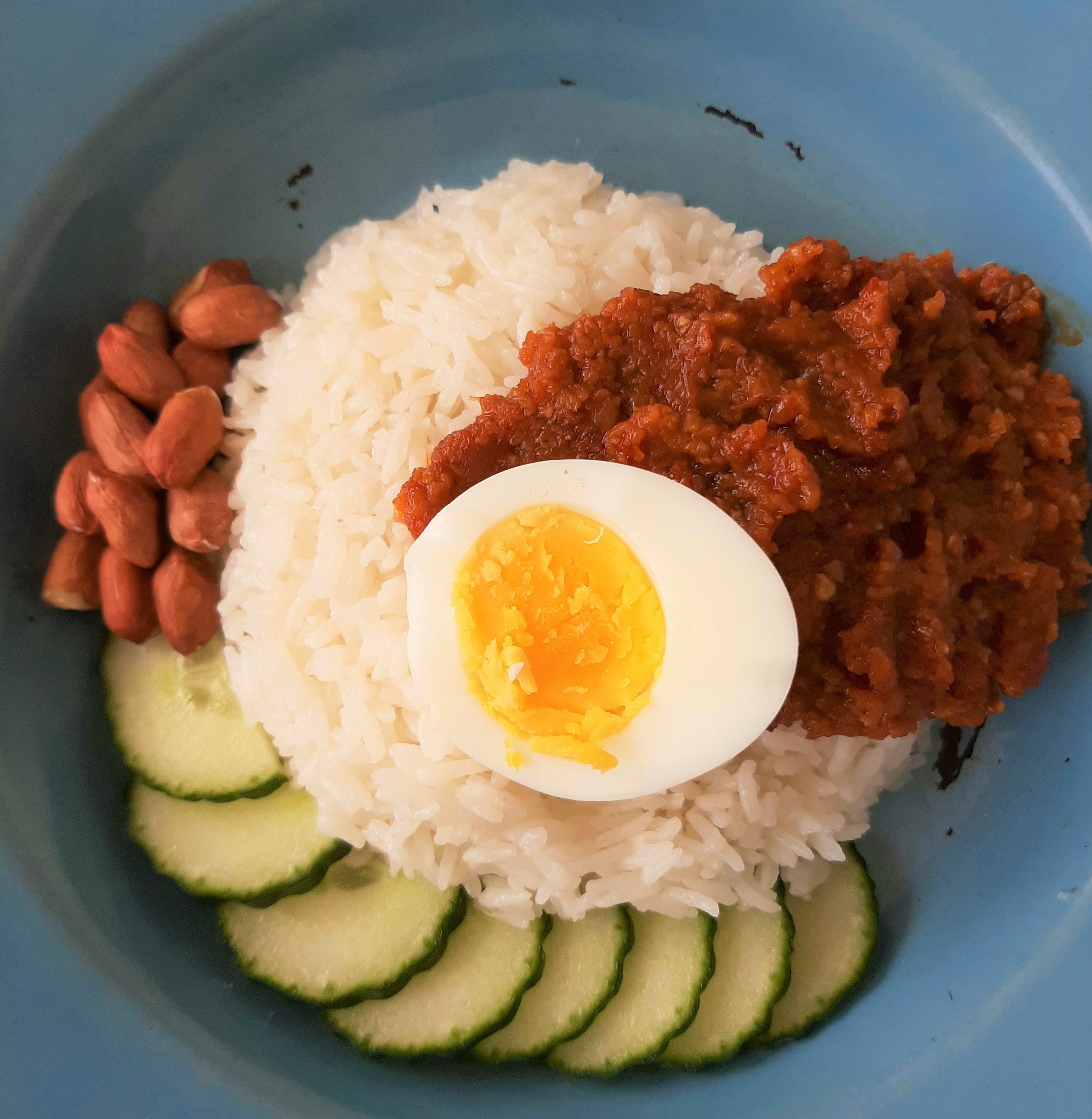
Regardless of the side dishes available, nasi lemak is almost always served with half a boiled egg, sliced cucumber, crunchy peanuts and a generous dollop of sambal goreng.

20200517_141216

Nasi Lemak with the basics: sambal goreng, peanuts, boiled egg & sliced cucumber

Substitutes: Pandan is scarce outside Asia, and although it can be found in some major cities around the world, it is still not widely available to most of us. In the absence of fresh pandan, there are “essences” you can use instead – at a push these are actually fine, though fresh is always best. Unfortunately there is no substitute for pandan, so if you can’t source either, but still want to make nasi lemak, please do. Just omit the pandan altogether and use the galangal and lemongrass instead.

Note: In this post I’m focusing solely on the basic nasi lemak recipe, but if you would like to know more about what else to serve nasi lemak with, please follow the links to my recommendations at the end of the recipe.

To discover other delicious Malaysian recipes from The Muddled Pantry, please click here
Click here for the recipe