Main Meal

Salade Niçoise

Along with its Provençal cousin bouillabaisse, Salade Niçoise is the perfect example of peasant food made good!
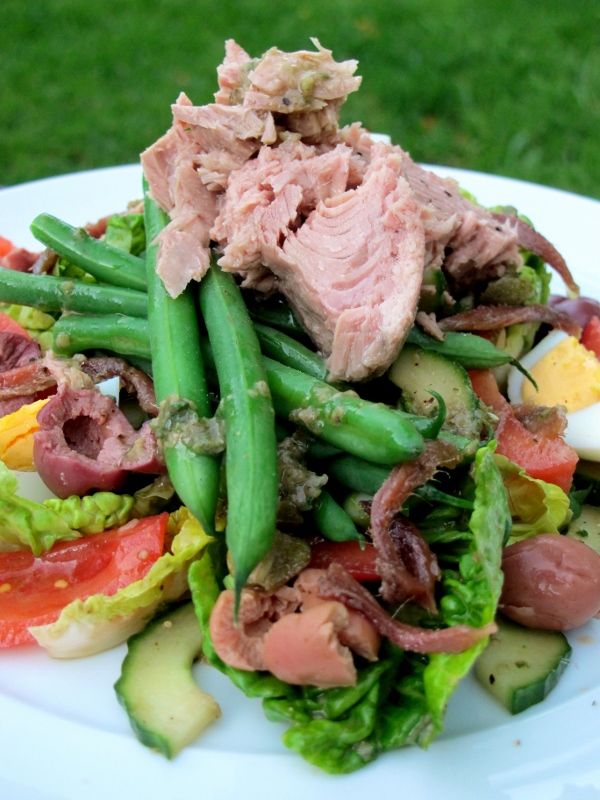
Hailing from the Cote d’Azur in the South of France, Salade Niçoise has always been popular and is considered one of the classic salads of the world. Whilst it’s undeniably a dish of humble beginnings, its ingredients have grown in sophistication, along with the salad’s popularity. Quail eggs, seared bluefin tuna steaks, asparagus – all have found their way into Niçoises the world over.

Whilst traditionally the inclusion of tuna in a Niçoise Salad is by no means a given, there was a time when good-old tinned tuna would suffice. Nowadays however, seared tuna steaks seem to have become the norm in swankier eateries. Controversially, I personally still prefer some good quality tinned tuna over a slab of seared tuna any day! Not only do I think it’s a criminal waste of precious, overpriced tuna, it is also often a tad bland and doesn’t stand up well to the intensity of the other ingredients. Good tuna deserves to be the star of the show and in a Niçoise, though, it is often lost in the riot of competing flavours. Save it for sashimi, I say.

It seems, however, that I’m in the minority in my tuna preference. So much so, I’ve even had waitrons apologizing because the Niçoise salad on the menu was “just” made with tinned tuna. They usually seem a bit surprised when I order it in spite of their dire warnings and forebodings! The truth is that a lot of things can make for a bad Niçoise salad, good quality tinned tuna isn’t one of them, but if seared is your thing, please don’t let me dissuade you!

These days just about anything passes as a Niçoise salad, in fact, there is really no definitive version of this classic French salad. Whether it be the anchovies, tuna or potatoes, everybody seems to have their own ideas with regards to which combination makes for the perfect Niçoise. To be honest though, as with most things, it really comes down to personal taste. Carb-conscious? Ditch the potatoes. Not fan of tuna? Leave it out. Hate anchovies? Eat a different salad!

For more great salads from The Muddled Pantry, please click here
Click here for the recipe

Spaghetti alla Puttanesca

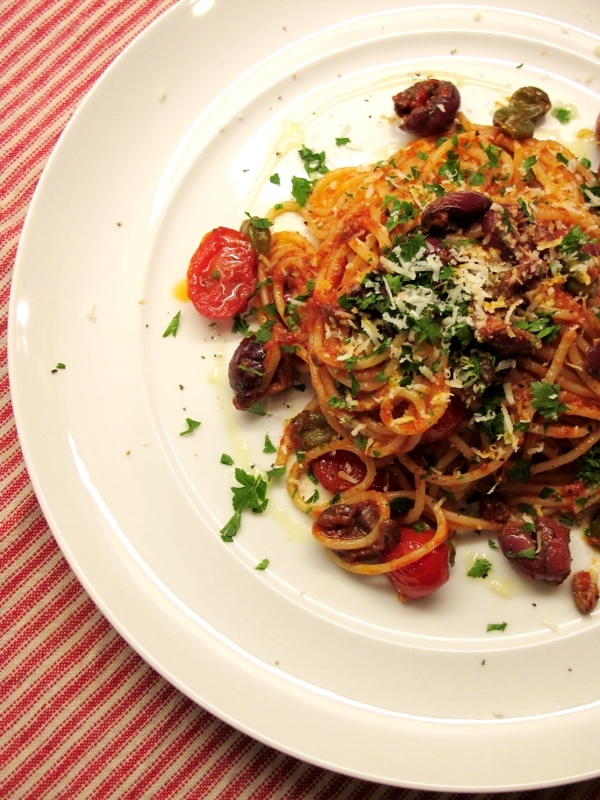
IMG_6913 (600x800)One of the ultimate “love it” or “loathe it” meals, Spaghetti alla Puttanesca is a dish accustomed to evoking passionate reactions in all those who dare eat it! Robust, seductive and “easy”, Spaghetti alla Puttanesca appropriately translates into English as “Spaghetti of the Whore”.

In spite of its alarmingly rowdy name, puttanesca has probably less to do with salacious ladies of the night and perhaps more to do with its “trashy” ingredients. The dish is alleged to have been created by a restaurant owner in the 1950’s to appease some rowdy late-night patrons. As closing time was upon them, the patrons supposedly demanded the owner quickly whip them up something to eat, insisting that it could be made with “any kind of garbage (puttanata)”. With just some leftover tomatoes, capers and olives, the obliging owner threw together a simple pasta sauce that would become the classic dish we now all know and love…or loathe. At least that’s the PG version of puttanesca’s origins and is perhaps nothing more than Wikiepdia-lore – we will never really know for sure.

I, however, prefer to believe in puttanesca’s seedier origin-story as it speaks to the heart of the unrefined character of the dish. This is a pasta sauce born out of back alleys of Sicily, ordered with harsh whispers and eaten with the appetite of the insatiable and unsophisticated. This is a dish that is as unapologetic and unrepentant as the women who reputably ate it. Puttanesca is a sauce that holds nothing back – there are few pasta sauces that pack this much of a punch with each mouthful. Coarse, salty and bordering on the uncouth, to my mind Spaghetti alla Puttanesca is indeed a dish that is aptly named!

Aside from its history, the one other point of contention with regards to puttanesca are anchovies! Whilst I cannot imagine puttanesca without them, I must point out that the addition of these divisive little fish to the sauce isn’t always the norm. In fact, anchovies were a later inclusion to the dish and are still only used depending on regional tastes and variations. Outside of Italy though, anchovies are synonymous with puttanesca and I see absolutely no reason to advocate otherwise.

Irrespective of which version of Spaghetti alla Puttanesca’s history you chose to believe, or whether you want it with anchovies or not, the next time you order it at a restaurant just bear in mind what you are really saying to the waitron. Depending on the neighbourhood you are in, when you utter the words, “I’ll have the puttanesca, please”, you might get more than you bargained for!

For more Italian recipes from The Muddled Pantry, please click here
Click here for the recipe

Hainanese Chicken Rice 海南雞飯

As macabre as it may sound, the sight of cooked chickens and ducks dangling from gruesome hooks typifies the South East Asian food experience for many of us; often eliciting sympathy and hunger in equal measure. For me though, it gives me pangs of nostalgia for what is, perhaps, one of my favourite Malaysian dishes – Hainanese Chicken Rice. Unsurprisingly, I’m not alone in my love for this dish either, as it appeared at number 45 on CNN’s World’s 50 Most Delicious Foods. Hainanese Chicken Rice’s enduring popularity is testament to the appeal of its uncomplicated nuances and its surprising depth of flavour.

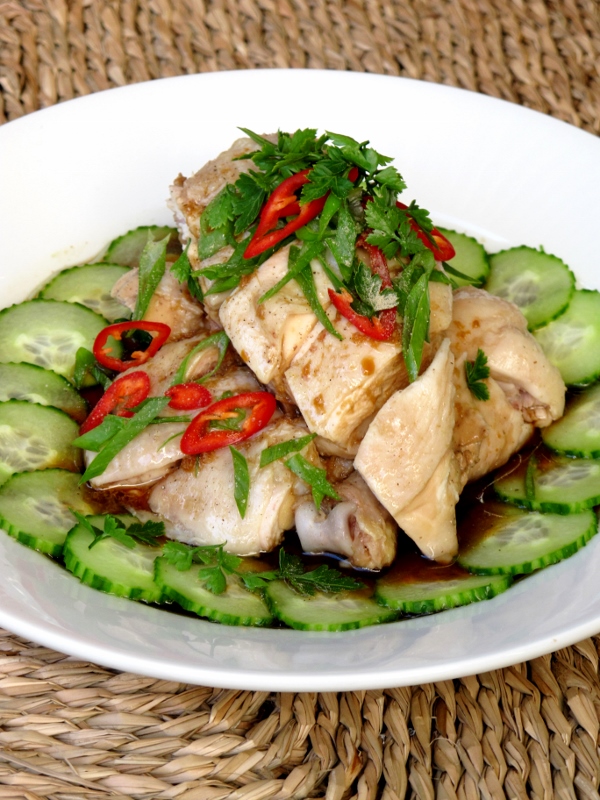
IMG_6853 (600x800)Typically there are two types of chicken on offer at any given Chicken Rice stall in South East Asia; poached (white) or roasted (brown). Growing up, I always preferred the latter, as I was a bit put off by the opaque appearance of the poached variety – if only I’d been a more adventurous child! Whilst the roasted version is undoubtedly very tasty, the poached version is in fact superior in both flavour and texture. Not only does the poaching process have a transformative effect on the meat and skin of the chicken (making it impossibly silky), it also imparts a subtle depth of flavour that enhances the chicken, rather than overpowering it. In addition to being tastier than its roasted counterpart, the white version is also much easier to make!

With a name like Chicken Rice, it should come as no surprise that the rice plays an equally important role in the dish! The good news is that the chicken’s poaching broth doubles-up as the stock used in making the rice. So getting the rice just right isn’t much of a chore – simply use the stock instead of water when making your rice. The stock can also be frozen and reused indefinitely, creating a depth of flavour that only gets better with each chicken poached.

A third, and equally important, element to Chicken Rice is its unique chilli sauce. This light, zesty sauce is both fragrant and hot – the prefect accompaniment to the “clean-tasting” chicken; it is an absolute must!

For more delicious Malaysian recipes, please click here

Click here for the recipe

Shogayaki 生姜焼き (Ginger Pork)

This was one of the very first Japanese meals I learnt to make and it is still one of my favourites!

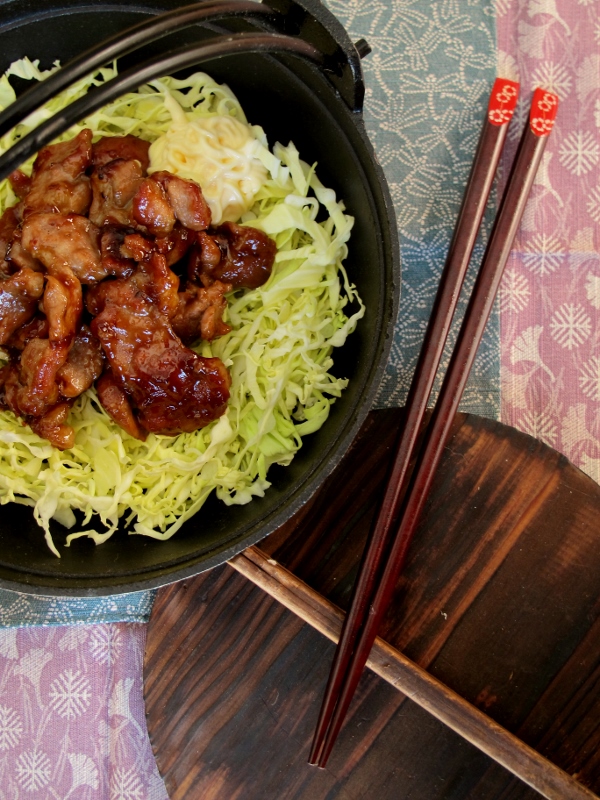
Shogayaki 生姜焼き (Ginger Pork)In fact, I make shogayaki so often it has arguably become my “signature” Japanese dish! I simply love the bite of the ginger, which plays perfectly against the sweet and salty meat. Combined with the crisp contrast of the shredded cabbage and the creamy mayonnaise, this dish will have you hooked with the very first bite!

Along with the obligatory shredded cabbage and mayonnaise, I like to serve shogayaki with rice, tamagoyaki (rolled omelette) and ingen no goma-ae (green beans with sesame sauce). Add some miso soup, throw in a couple of pickles and you’ll have yourself a full blown Japanese feast!

Umami indeed.

For more Japanese recipes, please click HERE or to find out more about how to stock a Japanese Pantry, please click HERE

Click here for the recipe

Katsudon カツ丼 (Crumbed Cutlet Donburi)

Forming part of the donburi style of Japanese cooking, katsudon is eaten all over Japan and is one of the classic donburi toppings.

Literally meaning “bowl of rice” in Japanese, donburi (rather unsurprisingly) consists of rice with a topping. Some of the most popular toppings are simmered in a mixture of dashi, mirin and soya sauce (such as katsudon, oyakodon and gyūdon), but this type of topping is by no means the definitive variation. Other toppings include grilled eel (unadon) and others, like tuna, are served raw (negitorodon). It seems there is really only one rule in donburi and that’s: rice, in a bowl.

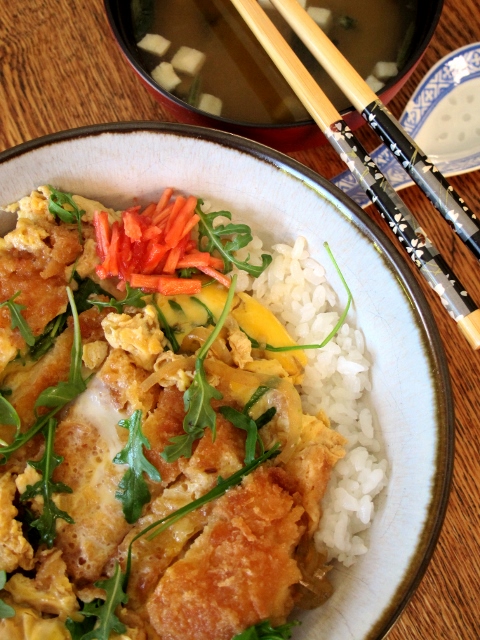
There is absolutely nothing refined about katsudon, and that’s why I love it! Simmered in a sweet dashi broth and then topped off with egg, this is Japanese comfort food at its best.

For more Japanese recipes, please click HERE or to find out more about how to stock a Japanese Pantry, please click HERE

Click here for the recipe

Steamed Pork Ribs with Black Beans 豉汁蒸排骨

An omnipresent dim sum classic, Steamed Pork Ribs with Black Beans is surprisingly easy enough recreate at home. Whether served with other dim sum, or as part of a larger Chinese meal, this dish is always a crowd pleaser!

Sourcing the right kind of pork rib is essential when making this dish, you want to buy ribs that have plenty of meat on the bone and you don’t want them larger than 3cm (the ribs should be small enough so that they’re chopstick-friendly). Cutting through rib bones at home is always a nightmare, so I would ask your butcher to cut them to size for you.

There are a couple of elements in this dish that come down to personal preference. Firstly, the amount of chilli added. Whilst this always comes down to your own personal tolerance, but even if you don’t have a Teflon gullet like me, a subtle hint of chilli is an absolute must for this dish. Secondly, the consistency of the sauce. My recipe calls for the sauce to be thicken with cornflour however, it is not uncommon for this ingredient to be omitted, resulting in a lighter sauce. I prefer a thicker sauce as it binds to the ribs, giving each bite an extra punch of flavour, but it’s entirely up to you.

Whilst this recipe makes enough for two people (eating it as part of a larger meal), it would probably stretch to feed another – if not for the fact that they are simply irresistible! I must confess that I cannot help but scoff down my “chef’s share” before it leaves the kitchen! So if you are weak-willed like me, please consider your own susceptibility to temptation when making this dish. Otherwise, your guests may go home hungry.

For more Chinese recipes, please click HERE or to find out more about how to stock a Chinese Pantry, please click HERE

Click here for the recipe

Merluza à la Gallega (Spanish Hake and Chorizo)

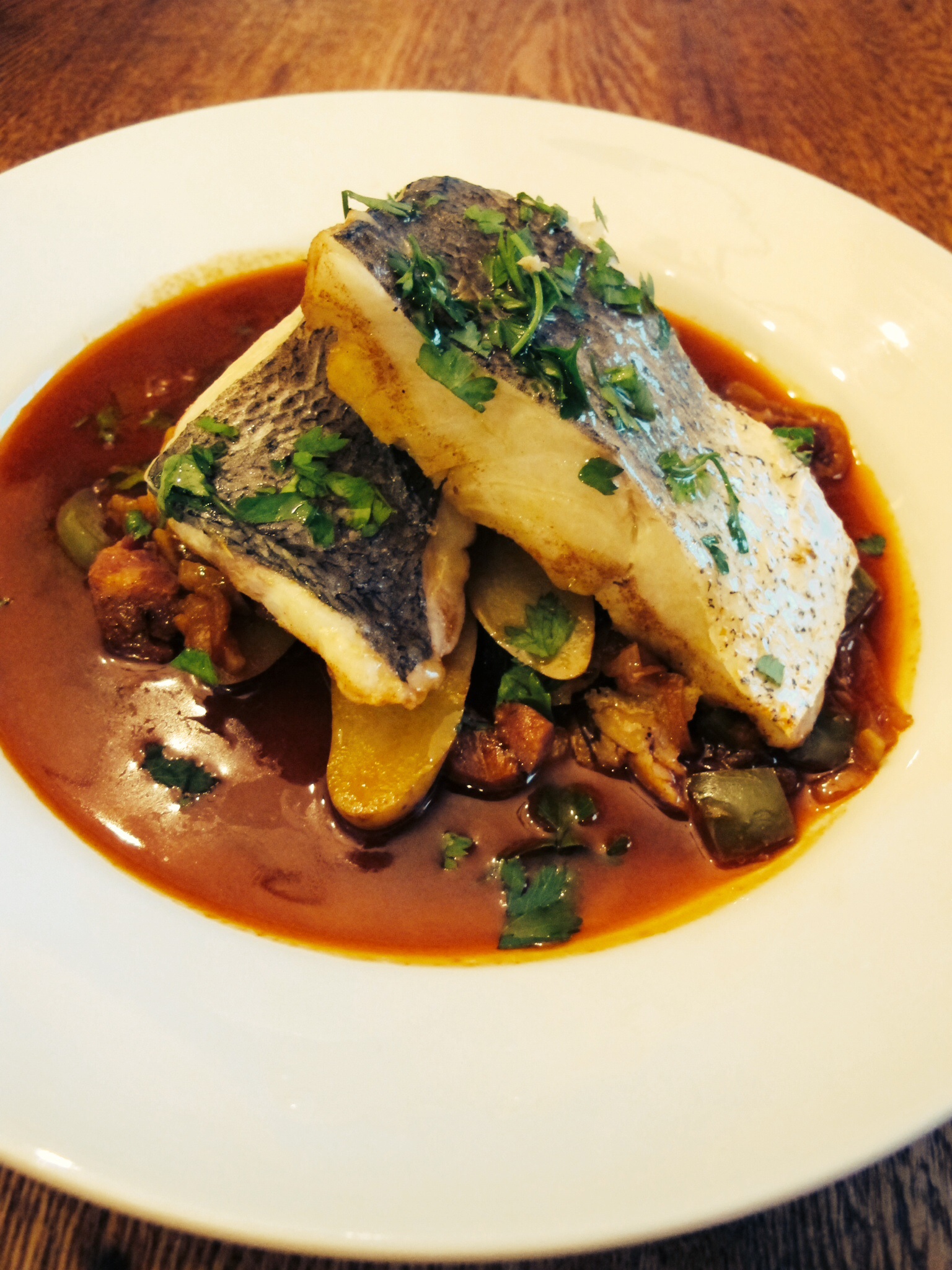
imageOn the face of it, South African and Spanish cuisines have virtually nothing in common, except for one thing – both countries consume a staggering amount of hake!

Know as merluza in Spain and often referred to as stockfish in South Africa, hake is a staple in both countries. Sadly, hake in South Africa is usually relegated to being given the “fish ‘n chips treatment”, which is a shame as its light and delicate flavour deserves so much more. Generally considered an every-man’s fish, when it comes to more complex dishes, South Africans tend to pass over hake in favour of classier fish like kob or kingklip. In Spain, however, hake is viewed with slightly more reverence than it is afforded in South Africa and, as a result, it benefits from a greater appreciation of its true potential.

My favourite way of sprucing up a piece of hake, Merluza à la Gallega is a revelation to all hake loving South Africans! Quick, tasty and relatively cheap to make, this dish is a true one-pot wonder. I love to serve this dish with some day-old ciabatta, drizzled with some olive oil and lightly grilled – it is the perfect way to mop up the smoky broth!

Trust me, you will never see the humble hake in quite the same way ever again. Impossibly good.

Click here for the recipe

Khao Phad Gai (Thai Chicken Fried Rice)

Khao Phad Gai (Chicken Fried Rice)A perennial takeaway favourite in our household, Thai-style Chicken Fried Rice (Khao Phad Gai) is one of the few dishes that both my partner and I enjoy eating, albeit with a few differences in our taste preferences. Naturally I like mine hot and spicy, whereas my partner’s is a somewhat more muted affair without any chilli or garlic. To my mind, the lack either of these elements seems like an affront to Thai cooking, but each to their own, I guess.

Along with an obligatory side order of Tom Yum Goong, Khao Phad Gai has a special place in my recent food history. It may be a simple meal, but this takeaway (along with a lot of red wine) was an absolute Godsend during a particularly stressful house-move – something I will forever be grateful for. Ordered almost every other night, we would sit, wine in hand, in amongst our half-packed boxes watching episodes of “Orange is the New Black”, tucking into our Khao Phad. None of it may have been very classy, but for a short while at least, this became our new normal.

Almost a year later, we don’t order Khao Phad as often as we did back then, but we still enjoy eating it now and again. After a rather disappointing order, though, I decided to try my hand at making it myself. Personally I prefer my own efforts, but my partner thinks otherwise. Apparently my version is “too flavoursome” for his delicate tastes – in my book that can never be a bad thing! As I said before, each to their own.

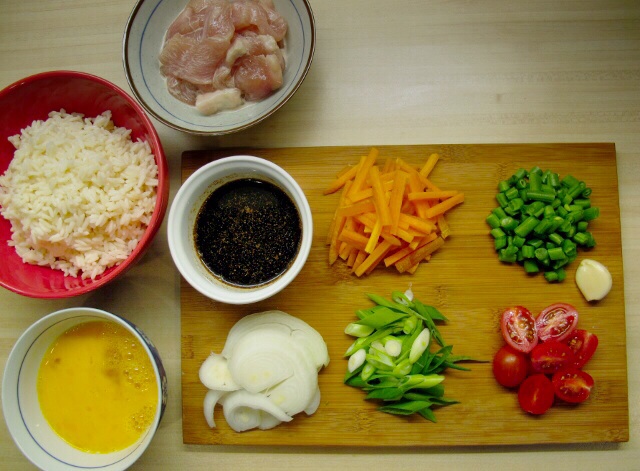
imageAs with most Asian food, the key to success is preparation…and a hot wok. Typically, 90% of any Asian stir-fry is prep-work, as the actual cooking usually takes just a few minutes – so make sure you have all you ingredients chopped and ready to go. Stir-frying can be fast and furious, and you don’t want to be faffing around with a carrot while your onions burn!

For more delicious Thai recipes please click here, or if you need tips on stocking your Thai Pantry please click here.

Click here for the recipe

Tonkatsu トンカツ (Crumbed Pork Cutlet)

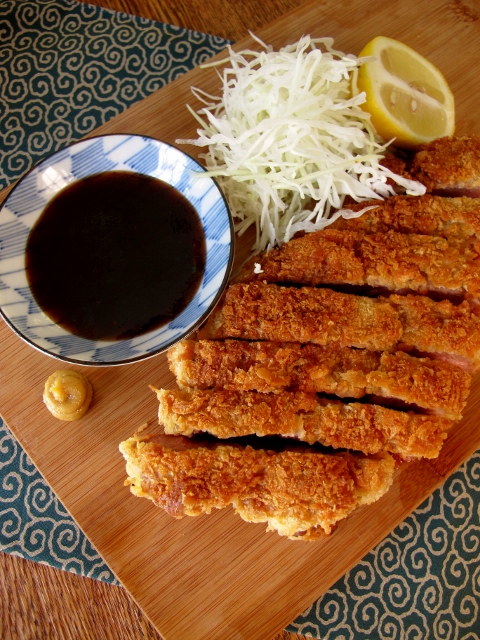
Tonkatsu トンカツ (Crumbed Pork Cutlet)It may surprise many to learn that not all Japanese food is healthy and Tonkatsu is a case in point. What is effectively a crumbed, deep-fried pork cutlet, tonkatsu is actually one of Japan’s favourite dishes.

A hallmark of youshoku cuisine (Japanese-style Western cuisine), tonkatsu is a very Japanese take on a Western schnitzel. In fact, other than the use of panko breadcrumbs, there is very little difference between the two! However, what really sets tonkatsu apart from its Western counterpart is how it is served. There are 3 traditional ways to enjoy tonkatsu (although there are, of course, other ways too). It can be served with just rice, shredded cabbage, mustard and tonkatsu sauce, it can be added to Japanese Curry Sauce to make katsu-karē or it can be used as a donburi topping called Katsudon. My personal favourite, katsudon is the epitome of Japanese comfort food, but no matter how you choose to eat it, tonkatsu is always delicious!

For more Japanese recipes, please click HERE or to find out more about how to stock a Japanese Pantry, please click HERE

Click here for the recipe

Chikenkatsu チキンカツ (Crumbed Chicken Cutlet)

Almost identical to its porkier cousin, chikenkatsu is, rather unsurprisingly, a chicken version of the Japanese deep-fried delight that is tonkatsu. As part of youshoku cuisine (Japanese-style Western cuisine), chikenkatsu literally means “chicken cutlet”, and is the Japanese interpretation of the chicken schnitzel.

As with tonkatsu, there are a number of ways chikenkatsu can be eaten. It can be served with just rice, shredded cabbage, mustard and the ubiquitous Tonkatsu Sauce, it can be added to Japanese Curry Sauce to make katsu-karē or it can be used as a chicken alternative to the donburi classic, Katsudon.

For more delicious Japanese recipes, please click HERE

Click here for the recipe