One-pot Lamb with Orzo

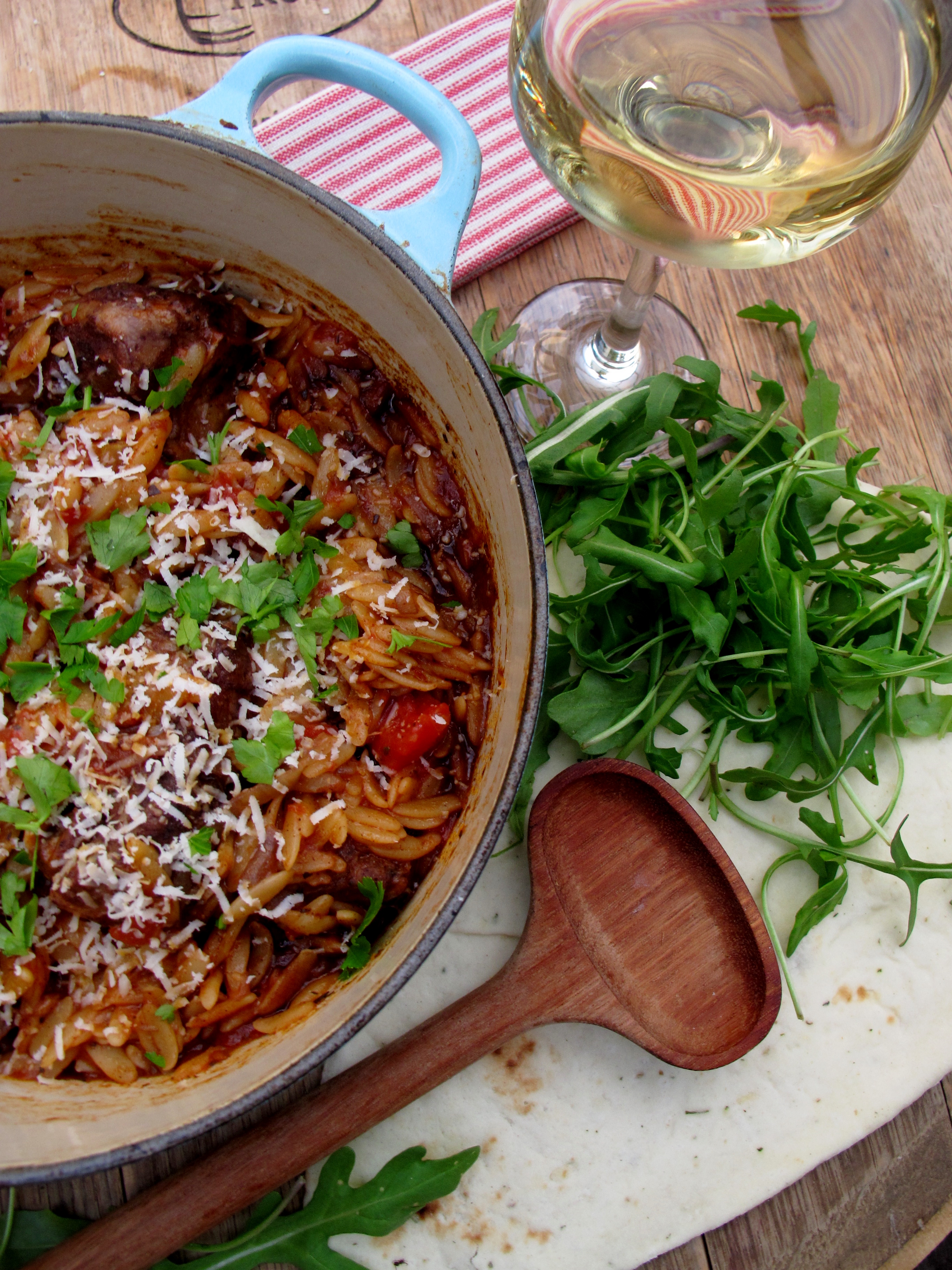
One-Pot Lamb with OrzoTired of doing loads of dishes? Need a one-pot wonder meal that even the kids will love? Then this is the recipe for you. This is simple, relaxed cooking at its best and is sure to become a firm family favourite!

Not to be confused with the Greek liqueur Ouzo, Orzo is a diminutive Italian pasta which resembles a large grain of rice. Unlike other pastas that are usually served with a sauce, the orzo in this recipe is actually cooked in the pot along with the lamb and tomatoes. This method of cooking the pasta allows the orzo to absorb the nuances of the sauce, resulting in a dish that is simply bursting with flavour!

Click here for the recipe

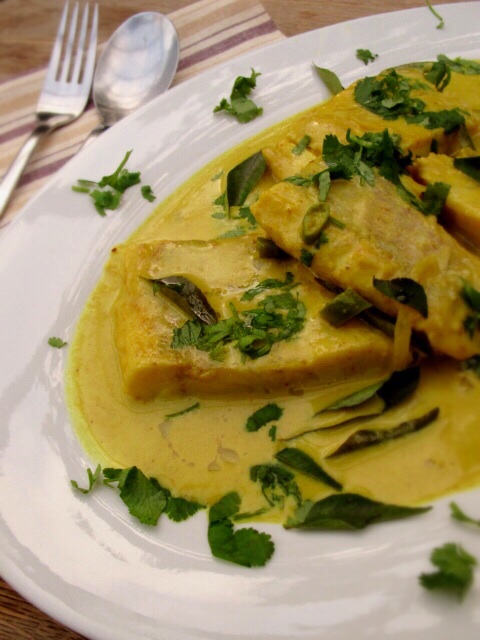
Keralan Fish Molee

The concept of a fish curry seems to freak people out. So much so, the mere suggestion of it usually elicits looks of suspicion and a chorus of “ugh!” and “ewww!“. Such reactions have always confounded me because fish curry is, in a word, delicious. Over the years I have tried to introduce my sceptical dinner guests to the delights of fish curry and I have found the most success with molee.

Keralan Fish MoleeA speciality of Kerala in Southern India molee is, strictly speaking a fish stew, but with its rich and fragrant coconut sauce it can still be considered a curry. Simple to make and requiring very few ingredients, molee is surprisingly complex in flavour and makes a great addition to any Indian meal.

Aside from the fish, the key ingredient to molee are curry leaves. The dish benefits immensely from fresh curry leaves, but if you can’t find these then dried leaves will do at a pinch. Whenever I manage to find fresh curry leaves I always make sure I freeze some, as these will still be superior to dried.

Still not convinced about fish curry? Give molee a go and trust me, before you know it you’ll be tucking into some Fish Head Curry!

For more of my top picks for an Indian feast, please click here

Click here for the recipe

Kimchi Risotto

If you follow this blog you’d know that I’m a tad obsessed with two things: kimchi and risotto! As much as I love both, I must admit I had my reservations about combining these two distinct flavour elements into a single dish. Kimchi and rice; that was a no-brainer, but kimchi and cheese? I just couldn’t get my head around how that would actually taste, frankly it sounded like fusion-cooking gone mad!

For a long while I just dismissed the notion of a kimchi risotto as a misguided attempt to make spicy fermented cabbage palatable to the uninitiated, by giving it a conventional context; but like cream-cheese sushi, it risks becoming a cultural and culinary aberration, an oxymoron that contradicts the very essence of what it purports to be. If you like that sort of thing, great, but it’s simply not for me. Generally speaking, fusion for fusion-sake leaves me cold.

Then one day I found myself in a serious food-rut; we’ve all be there before, we all know what grim times ruts can be. As I stared blankly at the contents of my refrigerator, I desperately hoped for a spark of inspiration. Nothing, we were mere minutes away from ordering pizzas for dinner, again. Then my eyes eventually rested upon that omnipresent fridge staple – kimchi. So strong was my desire not to have pizza, I thought: “Oh, sod it”. I figured making kimchi risotto was a win/win situation; either it would be amazing and I would love it, or it would be deplorable and I’d feel justified in my initial scepticism. I don’t mind admitting that I hoped for the latter, I don’t like being wrong.

As hungry as I was, I tried my best to dislike it, but I couldn’t. It was fantastic! My initial concerns about the combination of kimchi and cheese were unfounded. In reality the richness of the cheese muted the bite of the kimchi; mellowing it just enough to allow for an appreciation of the subtle flavours that normally hide behind the spicy, sharp bravado of kimchi. To my surprise, fusion cuisine had done the unthinkable – it had made kimchi taste better.

Does this fusion revelation mean I’ll be tucking into a portion of cream-cheese & biltong maki any time soon? Don’t count on it, but there are plenty of fusion temptations out there; bacon ice-cream, anyone? Perhaps not.

RECIPE NOTE: The rice quantities for these recipes vary depending on the number of people you are feeding and whether you intend making the risotto as a main meal or an accompaniment. As a general rule of thumb, I use approx. 70-80ml of rice per person for a main meal and 50-60ml as an side dish. Generally, risotto recipes on my blog are based on 2 people eating a full portion.

Click here for the recipe

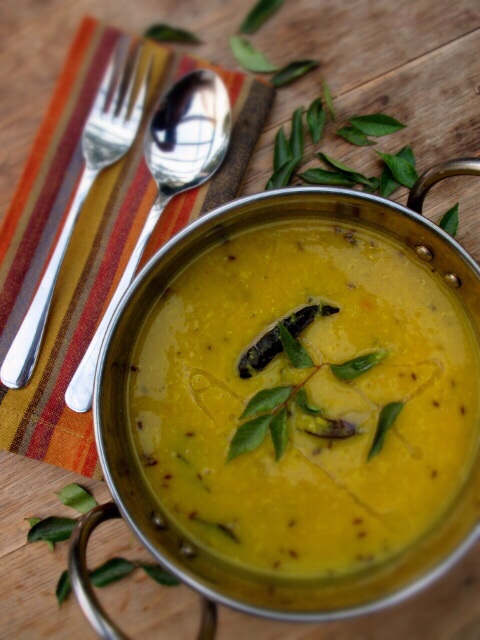
Tarka Dhal

Tarka DhalDhal is perhaps the unsung hero of Indian cuisine. All too often dismissed as a poor man’s curry or a dreary side dish, dhal is in fact so much more. Nutritious, simple and varied, dhal deserves to feature in any Indian meal. Personally, I could happily tuck into just a bowl of dhal and rice!

This recipe is dhal in its purest form. Flavoured with turmeric and seasoned with a tarka, this dhal recipe is delightfully simple and incredibly tasty.

The recipe uses two different types of dhal, red and yellow, but feel free just use 150g of either.

Unlike curries, dhal is best eaten on the same day it is made.

For more of my top picks for an Indian feast, please click here

Click here for the recipe

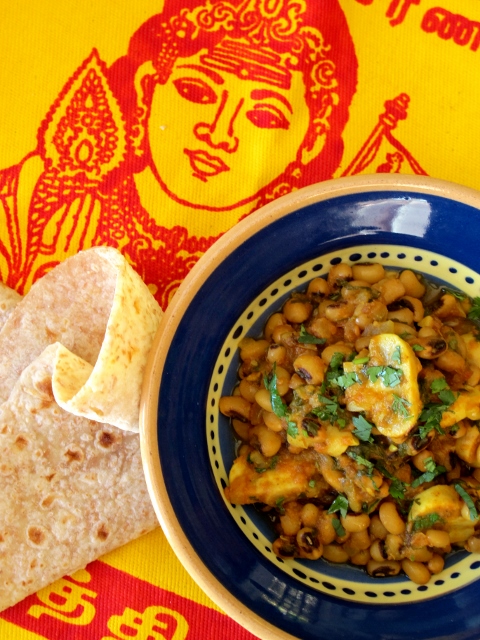
Lobia Khumbi (Black-eyed Beans with Mushrooms)

Sometimes the best meals come into your life quite unexpectedly and they stay with you forever – this is such a dish!

Many years ago I was planning a dinner party and one of the guests came with a painfully long list of dietary restrictions, chief amongst them being the double-act of inconvenience that is veganism and gluten intolerance! As I suffer from neither affliction, my instinctive response was just to cancel the dinner altogether, problem solved! Never one to back down from a culinary challenge, however, I decided to go ahead with the dinner after all and serve the mother of all vegan cuisines – I went Indian.

Lobia Khumbi (Black-eyed Beans with Mushrooms)Your rogan joshs and butter chickens aside, Indian food is perhaps the most karma-conscious cuisine in the world. With a mind boggling array of vegan and vegetarian dishes to choose from, one is never short of tasty delights from the sub-continent. An Indian feast is always a great option for a dinner party as the multiple dishes needed, allow you to cater for a wide range of tastes and needs, all without compromising the overall success of the meal. Generally speaking, whether the dish be vegan or laden with meat, all Indian food goes well together.

Which brings me to this particular recipe. Lobia Khumbi (Black-eyed Beans with Mushrooms) is a great addition to any Indian spread, be it part of a full-on feast or humble midweek meal. Hearty, wholesome and filling, this dish is so good it could almost turn me vegan! Whilst the black-eyed beans add an earthy undertone that balances out the spices, the mushrooms are actually the star of the dish, adding a “meatiness” that appeals to both meat-eaters and vegetarians alike. Add some tarka dhal and rice to the mix and you have a meal fit for the most pious (and discerning) monk. Who knew that good karma could ever be so damn dharma-delicious.

For more of my top picks for an Indian feast, please click here, or for more great Indian recipes from The Muddled Pantry, please click here

Note: this dish also makes an excellent alternative to your traditional sides dishes like mash potato, as it is mild enough to “fit” comfortably alongside most flavours. I recently served it with some pan-fried fish, sautéed kale and a tomato lemon butter sauce and it was absolute fusion-heaven!

Click here for the recipe

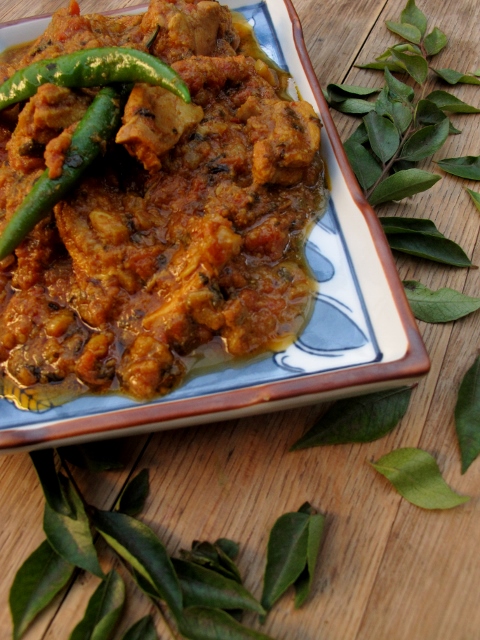
Kadhai Murgh (Chicken Kadhai)

One of my staple Indian curries, Chicken Kadhai regularly features in almost all Indian meals I make; big or small.

Kadhai ChickenThe key ingredient in this curry is the kasoori methi (dried fenugreek leaves) as it adds a distinct flavour that is both delicious and alluring. Although widely available from spice markets, kasoori methi isn’t a flavour many are accustomed to and makes a nice change from the typical curry flavours most people normally encounter.

A personal favourite, to my mind this curry tastes and smells of India herself; a heady blend of fragrant spices, the earthy tones of the kasoori methi – all marry into a potent assault on the senses. Just like India this curry will charm you, its flavours will linger and it will invariably leave you wanting more.

For more of my top picks for an Indian feast, please click here

Click here for the recipe

Rogan Josh

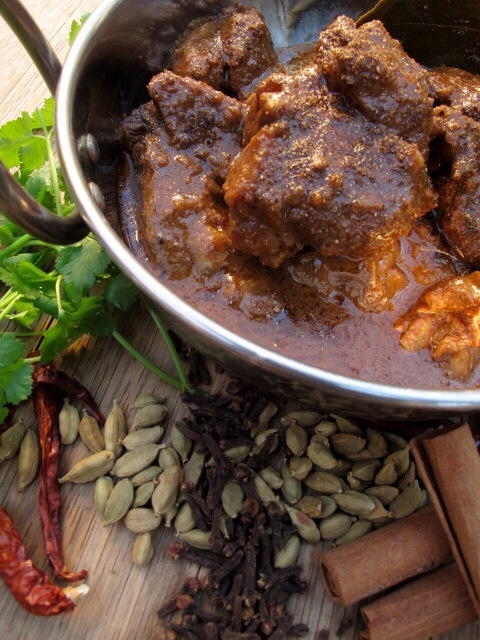
Rogan JoshArguably the King of Indian Curries, Rogan Josh is one of the most recognised Indian curries outside of India. Sadly, its ubiquitous stature has done it no favours beyond the borders of the sub-continent. Like many noble dishes before it, Rogan Josh has suffered from the inevitable gentrification that comes with Western popularity. Along with its equally maligned cousin Butter Chicken, Rogan Josh has been largely reduced to a synonym for a generic lamb curry. This is an absolute tragedy because Rogan Josh deserves its enduring popularity, it just shouldn’t have to suffer because of it.

In its true form, it is an amazing curry; incredibly tasty and surprisingly easy to make – it is my top pick for any Indian feast!

For more of my top picks for an Indian feast, please click here

Click here for the recipe

My Indian Feast

I love making curry.

Which is just as well, because once I start making curry I just can’t stop. In my house a simple curry invariably turns into a full-on 4 dish Indian feast…for two. It doesn’t matter how humble my initial intentions are, the simple fact of the matter is that Indian curries need companions; what is a rogan josh without a dhal, a korma would be lost without a sambar. Seduced by the alchemy of spices and my insatiable need to feed; it all gets out of hand very quickly, but that’s okay, because I really do love making curries!

One of the best things about making curry is that it always benefits from being cooked the day before. Dhal and vegetable curries aside, I would never dream of serving a curry on the day it was made. To do so would be a shame, a wasted opportunity to allow your guests the experience of tasting the full array of flavours of the curry, which can only develop if given the necessary time. Far from being an impediment, a curry’s need for advanced preparation is, in fact, one of it’s greatest conveniences and makes it a dinner party favourite at our house. An Indian feast allows you to make the various elements days in advance, all the while giving the curries time to mature to their full potential. This advanced preparation makes for a stress-free meal, giving you more time to spend with your guests.

The other important element is choosing the right dishes for your feast. I tend to work on a ratio of two meat, one or two vegetable and one side dish – this gives you a good mix of dishes and should cater to all tastes and dietary needs. One of the great things about Indian food is that it is easy to accommodate vegetarian/vegan guests, you can all enjoy the “same” meal together. Now what curries to make? There are a myriad of choices out there; Indian food is wildly diverse, at times bewilderingly so, but I tend to stick to a few classic dishes what most people know and aren’t afraid of.

These are my top-picks of an Indian Feast:

Meat Curries:

Lamb:

Rogan Josh

Gosht Shahajani

Chicken:

Kadhai Murgh (Kadhai Chicken)

Makhani Murgh (Butter Chicken)

Fish:

Molee (Keralan Fish Curry)

Vegetable Curries:

Aloo Mutter (Peas & Potato Curry)

Aloo Gobi (Cauilflower & Potato Curry)

Lobia Khumbi (Black-eyed Beans with Mushrooms)

Accompaniments/Side Dishes:

Tarka Dhal

Chole Chaat (Spicy Chickpea)

Sambhar

Like all feasts, planning is key. Read through your recipes in advance and plan accordingly. If necessary, marinate your meats overnight in preparation of cooking the curry the day before serving. Most curries will keep for a couple of days in the refrigerator, so stagger your cooking over a few days so as not to become overwhelmed!

On the day of the meal, organise any last minutes flourishes by each individual dish, so everything is where you want it, when you need it. Slowly reheat you curries at least an hour before serving, they can always been heated up again just before serving. Of course, don’t forget the most important element of your feast – the rice!
 

Shortbread

ShortbreadTo my mind, of all the sweet treats my mother made when I was young, shortbread always seemed the most luxurious and perhaps surprisingly, the most “exotic”. Set against the kaleidoscope of Malaysian desserts that I grew up with, shortbread seemed the epitome of Western refinement – something the lords and ladies of Windsor would perhaps nibble on, whilst sipping on their Earl Grey at teatime. In a childhood saturated with deep-fried bananas and glutinous purple layer-cakes, there was something about the buttery simplicity of shortbread that echoed a colonial restraint that appealed to my early sense of identity. That my mother made very good shortbread, made me feel different; it, in part, made me feel just a wee bit more British.

The secret to my mother’s shortbread is, however, an altogether un-British Asian ingredient: rice flour. This elevates the shortbread to another level; giving it an amazing texture and makes for an even crisper biscuit bite.

For more Sweet Treats from The Muddled Pantry, please click here

Note: Try to use rice flour sourced from an Asian supplier rather than from a health shop as the former seems to be finer and gives a better finish.

Click here for the recipe

Mushroom and Lemony Lentils

Sometimes all you need to produce culinary magic is a couple of tins of lentils, a few basic ingredients…and 24 hours.

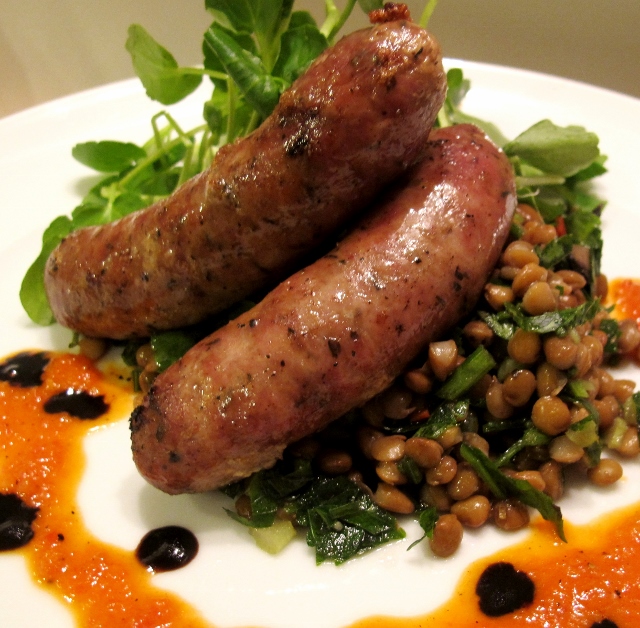
Mushroom & Lemon Lentils with Sausage and Roasted Red Pepper & Tabasco SauceThis recipe is store-cupboard alchemy at its best and is a great healthy alternative to the usual starch-demons that plague us all, like mash potatoes or rice. Infinitely adaptable, these lentils go well with just about anything; from grilled meats, to a stand-alone salad – this is healthy eating at its most appealing.

These lentils go particularly well with a piquant counterpoint, such as a Roasted Red Pepper and Tabasco Sauce, perhaps dotted with some Crema di Balsamico.

If you plan to serve it as a salad, top with some sliced avocado and perhaps some pomegranate seeds.

Most recently, I partnered these lentils some grilled Toulouse sausage from Rudi’s and it was simply delectable!

Click here for the recipe