Recipes

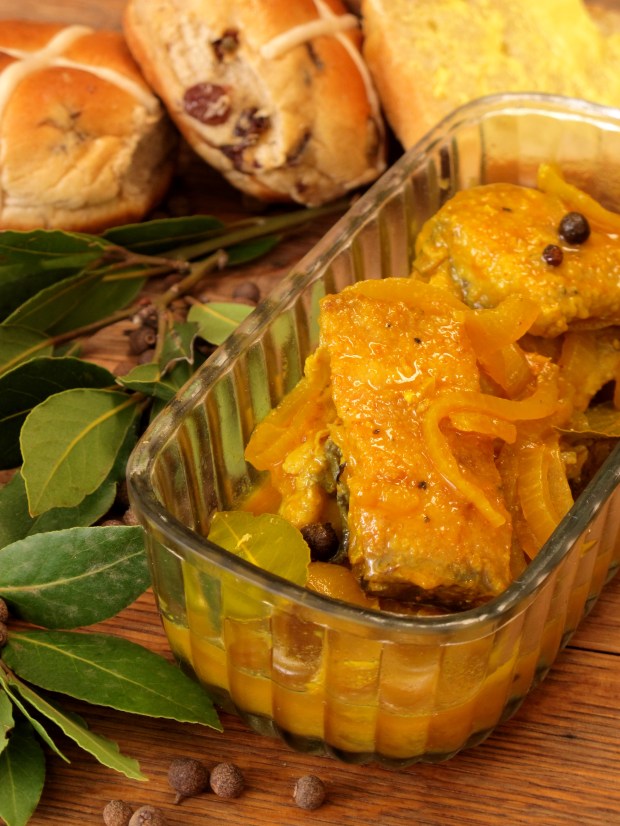
Cape Malay Pickled Fish

Down here in the Cape you always know Easter is just around the corner when a seasonal preoccupation takes hold of our beloved city; yes, I’m talking about our pickled fish obsession.

Like tinsel before Christmas, it seemingly comes out of nowhere.

Overnight supermarkets load tables with tubs of this sweet & sour delight, whole yellowtail is suddenly on the Specials board of your local fishmonger and, most tellingly, internet and food blog searches for pickled fish recipes sky rocket. All pickled portents that tell us one thing – Easter is upon us.

Before its association with Easter, pickled fish was simply a tasty way for the Cape Malay community to make the most of an abundance of fish during the summer months by preserving the fish – allowing them to keep the fish for an extended period of time. This classic Cape Malay dish is the perfect example of the heavy influence of Malaysian and Indonesian culture on Cape cuisine as the pickling liquid is more akin to a sweet and sour curry than any other methods of pickling fish.  Traditionally snoek and yellowtail were the favoured catch as their dense flesh withstands the pickling process especially well, but flaker fish such as cob and hake can also be used although I prefer using yellowtail.

Of course there is also the small matter of what you should serve your pickled fish with.

The most common way is to simply have it with buttered white bread, but for those of you with a sense of adventure you can always try it with another Easter treat – hot cross buns. I know this might sound like a crazy and unappealing combination, but there really is method in this Easter mash-up madness. Call it an Easter miracle, but for some reason it really does taste amazingly good!

Pickled fish and hot cross buns; yep, welcome to the true taste of the Cape.

For more South African recipes from the Muddled Pantry, please click HERE

Click here for the recipe

Yam Khai Dao ยำไข่ดาว (Thai Fried Egg Salad)

Laughably easy to make and refreshingly different, Yam Khai Dao is definitely one of my favourite Thai salads and has become a regular feature of any Thai meal of mine.

As with so many Thai dishes, this deceptively simple salad is a master class in contrast with the crispy, rich eggs giving balance to the classic sweet sour dressing and the bite of the chilli is tempered by the fresh herbs and lettuce. This is most definitely a case of remarkable food made with the most basic of ingredients.

Personally I think the addition of a salad is an essential part to any Thai meal. Not only do they as offer the perfect foil to the richness of most mainstay Thai dishes (like coconut based curries and fragrant salty stir-fries), but they also provide balance to a meal, both in terms of healthy eating and flavour.

Considerations of balance and healthy eating aside, Yam Khai Dao’s true appeal lies in the fact that it is so easy to make and, short of some palm sugar, requires almost no specialised Thai ingredients. Unsurprisingly the key component of this salad is the eggs; they must be cooked in a decent puddle of smoking hot oil to ensure that the whites of the eggs bubble up immediately upon contact, resulting in lovely crispy eggs without being saturated in fat. I love the fact that you can prepare most of the salad and dressing in advance and all that’s left to do before serving is to fry the eggs and mix everything together. To say that Yam Khai Dao is as easy as frying an egg is an understatement – if you can get that right, then the success of the salad is almost assured!

For more delicious Thai recipes please click here, or if you need tips on stocking your Thai Pantry please click here.

Click here for the recipe

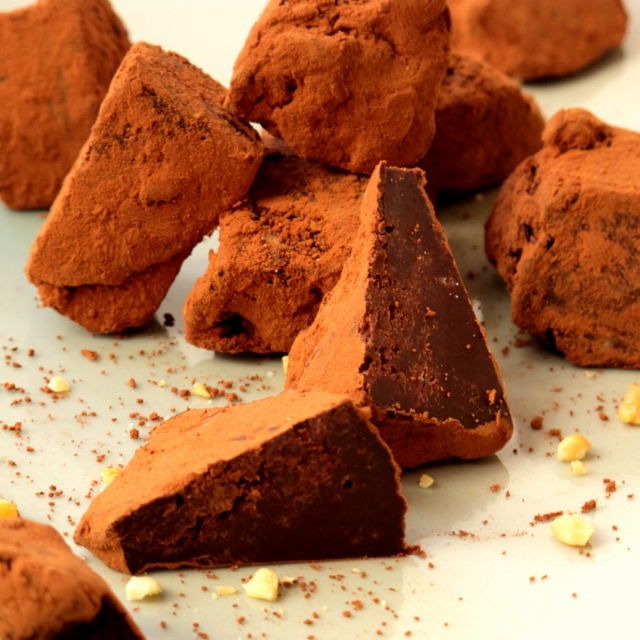
Eloise’s Whisky Truffles

Simple and thoroughly decadent, these wonderful French-style truffles are a chocoholic’s dream come true.

The ultimate bittersweet nibble, these truffles work well as a final flourish to a dinner party with a glass of cognac, port or even as a sneaky chocolate treat to be had when nobody’s looking.

I first had these truffles many years ago when I moved to Cape Town. My dear friend Eloise made them for me once as a thank you gift for inviting her family to dinner one evening. As it was the first time I had met her she was blissfully unaware that I’m lactose intolerant so I just passed the thoughtful gift on to my partner (who is a chocolate-fiend of note) and didn’t think about them until the next day.

As it turned out, the truffles weren’t to my partner’s taste at all as they weren’t as sweet as he would have liked. More surprisingly, however, they turned out to be right up my street! I’m not normally a ‘sweet’ person, but every now and again there are exceptions to the rule and these are most certainly that – exceptional!

Bitter, sweet and with a hint of whisky; these little chocolate gems are most definitely worth the consequences of lactose intolerance and that’s not something I say lightly.

Click here for the recipe

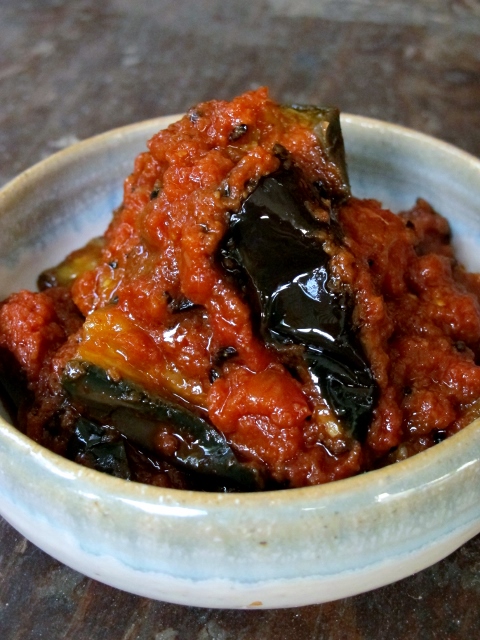
Bhartha (Spicy Indian Eggplant)

Generally speaking I’m an unashamed carnivore at heart, but when it comes to Indian food I’m more than willing to forsake my love of meat and go 100% vegetarian. Not only is this advisable whilst eating in India, the reality is that Indian food is truly a culinary-nirvana for the non-meat eaters amongst us.

Your rogan joshs and butter chickens aside, Indian food is perhaps the most karma-conscious cuisine in the world with a mind-boggling array of vegan and vegetarian dishes to choose from, one is never short of tasty delights from the sub-continent. At any rate, this diversity of dishes make an Indian feast a great option for a dinner party as it allows you to cater for a wide range of tastes and needs, all without compromising the overall success of the meal. Generally speaking, whether the dish be vegan or laden with meat, all Indian food goes well together.

I’ve always thought of eggplants and Indian cooking as being the perfect partners. It was almost as if the silky opaque flesh of the eggplant was specifically designed to absorb the rich flavours of Indian cooking and as such could withstand even the boldest of spices.

Personally bhartha has always been my favourite way of preparing eggplant and is often a stalwart of any Indian meal of mine, largely for three reasons: it is easy to make, tastes amazing and can be made days in advance. Traditionally the eggplant is deep-fried resulting in a dish that is often swimming in oil and that should come with a health warning. I prefer to steam my eggplant in a microwave instead of frying it which makes for a far healthier and more palatable dish.

As with most Indian dishes bhartha can, and should, be made in advance and gently reheated before serving – again highlighting why Indian food makes the perfect dinner party option.

For more of my top picks for an Indian feast, please click here, or for more great Indian recipes from The Muddled Pantry, please click here

Click here for the recipe

Japchae 잡채 (Sweet Potato Noodles with Beef & Vegetables)

One of Korea’s most loved dishes, japchae seems to be one of those dishes that can be found almost everywhere and at any time. Be it at breakfast, dinner or at a party, japchae is almost sure to be a feature. Like so many national dishes in Asia, food can represent so much more than just a tasty meal; in the case of japchae it is all about colour and harmony. Translating as “many kinds of various vegetables” japchae is made with the five colours that the Koreans believe reflect obang saek or world harmony to you and me. Each colour symbolises one of the five universal directions – North (black: beef/mushrooms), East (green: courgette/cucumber), South: (red: carrot), West (white: onion) and, most profoundly, the Middle (yellow: egg).

World harmony aside, the best news about japchae is that it is banting and LCHF friendly! Okay, so there is a bit of sugar in the recipe, but at its core japchae’s sweet potato starch noodles are a great low carb alternative to the regular wheat variety and taste infinitely better than courgette noodles.

Noodles without the carb-induced guilt; now what could possibly be better than that?

To be honest I was a bit hesitant about trying japchae when I first encountered it at a breakfast buffet in Seoul. I had tried cooking with Korean sweet potato noodles previously and it was a bit of a disaster, but I figured it couldn’t hurt to give it another go. I’m so pleased that I did! Chewy, beefy and incredibly satisfying; from the first bite I knew japchae was going to be one of the first Korean dishes I would attempt to recreate when I got back to my kitchen in Cape Town.

As it turned out, making japchae at home is relatively easy and aside from the sweet potato noodles themselves, all the ingredients are Asian store-cupboard staples. The only real difficulty is that the numerous components of the dish need to be individually prepared and cooked before being assembled, but other than that it is actually pretty straight-forward. Just don’t be tempted to soak the sweet potato noodles for longer than 30 minutes or overcook them as this will affect their texture.

Most of the japchae I had whilst in Korea actually didn’t contain any meat so if you would like to make a vegetarian version of the dish simply omit the beef. If you do, however, want to make a meat version then you can also substitute the beef steak with some mince instead.

For more Korean recipes from The Muddled Pantry, please click here

For tips on stocking a Korean Pantry, please click here

Click here for the recipe

Nasu Dengaku なす田楽 (Oven-Roasted Eggplant with Miso)

Eggplants, aubergines or brinjals; call them what you will, but most of us are pretty much clueless as to what to do with this perfect purple delight. Along with an undeserved reputation for being bitter, eggplants are unjustly thought of as greasy. Typically shallow fried, eggplant’s absorbent flesh is easily saturated with excessive amounts of oil and can result in the dish becoming too rich. Luckily, however, there are a couple of ways to cook eggplants without the need to have your local cardiac surgeon on speed-dial, those being steaming and roasting. As the name of the recipe suggests this dish involves the latter method and the results are just to die for, as roasted eggplants and miso are quite simply a match made in heaven.

Traditionally nasu dengaku is made with eggplants that have been cut in half and then grilled, but this method only really works with thin Japanese eggplants which are, unfortunately, quite hard to come by in Cape Town. As such, you are welcome to oven-roast halved eggplants if you prefer, but it just seems so much easier to cube them instead, as the end result isn’t that dissimilar and makes for a more chopstick-friendly meal.

This dish makes for a wonderful addition to any Japanese spread and is also great in salads or even sandwiches (nasu dengaku on a ham and cheese sandwich would be all kinds of awesome!).

For more Japanese recipes, please click HERE or to find out more about how to stock a Japanese Pantry, please click HERE

Click here for the recipe

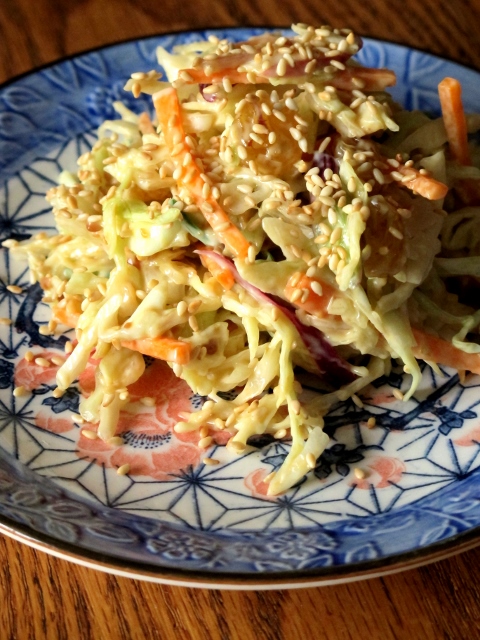
Asian Coleslaw

Lets be honest, coleslaw has been called many things over the years but trendy has never been one of them – at least until now, that is.

A salad stalwart of 80s potluck dinners, coleslaw has since been pretty much relegated to being nothing more than a questionable side-order to a greasy bucket of chicken – a lazy attempt to elevate our deep-fried indulges into something that resembles a balanced meal! Thankfully, however, these days coleslaw has made something of a comeback and is looking (and tasting) better than ever! Personally I think coleslaw owes its unexpected revival to the recent trendy-burger movement: after all what is a gourmet burger without a helping of gourmet sides?

Truffled skinny fries, tempura onion rings and umami ketchup, it was only a matter of time before coleslaw got in on the action and got a much needed makeover. Whilst the Western incarnation of coleslaw has undergone somewhat of a reinvention, the greatest evolution of the dish is, however, truly manifest in Asian Coleslaw. An ubiquitous name at best, Asian coleslaw is really just regular coleslaw but with a fusion twist.  Don’t get me wrong, regular ‘slaw is awesome, but Asian ‘slaw is simply next-level awesome! Whilst no single ingredient turns regular coleslaw Asian, the star of this particular version of Asian coleslaw is undoubtedly the sesame seeds, which add a wonderful toasted flavour that suits the rich creamy tang of the mayonnaise.

Perhaps one of the best things about coleslaw is its versatility. Traditionally the only two mainstays of the dish are white cabbage and mayonnaise, other than that you can add or omit just about anything. Try making it with some shaved fennel or replace the spring onion with thinly sliced regular onion. Leaving out the sultanas and  doenjang (Korean soy bean paste) would instantly make for the perfect LCHF side dish. Of course if you really wanted to push the boat out you could always substitute the sesame seeds with toasted pine nuts, but given the exorbitant price of pine nuts it does rather feel like an extravagance too far for something as humble as coleslaw.

To call this a “recipe” is somewhat of a stretch as making coleslaw is really just an assemblage of ingredients rather than an actual recipe per se. Okay so there is a fair amount of chopping involved when making any coleslaw, but if you have a decent mandolin handy then there really isn’t anything to it. It seems almost criminal that something so good can require so little effort, but it does and I don’t mind admitting that I’m a little obsessed. I’ve been eating coleslaw with just about everything recently, but that’s because it goes with just about everything! Burgers, sausages, grilled chicken and tonkatsu / chikenkatsu (Japanese Pork / chicken schnitzels) – all make the perfect companion to a healthy dollop of ‘slaw!

Click here for the recipe

Picanha Steak with Chimichurri

With perhaps the exception of empanadas, nothing screams South America more than picanha steak with chimichurri.

A relatively unknown cut of meat outside South Amercia, picanha is also known as rump-cap or top sirloin-cover. Picanha is characterised by its thick layer of fat and heavy marbling, which gives the meat incredible flavour and succulence, making it one of the most prized cuts of beef to those in the know. Until recently picanha was a cut rarely found outside the Americas, but thankfully that seems to have changed and it is increasingly easy to source locally. Steak-lovers of the world rejoice: picanha is finally here and hopefully it’s here to stay!

So let me not undersell this, picanha and  chimichurri are truly a match made in steak-heaven! The succulent steak and piquant sauce are perfect bedfellows, with the robust and zesty chimichurri cutting through the richness of the steak. Put quite simply, the combination of picanha and chimichurri is pure carnivoristic perfection.

Steak has never tasted this good!

Click here for the recipe

Peppermint Crisp Tart

Everybody knows the best way to a South African man’s heart is through a braai. However, to get him in touch with his inner soul, you need to feed him some Peppermint Crisp Tart! I don’t know what it is about this simple dessert, but seems to have a profound affect on most South Africans, inducing bouts of childhood nostalgia with every bite and even the odd misty eye (they aren’t crying of course, its just that pesky braai-smoke).

Sometimes referred to as a Fridge Tart and occasionally as a Transkei Mud Pie, Peppermint Crisp Tart was arguably the South African dessert of choice in the 80’s and early 90’s. The very definition of a store-cupboard dessert, it was originally made with Orly Whip (a long-life non-diary cream substitute) instead of cream, meaning you literally did not have to buy anything fresh to make the tart – you could whip it up in 15 minutes, pop it into the fridge to set and voilà: dessert bliss!

Today Peppermint Crisp Tart jostles with the mighty Malva Pudding for the title of South Africa’s favourite traditional dessert and whilst Malva Pudding may have a greater claim to that crown, Peppermint Crisp Tart must come a very close second. The key to Peppermint Crisp Tart’s enduring appeal is its convenience. All you need to make it are: 4 ingredients, a bowl, a whisk, a dish and a fridge – you can’t get easier than that!

Now I won’t lie to you, South African’s love their desserts jaw-achingly sweet and Peppermint Crisp Tart is no different – this stuff is not for the faint of heart! I’m not the biggest fan of desserts, but even I can’t resist indulging in a small portion of this decadent dessert. Why? Because, to put it mildly, Peppermint Crisp Tart is AMAZING! Something rather magical happens to the ingredients as the tart sets in the fridge, creating a masterpiece of dessert decadence that needs to be tasted to be believed.

Is it refined? No.

Is it subtle? Most definitely not.

Is it the greatest 4 ingredient, non-cook dessert ever conceived? Quite frickin’ possibly.

Click here for the recipe

Phat Kaphrao (Thai Beef Mince with Basil & Chilli)

Quick and tasty, phat kaphrao (Thai Beef Mince with Basil & Chilli) is a great dish for anyone who wants some authentic Thai flavour in a hurry! Unlike many other classic Thai dishes, phat kaphrao takes mere minutes to whip up and doesn’t require more than a couple of Thai ingredients, making it a great lunch option or a simple addition to a larger meal.

The real stars of the show are the basil and chilli so it doesn’t really matter what your protein of choice is when making phat kaphrao. Whilst this particular version of the dish uses beef, you can also make it using minced pork or chicken – it really just comes down to your preference and what you have lurking in the fridge at the time. Personally I prefer making it with beef as I find chicken and pork mince can be a little dry – something that the beef’s fat content seems to negate, so don’t use extra-lean mince when making this dish. If you are going to use minced chicken just make sure that it’s made with some dark meat and not just chicken breast.

But back to the all important basil and chilli.

Firstly don’t be shy when adding the basil – use lots…and then add a bit more! I’m of the opinion you can never have enough basil in phat kaphrao! Another thing to bear in mind is that not all basil is created equal and it is important that you use the right kind in the right dishes. Whilst similar to Thai basil, sweet Mediterranean basil isn’t really a good substitute in Thai dishes as it’s far too ‘soft’ to withstand intense cooking and surrenders its flavour all too readily. Admittedly Thai basil isn’t always easy to source so I suggest growing a plant in your garden – it is easy to grow and you’ll have an abundant supply on hand whenever you need it.

Whilst it’s an integral part of the dish’s flavour, the amount of chilli you chose to add to your phat kaphrao comes down to personal preference and tolerance levels. Like most Thais I love my chillies, but I prefer to err on the side of caution when adding them to the dish as the heat of chillies can be notoriously unpredictable. Instead I prefer to serve the bulk of the chillies on the side (chopped and steeped in white rice vinegar) which allows you to add as much heat as you are in the mood for.

For more delicious Thai recipes please click here, or if you need tips on stocking your Thai Pantry please click here.

Click here for the recipe