Main Meals

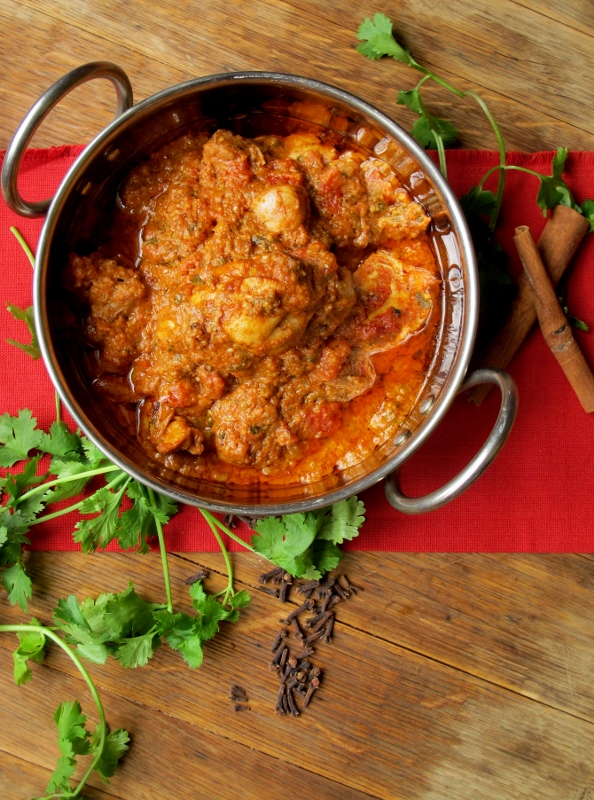
Makhani Murgh (Butter Chicken)

Makhani Murgh (Butter Chicken)

The chances are, this recipe is nothing like the butter chicken you’ve ordered countless times from your local Indian takeaway. I too have ordered it more times than I care to admit, so I know what passes for butter chicken these days and most of it is pretty dismal. So much so, I have actually stopped ordering it altogether, for fear it would put me off Indian food completely.

As you might have gathered, I’m somewhat disillusioned about the state of butter chicken these days – especially when I consider what a wonderful dish it truly is! Unfortunately, this venerable dish has largely been reduced to being the poster-child for unimaginative and pedestrian Indian fare. When made well, however, butter chicken undoubtedly deserves its place amongst the great Indian classics. Rich, decadent and wonderfully spiced, this dish is a real winner and should feature in any Indian feast.

As tasty as it is, the real appeal of butter chicken is how easy it is to make! Primarily cooked in the oven, the dish frees up valuable stove space – a godsend when you’re trying to juggle up to six dishes on a 4 plate hob! Like most curries, butter chicken can also be made in advance and gently reheated before serving. In the case of butter chicken though, it should be placed under a grill to be heated through and lightly browned, rather than on a hob.

Note: Please do not ever be tempted to make butter chicken with anything other than chicken thighs, especially not breast meat, which will come out completely dry and taste terrible.

For more of my top picks for an Indian feast, please click here, or for more great Indian recipes from The Muddled Pantry, please click here
Click here for the recipe

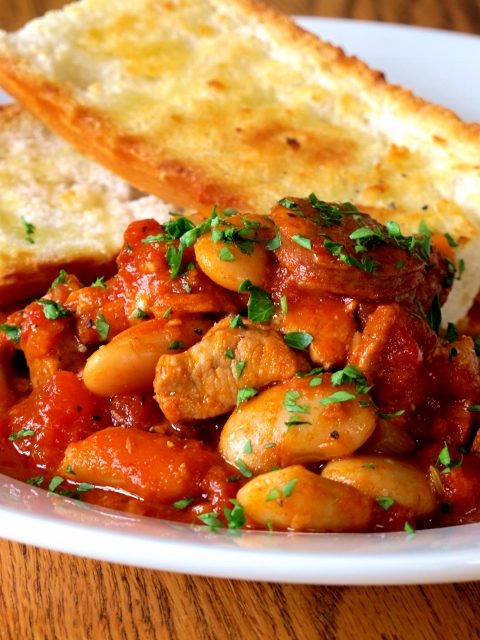
Spanish Pork Casserole with Chorizo & Butter Beans

Spanish Pork Casserole with Chorizo & Butter Beans

A true one-pot wonder, this simple Spanish inspired casserole is big on flavour and refreshingly light on effort. Other than the initial stages of browning the ingredients, this dish pretty much takes care of itself and rewards with a tasty family friendly meal that can be adapted to cater to almost all tastes and preferences.

Now I have to be honest, this wonderful casserole is probably as Spanish as chow mien is Chinese or California rolls are Japanese, but these days cultural authenticity is hardly an impediment to being the poster child of world cuisine. The modern maxim seems to be, “If a dish tastes good, who cares?” and rightfully so. After all, when the results are this tasty, I’m all about the muddled.

So whilst only vaguely Spanish, this simple dish is nevertheless brimming with classic Iberian flavours and, for a change, all the ingredients are perennial pantry staples. Admittedly I take it for granted that my larder resembles an over-stocked cornucopia of random ingredients, but this isn’t the sort of dish that calls for long forgotten packets of shrimp paste, bamboo leaves and jellyfish (yes, I do actually have the latter lurking in the depths of my fridge!). I digress, however.

Thankfully, significantly less exotic pantry staples are required for this dish, namely tins of butter-beans, chopped tomatoes, chorizo and smoked paprika. Admittedly smoked paprika isn’t necessarily a staple pantry item, but is readily available at most supermarkets or it can be substituted with regular paprika and a pinch of chilli powder or flakes. You can also use chickpeas instead of the butter beans and the fennel seeds can be omitted if you don’t have any…like I said, this recipe is nothing if not adaptable.

Note: As with most stews and casseroles, this dish will be all the better from a night chilling in the fridge.

Click here for the recipe

Chilli con Carne

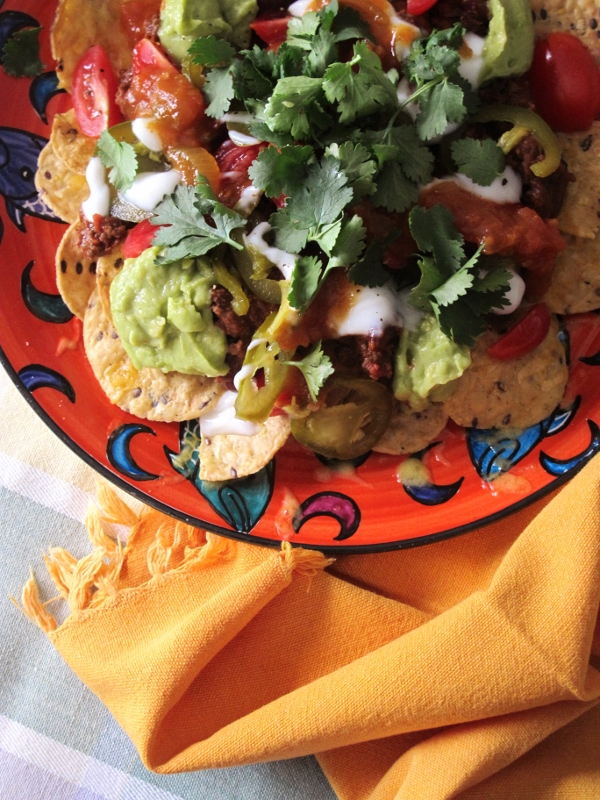
Chilli con Carne Nachos

Believe it or not, but there was a time when I was completely at sea when it came to cooking and Chilli con Carne was my only lifeline!

Admittedly back in my university days, my Chilli’s “secret ingredient” was a packet of Knorr Chilli con Carne flavouring, but given the dish was also made with cheap soya mince, the dubious origins of its flavour-base was the least of its problems! That said, my Chilli was still the stuff of legend in my digs and its fame wasn’t without merit. In spite of its shortcomings it still tasted pretty damn good, but given my only real competition was marmite on toast, my culinary supremacy was pretty much a given!

Mercifully, my cooking has improved somewhat since those dark days and my Chilli con Carne has since had a much needed makeover. Rather unsurprisingly, the soya mince and glorified packets of MSG have fallen to the wayside and have been replaced with more natural ingredients, but don’t be fooled – this is still good eating, just on a slightly improved budget!

Aside from the exclusion of various e-numbers and MSG, key to the elevation of my Chilli from student fare to tex-mex bliss is the inclusion of some dark chocolate. By simply adding a bit of chocolate, this dish develops a depth of flavour that is hard to beat…give the Chilli sufficient time to mellow and you’ll have an overnight sensation!

There are many ways to eat Chilli. You can simply serve it with some plain white rice, topped with a spoonful of sour cream and snipped chives or you can use it as a filling for burritos by wrapping it up in a tortilla with salad and guacamole.

These days, however, my favourite way to eat Chilli is by making nachos! Simply add the chilli to a pile of tortilla chips, sprinkle with all your favourite toppings and voilà: nachos’fantastico!

Click here for the recipe

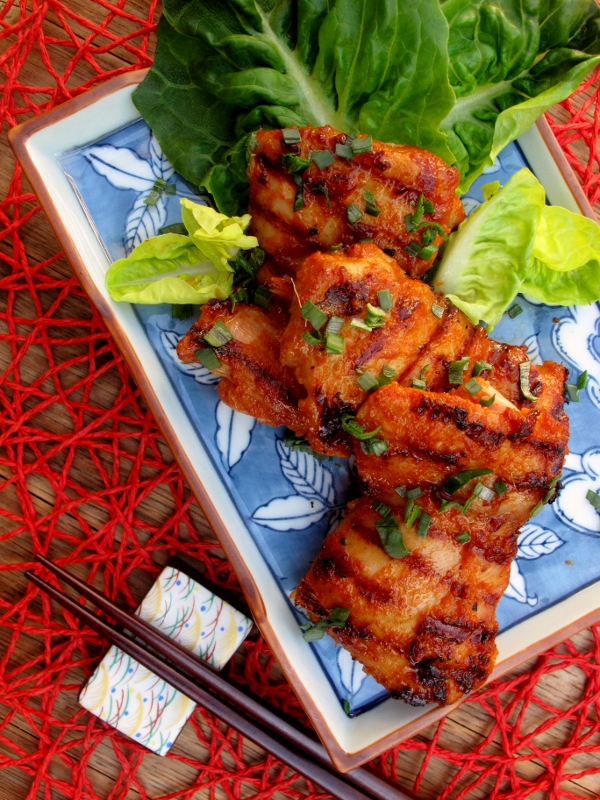
Korean Grilled Chicken 매운닭구이

Korean Spicy Grilled Chicken 매운닭구이

As I’ve mentioned previously, Koreans love to braai and they do so quite brilliantly. Whilst galbi is the undisputed star of any Korean Barbecue, there are plenty of other yummy options vying for space on your grill – this tasty recipe being chief among them.

This simple recipe is an absolute barbecue wonder and, as with most Korean marinates, has a transformative effect on the chicken, especially if left overnight. Whilst you can get away with marinating your meat for less time, ideally this marinate needs at least 12 to 18 hours to work its magic.

This marinate also works perfectly well with other cuts of chicken, particularly spatchcocked chicken, but obviously you will have to adjust the cooking time accordingly (35 to 40 minutes on a low-medium barbecue)

For more Korean recipes, please click HERE

To find out more about how to stock a Korean Pantry, please click HERE

For more braai/barbecue recipes from The Muddled Pantry, please click HERE

Click here for the recipe

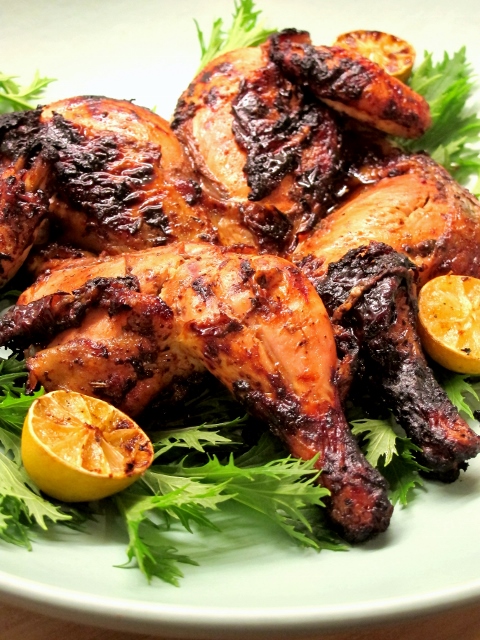
Barbecue Spatchcock Chicken with Charred Lime

Barbecue Spatchcock Chicken with Charred Lime

Also known colloquially as flatties, spatchcock chickens have long been a feature of the traditional South African braai. Of course, strictly speaking spatchcock chickens are not exclusively South African, but they have nevertheless earned their place on the grill along side other local favourites like braaiwors and skilpadjies. Delicious and, most importantly, practical, flatties remain a true braai stalwart!

Whether it be marinated in spicy peri-peri, chutney and ginger beer or simply with some lemon and herbs, you can usually find a flattie to meet your family’s tastes. Personally, my favourite flattie is marinated in a simple braai sauce and then doused in the juice of a couple of charred limes.

Now I must confess that I’m not a natural braaier. Generally speaking, I have an annoying propensity for cremating everything I place on a braai and my Weber has been collecting dust in the garage for years. This particular recipe is, however, just so damn tasty I just can’t resist the urge to wheel out my long forgotten braai! I can’t get enough of the combination of the lime and braai sauce, so much so, I could happily eat the whole chicken on my own – burnt or not! This simple recipe is my very own barbecue-bliss. Enjoy.

For more braai/barbecue recipes from The Muddled Pantry, please click HERE

Click here for the recipe

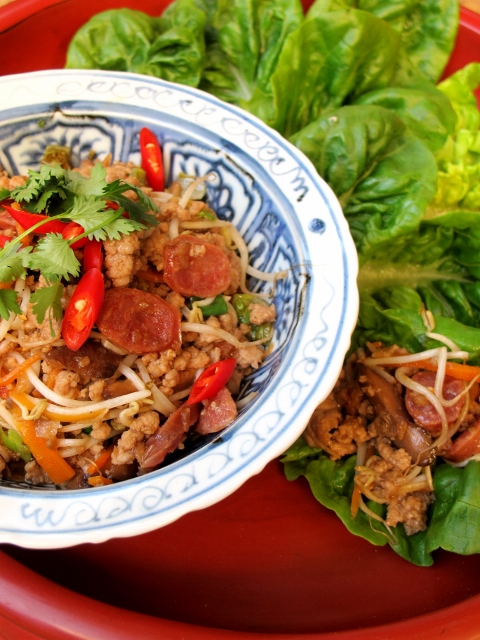
Sang Choi Bao 生菜包

Sung Choi Bao

Literally translated as “lettuce package”, Sang Choi Bao is made with fatty pork mince which is then eaten encased in crisp lettuce leaves, making it a great option for those of us who are avoiding traditional carbs like rice – something that is quite hard to do with Asian food!

Like most Asian recipes this one does have a few specialist ingredients, all of which are readily available from good Chinese supermarkets, but feel free to leave out whatever you can’t source. The key to the dish is actually in the sauce and the various vegetables, rather than the recipe’s more exotic inclusions. Okay, so this recipe does call for a small amount of sugar (not strictly Banting, I know), but you can just leave it out if you are so inclined.

Substantial and satisfying, this tasty dish scarcely feels like a meal that forgoes anything; and although it certainly isn’t conventional, Sang Choi Bao is also delicious when eaten with rice.

Traditionally eaten with your fingers, Sang Choi Bao is great fun to eat, making it a good dish for sharing. I suggest serving it up in a big bowl surrounded by the lettuce leaves and just let everybody tuck in. You can expect lots of sticky fingers after dinner!

For more Chinese recipes from the Muddled Pantry, please follow the link here.

For tips on stocking a Chinese pantry, please follow the link here.

Click here for the recipe

Assam Prawns (Tamarind Prawns)


Assam Prawns

A common complaint about many Malaysian recipes is that they are usually complicated and often have a long list of intimidatingly exotic ingredients. Whilst the resulting meals are invariably worth the effort, for the most part this particular gripe about Malaysian food isn’t completely without merit.

Like most expat Malaysians, I am forever seeking out viable substitutes for ingredients that we just take for granted at home. Candlenuts (buah keras) get substituted with blanched almonds, galangal (lengkuas) with ginger, bokkoms for salt fish and so on. For the most part the integrity of the dishes are rarely compromised, but there are some ingredients for which there are simply no substitutes and the meal invariably suffers for their subsequent omission.

Thankfully, however, there are some great Malaysian dishes that defy these inherent pitfalls and are surprisingly easy to make, Assam Prawns being a case in point. Requiring just a few basic ingredients and a very short cooking time, Assam Prawns pack quite a punch for its meagre effort level. Provided you can source some tamarind pulp, this dish offers an authentic taste of Asia without any of the usual hassles and exotic ingredients associated with Malaysian cooking.

Beyond being ridiculously simple to make, Assam Prawns are a true Nyonya classic and were, with good reason, a firm family favourite at my grandmother’s dinner table. This dish has it all! Sweet prawns, slavered in a simple tangy tamarind coating; what more could you want? This is truly finger-lickin’ good food, Malaysian style!

Note: Whilst the thought of it might seem strange to non-Asians, part of the joy of this dish is eating the prawns with their shells on. Encrusted in all that lovely sweet tamarind sauce, the prawn’s soft shell is perfectly edible and is, in fact, a great source of calcium. A word of warning though, don’t eat the sharp tail-shells and don’t forget to suck the prawn’s head. I’m serious, the tail-shell will totally choke you and the head is amazingly sweet and tasty when sucked. Trust me, your ultimate enjoyment of this incredible meal depends on both of these tips, so get sucking!

To discover other delicious Malaysian recipes from The Muddled Pantry, please click here
Click here for the recipe

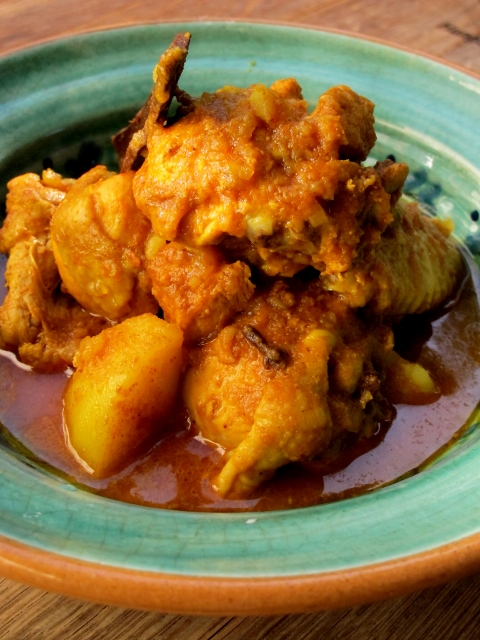
Cape Malay Chicken Curry

I’ve always thought of Cape Malay food as being the ultimate manifestation of ‘cuisine by circumstance’.

Finding themselves at the tip of Africa, and a world away from their native produce, the Malaysians and Indonesians of the time must have felt they were faced with a bleak culinary future. Devoid of South East Asian staples like coconuts and pandan leaves, the bountiful (but unfamiliar) fruits of the Cape must have been an ironic bitter pill to shallow.

Thankfully, the Cape’s prominence along the spice route meant there was an abundance of spices and combined with a mingling of cultures and a reliance on local produce, resulted in the creation of something quintessentially South African – Cape Malay cuisine. With dishes like koe’sisters, pickled fish and denningvleis, Cape Malay food is as unique as the culture it feeds.

Bobotie aside, arguably one of its most famous dishes has to be Cape Malay Chicken Curry. A dish that never seems to fade in its popularity, this simple curry is a perfect example of great Asian food made without staple Asian ingredients. In the absence of coconut milk or candlenuts, this curry is enriched with tomatoes, but is still royally flavoured with exotic spices. As with almost all Cape Malay dishes, chicken curry is always served with an array of sambals or condiments.

Simply delicious, no matter where you are in the world.

For more great South African recipes from The Muddled Pantry please click here

Click here for the recipe

Thai Green Chicken Curry (Kaeng Khiao Wan Gai)

Arguably the most famous curry in the world, Green Curry is, for many of us, the poster-child of Thai cuisine. Disarmingly unintimidating, delicious and rewarding to make, it is hardly surprising that Green Curry has the equivocal honour of being as synonymous with Thailand as Spaghetti Bolognese is to Italy.

Thai Green Chicken Curry (Kaeng Khiao Wan Gai)In spite of the fact that it is a true Thai classic, Green Curry is actually remarkably easy to make at home. The first thing to consider is your curry paste and the eternal debate between homemade or store-bought. Whilst there are a wide range of fantastic ready-made pastes available, many recipes and chefs wax-lyrical about the absolute necessity of making your own, insisting, “that’s how its done in Asia”. Poppycock!

Now I’m not suggesting you shouldn’t make your own, I’m just saying you mustn’t get too hung up on doing so. The truth is that the only Asians making their own curry pastes are those who’s job it is to do so.

Okay, so whilst I do concede that a homemade curry paste is almost always nicer than store-bought, they invariably require a long list of ingredients that are difficult to source and often impossible to substitute. As part of this recipe I have included a homemade curry paste and the final dish is all the more rewarding for it, but if you can’t be bothered making it or you don’t have the ingredients, don’t despair – there is no shame in using a store-bought paste instead (as I often do). Thankfully, as with most curries, the success of the dish actually relies more on technique than ingredients; so rather focus on how you make the curry and less on the provenance of your paste. The chances are your curry will still turn out great!

For more delicious Thai recipes please click here, or if you need tips on stocking your Thai Pantry please click here.

Click here for the recipe

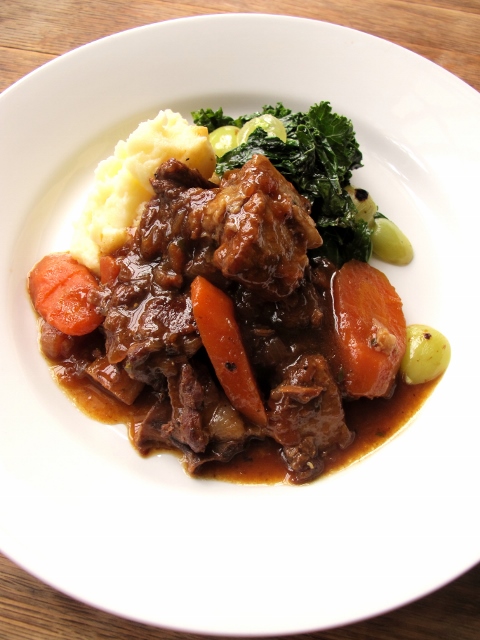
Cider Braised Beef Short-ribs

Being half Asian I naturally adore food packed with flavour and usually in my kitchen that means spicy and exotic, but sometimes I crave the simple home-cooked comforts of my mother’s land. It may be the inner-Brit in me, but there are days when you can just keep your kimchi and beef rendang – all I want is toad-in-the-hole or a proper Sunday roast!

Without a chilli nor spice in sight, this dish is the epitome of what I would call real British comfort-food. Made with just a few seemingly unassuming ingredients, this humble stew seems to come out with more flavour than was put in! Uncomplicated and yet rich with depth, this dish is the perfect example of good food, made simply.

Adapted from Leiths Meat Bible, this amazing braise goes well with just about anything. Feeling sophisticated? Serve it with classic mash potato and some sautéed kale with grapes. Feeling rustic? Just grab some fresh crusty bread and mop-up the delicious sauce!

Kimchi and beef rendang? Lord knows I still love them, but when old-school British comfort-food tastes this good, you could be forgiven for never wanting anything else!

Click here for the recipe