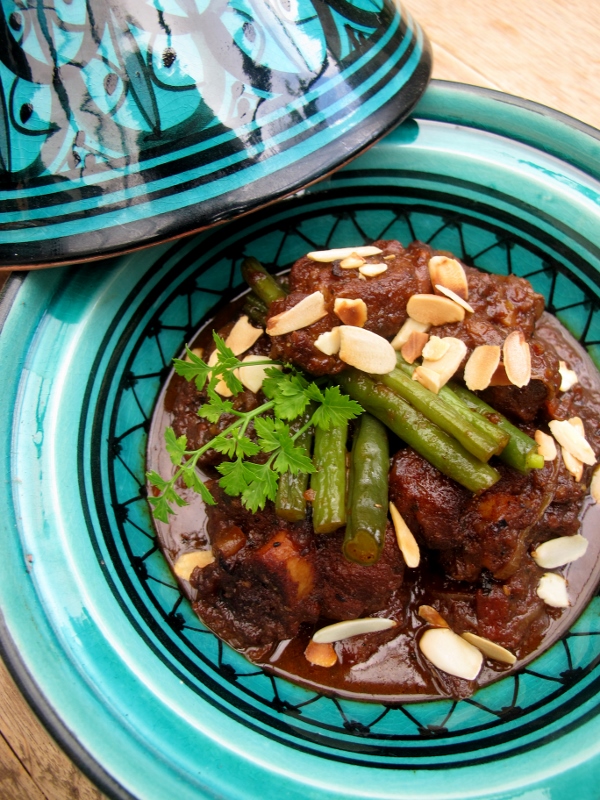
Lamb Tagine with Dates

Lamb Tagine with DatesA firm family favourite, this tagine is sweet and intensely spiced.

So much so, I rarely make this dish for anybody else other than my partner. Not because it isn’t utterly delicious, but because it is almost bludgeoning in its intensity and is not for the fainthearted; this is real stick-to-your-ribs type cooking!

On the few occasions I have served it to others it has always gone down a treat, I just make sure that the friends I make it for like this style of cooking. The trick to getting away with serving a dish packed with this much flavour is to pair it with a simple side dish like plain couscous or a zingy lemon-soaked tabbouleh…or, if you are my partner, some plain white rice! And whilst I despair at the latter, it is a miracle that my partner likes this dish at all so I don’t push the matter, but I normally discourage such pandering and recommend couscous as the appropriate accompaniment.

For more delicious Moroccan recipes please click here or if you would like to read more about tagines please click here

Click here for the recipe

Morocco: Lifting the Lid on Tagines

Ever since I visited Morocco back in 2000, I’ve been obsessed with tagines.

Over the years I have amassed a fair collection of these conical wonder-pots; so much so, I actually have a cupboard solely dedicated to storing my tagines! Thankfully my obsessive nature has since moved on to other kitchen oddities, but the fact remains that tagines are possibly the greatest casserole pot ever invented. Ingeniously designed to produce meltingly tender stews – tagines are to Morocco, what the wok is to China: inseparable and indispensable! Whilst I’m unsure of the exact culinary science behind the tagine’s unwavering ability to produce such tender meat, rather unsurprisingly, the key to its design lies in its conical lid. This uniquely designed lid allows the steam to rise up to the top and drip back down into the simmering stew, that is about all I know. Beyond that, it is just magic.

Traditionally made out of clay and cooked over a charcoal fire, today tagines come in a variety of guises. Pick a size or colour, cast-iron or pottery; these days there is probably the perfect tagine out there to fulfill your own specific “foodie” aspirations. Whilst I have a real soft spot for authenticity, I would avoid buying a traditional clay tagine as these are notoriously tricky to cook with, require “seasoning” and are hostile to alternative cooking methods (they may crack or worse, explode!). To my mind, what makes a good tagine is its ability to go directly from the stove-top to oven. I currently use a tagine made out of mircostoven, not very traditional I know, but what it lacks in authenticity, it makes up for in versatility! I’ve had a number of tagines that were suitable only for cooking in the oven and I found these to be very inconvenient as you had to prepare and sauté your stew ingredients in a separate pan, before adding them to the actual tagine for cooking in the oven. I’ve always found this to be detrimental to the flavour of the finished meal – any time you use two separate pans/pots like this, you run the risk of losing some of the flavour in the transfer. If that is not enough to convince you to buy a multi-functional tagine then consider this the ultimate persuasion: one tagine means there’ll be less washing-up!

So now you know what type of tagine you should buy, back to tagines as an actual meal.

Tagines in Morocco were not at all what I expected. In fact, from my own experience they’re largely indistinguishable from the complex heady concoctions we have come to expect from watching TV chefs who are drunk on preserved lemons and dates stuffed with walnuts. In the month that I trailed around Morocco, the few tagines I encountered were actually pretty plain affairs; tasty, simple and unrefined – Berber Tagine ruled supreme! I have no doubt that grander tagines were being eaten in the luxury courtyards of ancient riads or on a rooftop overlooking Marrakesh’s Jemaa El-Fna, but sadly these places, and tagines, were beyond my meagre backpacker budget.

This does not mean that I didn’t have some amazing tagines in Morocco, far from it. The best tagine I had was a simple berber tagine from a hole-in-the-wall restaurant, located just inside the main entrance to Marrakesh’s labyrinthine souk. Made in individual portioned clay tagines and eaten with chunks of soft bread, these tagines were a master class in simplicity: lightly spiced lamb with potatoes, onions and carrots, that was all it took to create tagine-magic. Our favourite part of this mini-tagine was, however, the encrusted potatoes and onions at the bottom of the stew. Whilst seemingly unintentional, these fonds, or sucs, gave the tagine an intensity that had us coming back time and again! Unfortunately, as this culinary masterstroke was unintentional, which turned the simple act of picking our individual tagine (out of the 20 or more available) into a game of culinary roulette! We would try to stack the odds in our favour by asking which tagine had been cooking the longest, in the hope this would be most likely to have formed the coverted crust, but like all gambles it was hit and miss. What was worse though was when only one of us hit the jackpot – tagine-envy is truly an ugly thing!

So whilst my time in the country gave me a greater appreciation of the potential for simplicity in Moroccan cuisine, it did not dampen my devotion to its headier flavours. I, like many before me, am readily seduced by the spiced romance of the Moroccan palette; whether the food is simple or grand, central to that allure is the tagine. Many years on, a good few tagines later, I still love making Moroccan food. Often my tagines are coddlingly sweet, other times they’re refreshingly tangy and sometimes they’re the epitome of simplicity. And if I’m lucky, and my cooking karma is just right, sometimes my tagines will reward my unwavering devotion with an encrusted potato, or two…but sssh, don’t tell my partner!

For some delicious Moroccan recipes, please click here
Cauliflower Soup with Caraway and Chorizo

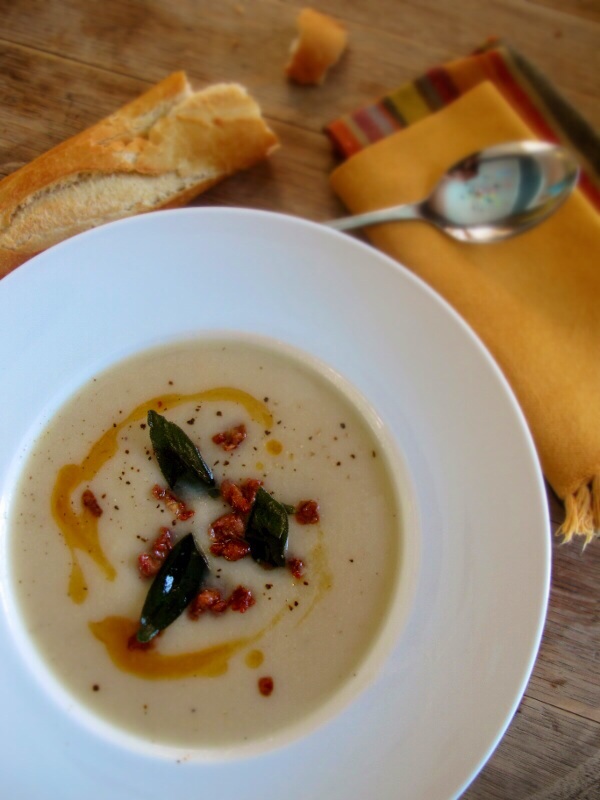
imageNobody can deny that the once humble cauliflower is the new broccoli. The reigning darling of the health-conscious, and the saviour of “The Cult of Banting” cauliflower’s stock has never been so high.

Once only to be found shroud in a béchamel sauce, these days you can find a myriad of recipes for this previously maligned vegetable. Long before it became de rigueur though, I’d been using cauliflower to make this amazing soup.

What elevates this soup beyond just being a bowl of bland puréed cauliflower is the simple addition of caraway seeds. These add an earthy note, giving the soup a depth of flavour that would otherwise be lacking. In addition to some lightly fried spicy chorizo, I usually garnish the soup in a number of ways, depending on the occasion. For an informal meal I would use some fresh flat-leafed parsley, but for a dinner party I would sprinkle over some snipped chives. If I really want to impress, however, I would garnish the soup with some crispy sage leaves. The added texture and flavour takes the dish to an entirely different level. Just make sure you don’t burn the sage!

I love this soup; not because it’s trending or good for me, but because it is cheap, easy and surprisingly sophisticated – truly this is a soup for all occasions. Long after the cauliflower’s time in the spotlight is over and it returns to being the humble vegetable it once was, I know I’ll continue loving this recipe, and so will you.

Note: being stubbornly pre-Banting my recipe does contain potatoes, but theses are included out of habit and not necessity, so can easily be omitted if desired.

Click here for the recipe

Thai Candied Pork (Moo Wan), Green Papaya Salad (Som Tam) & Coconut Rice

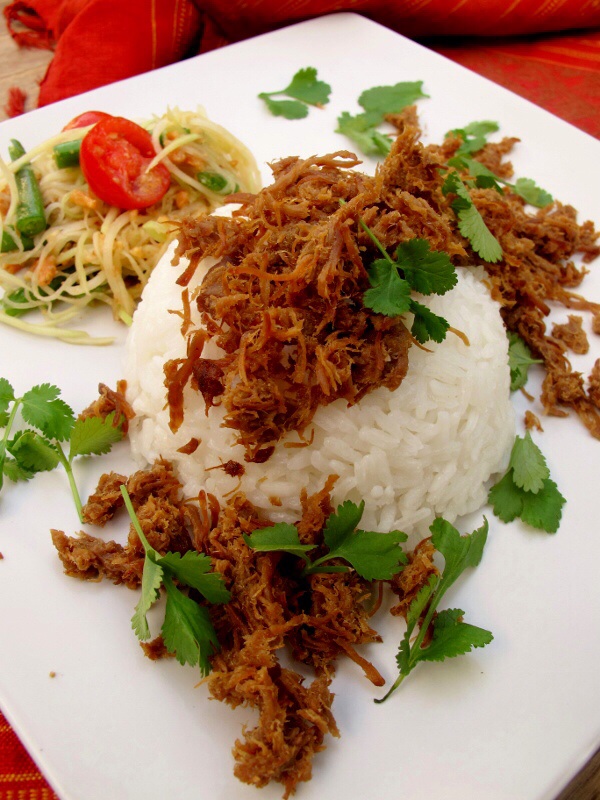
There are some dishes that are just meant to be eaten together, their combined flavours amounting to something akin to culinary kismet – this is such a meal. Eaten on its own Moo Wan is almost unpalatably sweet, but when served with som tam (green papaya salad) the results are nothing short of stellar! Add coconut rice to the mix and you simply have heaven-on-a-plate.

imageAs with so many Thai classics, the key to the success of the overall meal is the balance each individual element strikes when combined. The sweet moo wan counters the tang of the salad, the coconut rice envelopes the fierce chilli kick of the som tam, whilst the salad adds texture and bite; every element has its own role to play in creating the perfect balance, resulting in an almost perfect Thai meal.

Whilst the idea of making the three separate dishes for this meal may seem daunting, the truth is that individually they are actually pretty easy. The trick to preparing multiple dishes for any Asian meal is preparation and timing. The moo wan will keep in the fridge for a good few days, so I would make this in advance if possible. You should start cooking the coconut rice at least 40 to 50 minutes before serving, as it will benefit from being allowed to stand for half an hour after cooking. The som tam must be prepared just before serving, so I recommend prepping your ingredients in advance. However, the papaya should only be shredded just before using. To find out how to make som tam (green papaya salad), please click here to find the recipe.

For more delicious Thai recipes please click here, or if you need tips on stocking your Thai Pantry please click here.

Click here for the recipe

Som Tam (Green Papaya Salad)

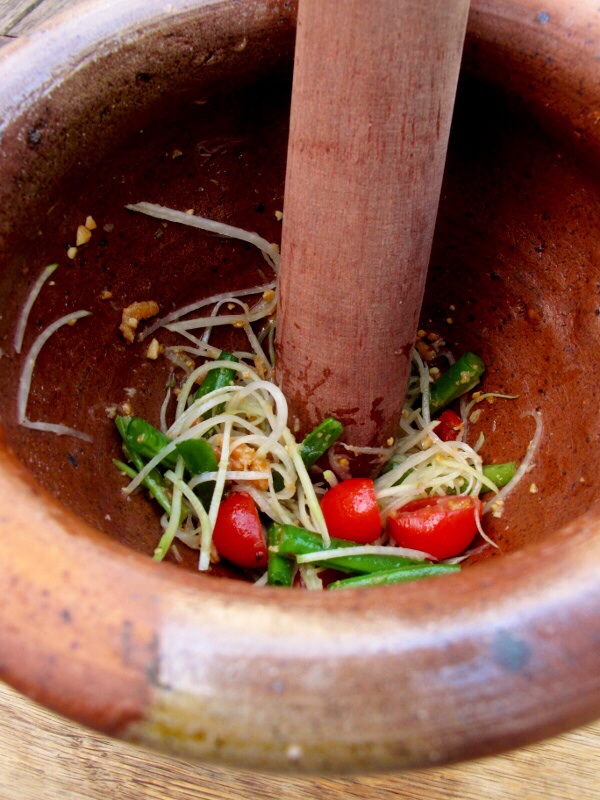
I’ve always loved Thai Green Papaya Salad (Som Tam), but I’ve had to set aside my cravings for the simple reason that you couldn’t source green papaya in Cape Town…that is, until now! Having spotted a gap in the market, the New Asian Spice Supermarket in Sea Point has thankfully started stocking them. Supply is often erratic, as there’s only one farm in the whole of South Africa that produces these under-ripened gems, but regardless of sporadic supply at least they are finally available locally. And so, in an instant, an obsession was reborn!

Other than sourcing green papaya, there are two key elements essential to making the salad. The first is the need for a large pestle and mortar, the second is shredding the papaya correctly. The latter can either be done by hand, using a sharp knife to cut into the papaya and then using a vegetable peeler to shred the flesh; or with a mandolin, using a fine shredding attachment. Personally I use a mandolin; while less authentic, it gets the job done in half the time!

The epitome of the classic Thai sweet vs. sour dish, Som Tam delivers a tangy, sweet punch with a texture and crunch that is incredibly refreshing. Hot, fragrant and balanced, for many this is Thailand on a plate. Although delicious served with just some plain rice, or as part of a larger Thai banquet, if you want to partner the som tam with something really authentic, try it with Candied Pork and Coconut Rice – spectacular!

For more delicious Thai recipes please click here, or if you need tips on stocking your Thai Pantry please click here.

Click here for the recipe

Chocolate Parfait with Pecan Crumbs

Chocolate Parfait I have had more than my fair share of doomed desserts. In fact given the choice, I would happily forgo them completely, or buy-in something instead. I am, however, not a dessert person: never have been, never will be. I would rather have a starter for a “pudding” than a crème brûlée, but I’m in the minority; understandably most dinner guests expect a sweet treat to end their meal, not another bowl of French onion soup! Like any good host I like to give my guests what they want, so I’ve taught myself a few special desserts to cater to their not-unreasonable dining expectations.

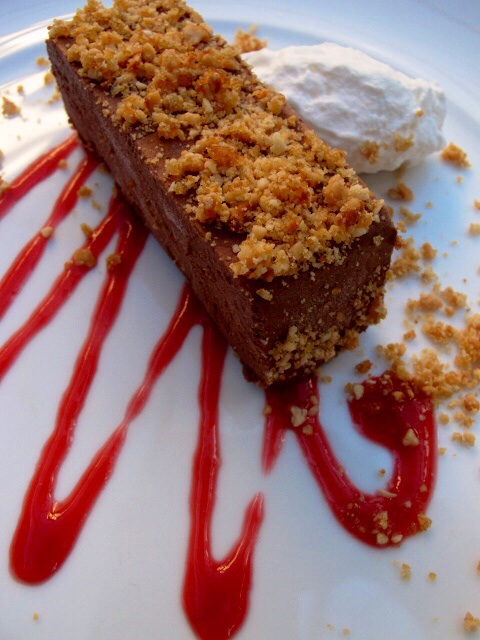
Which brings me to this particular recipe – chocolate parfait. In my relatively limited arsenal of dessert recipes, this is possibly my favourite. Part ice-cream, part semifreddo; chocolate parfait is entirely appealing but without the hassle of either. Unlike ice-cream, parfait requires no churning or special equipment. Elegant enough to impress, virtually impossible to stuff-up and always deliciously moreish; chocolate parfait is a dessert coup!

Paired with pecan crumbs, whipped cream and a coulis, this dessert is so delicious even I am tempted to scoff a slice!

For more Sweet Treats from The Muddled Pantry, please click here

Click here for the recipe

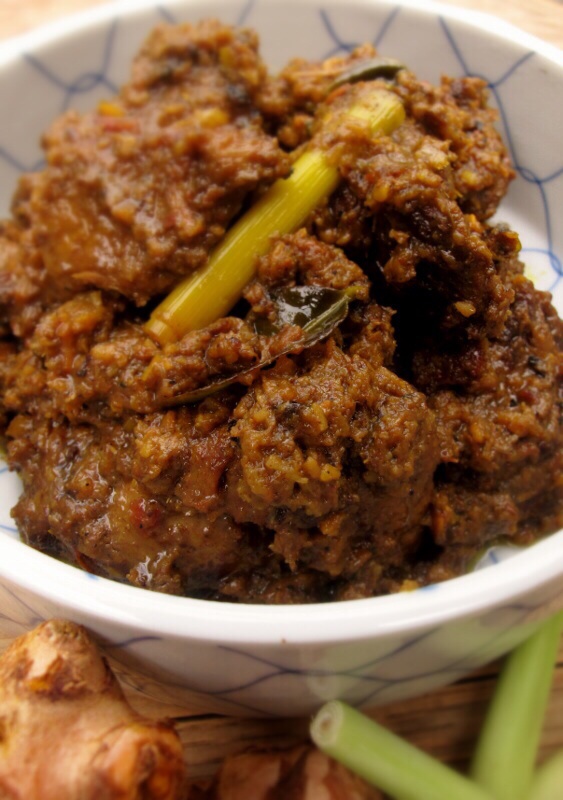
Rendang Daging (Beef Rendang)

Beef RendangSome mornings I wake up with one word in mind: “rendang!”. I think it’s probably just a Malaysian thing, but this is a dish I literally dream about.

Beef Rendang is perhaps the most beloved Malay meal and is often the go-to main dish for many a family feast or special occasion. With its origins rooted in Indonesia, rendang is popluar throughout South East Asia, especially amongst the Malays in Malaysia and Singapore. Although not widely known outside the region, a 2011 online poll by CNN International chose rendang as the number one dish of their ‘World’s 50 Most Delicious Foods’. Yes, rendang really is that good!

Rendang, however, seems to appeal the most to expat Malaysians. In spite of its long cooking time, rendang is relatively easy to make and can withstand a certain degree of adaptation – something that is vital given the inherent difficulties in stocking a Malay pantry abroad. On a deeper level, though, cooking up a batch of rendang can sometimes feel like an affirmation of our shared cultural identity; a reconnection to our collective culinary memories, through taste. This is the real reason for rendang’s enduring popularity; for many of us it, quite simply, tastes of home.

Ostensibly a curry, rendang is in fact what is known as a dry-curry. Cooked over an extended period, the aromatic coconut sauce is reduced to the point until it clings to the tender beef. This prolonged reduction creates an intensity of flavour that can only be described as explosive. As with all curries, a rendang benefits immensely from being made the day before serving; a night in the fridge gives the flavours time to develop and mellow. Your rendang will be all the better for your patience.

To discover other delicious Malaysian recipes from The Muddled Pantry, please click here

Click here for the recipe

Kari Kapitan (Nyonya Chicken Curry Kapitan)

This Malaysian Classic was my late father’s favourite curry and with good reason, it is simply delectable!

The überkind of Nyonya cuisine, Kari Kapitan is the prefect confluence of traditional Malay and Chinese flavours. My version of this curry is a loose adaptation of that of the reigning queen of Nyonya food, Pearly Kee. Nyonya cuisine is the epitome of what makes Malaysian food great; inclusivity, and Pearly is a true vanguard of this culinary heritage. The result of a marriage of Malay and Chinese ingredients and flavours, Nyonya style cooking is unique to Malaysia and is, perhaps, one of the most underrated cuisines in the World.

A Malaysian take on a traditional Indian Chicken Curry, Kari Kapitan is the result of a thorough Nyonya makeover. Along with the classic additions of lemongrass, lime and galangal, the chief Nyonya element is belachan. Ubiquitous to Malaysian cuisine, belachan is a fermented shrimp paste and is one of the hallmarks of Nyonya cooking. Whilst best described as ‘pungent’, belachan mellows when added to a curry, imparting a depth of flavour to the finished dish like no other.

One of my happiest childhood memories is going on a family outing to the local waterfalls; virtually the entire Clan was there – grandparents, aunts, uncles and a full gaggle of cousins. After hours of slip-sliding through the falls, it was finally lunchtime! As we gathered for our picnic, my grandmother presented us with a massive white Tupperware, filled to the brim with leftover Kari Kapitan. Armed with anticipation and slices of fresh white bread, we all tucked in; what bliss! Perched on those boulders, surrounded by my army of screaming cousins, with the cool waters rushing between my toes and my fingers stained yellow from the Kari Kapitan; it was the perfect childhood memory, matched with the perfect meal.

Universally, all curries benefit from a day of rest before being served, but this is especially true of Kari Kapitan. Whilst still delicious when eaten on the day of cooking, a bit of patience reaps its own reward. Such is its plethora of flavours, Kari Kapitan needs time to find its balance, to develop and mature. As a result, Kari Kapitan makes for amazing leftovers…and memories.

To discover other delicious Malaysian recipes from The Muddled Pantry, please click here

Click here for the recipe

Gerry’s Homemade Rusks

Gerry's Homemade RusksWhen I first arrived in South Africa I was completely unprepared for the local obsession with rusks. To my mind, and to most non-South Africans, a rusk is a dry, hard baby biscuit, designed to aid teething – not very appealing. Confused as to why everyone was eating baby biscuits, I soon discovered that rusks here are something altogether different. They are still slightly dry and hard, but they are all about comfort-snacking and dunking. Rusks are South Africa’s biscotti and to my mind nobody makes them better than my dear friend Gerry.

Always made with love, Gerry’s recipe strikes the right balance between comfort and decadence: this recipe is rusk perfection. Although traditionally served with hot coffee, these rusk are so good I can happily forgo the dunking altogether and eat them straight out of the tin!

As for South Africa’s obsession with rusks? Thanks to Gerry’s I get it now, I totally do.

For more Sweet Treats from The Muddled Pantry, please click here

If you would like to read more about South African food please follow this link or for more South African recipes, please click here

Click here for the recipe

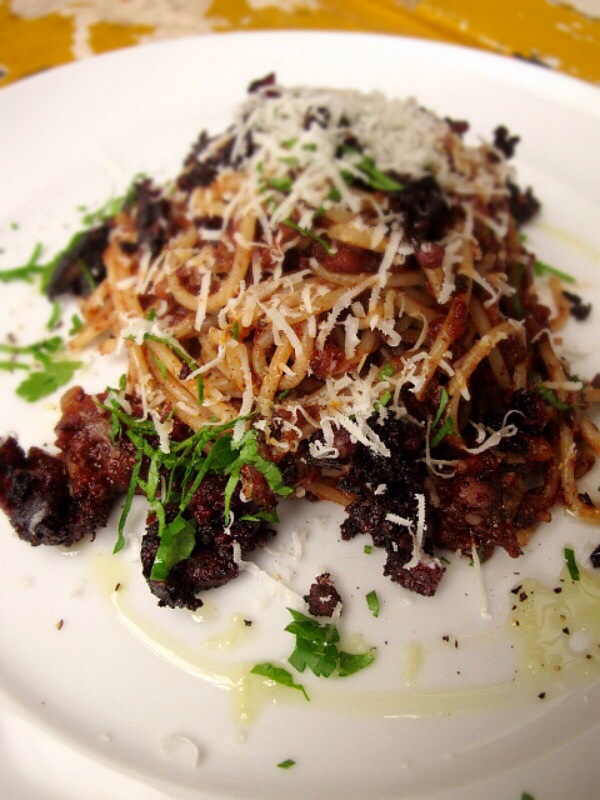
Black Pud’tanesca

Black Pudding Pasta: Black Pud'tanescaSome days I just need to have a black pudding fix.

Yes, I know many think it’s gross, but my love of black pudding is a cherished hangover from my days when I lived in Newport, South Wales. Back then, I loved nothing more than a visit to my local greasy-spoon cafe, just off the Cardiff Road. This place was the Real McCoy: the accents were thick, the tea was brutal, the vinyl tablecloths slick with grease and the fry-ups were a full-on, no-holds barred affair – even the bread was fried! It may have been a coronary hazard, but was pure greased bliss. Even now the mere thought of fried eggs with baked beans, black pudding and fried bread is enough to make my mouth water and my arteries contract.

Thankfully these days I’m slightly more circumspect about my breakfast choices, but now and again I find myself craving a bit of black pudding. More recently however, I have been trying to find new ways of incorporating this maligned British delicacy into my cooking. As a result, it has found its way into various risottos, been served elegantly with smoked haddock and even added to salads; all delicious, but by far my favourite effort has been Black Pud’tanesca! Akin to a punchy traditional Puttanesca, this robust pasta sauce is not for the fainthearted. A gutsy dish, big on flavour, it had me hooked with my very first bite; each successive mouthful was followed by an “oh my God, that’s amazing!”, culminating in a flurry of unashamed plate-licking, a second helping and more “oh my God”s!

Seriously good, easy to make and impossible to forget, this humble pasta sauce will forever change the way you see black pudding. Be brave and prepare to be amazed; if you’ll forgive the pun, this recipe is bloody delicious!

Click here for the recipe