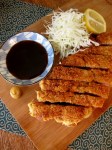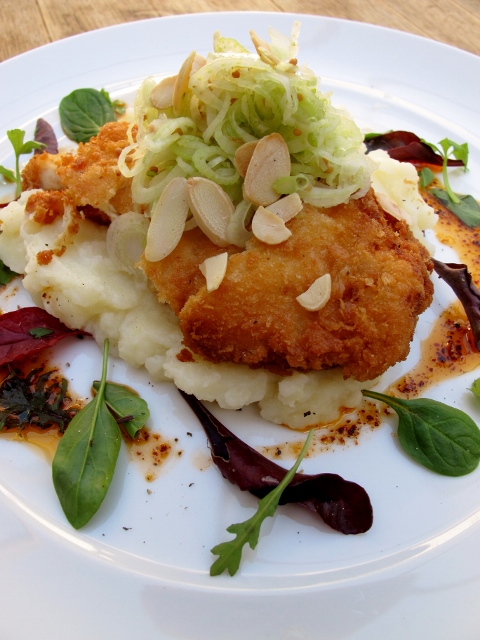
Chicken Katsu with Warm Fennel & Almond Salad and Sichuan Chilli Oil

Chicken Katsu with Warm Fennel Salad and Sichuan Chilli OilInspiration is occasionally born out of apathy and the origins of this tasty meal were no different.

Feeling particularly uninspired one evening, I decided to forgo my usual practice of preparing two completely separate meals for dinner and instead decided to do the unthinkable – eat the same dinner as my partner! Now please bear in mind that this dining-convergence doesn’t happen often in my kitchen, very rarely in fact. We have wildly different tastes and normally I’m happy to make us different dinners every night, but there are occasions when I justifiably just think, “sod it” and we end up with the same meal. At least almost exactly the same, I always have to tart my own meal up, just a little!

So, “Chicken Schnitzel with mash” for two it was then! Now I must confess that the very first time I made this dish it was with some horrendous ready-made Chicken Schnitzels, wrestled from the frozen depths of my freezer. Indeed I had sunk so low, but like I said, “apathy = inspiration”.

But even in this heightened state of disinterest, I still needed something to spruce up this dire meal, so I set about rummaging through the fridge. I was looking for quick fixes and I found some; leftover pickled fennel that I had made for Kimchi Tacos – sorted! Things were starting to look up. It was only then that the inspiration started to kick-in; some toasted almond flakes were added to the fennel and Sichuan Chilli Oil, leftover from when I last made Dan-Dan Noodles, found its way onto the plate! Whilst this was fast turning into an inspired concoction, the addition of these two ingredients turned out to be culinary-dynamite! With just a few simple twists this meal went from turgid to terrific!

Note: The chicken in this dish has since morphed into Japanese Chicken Katsu, but there is nothing wrong with using good old chicken schnitzel instead (homemade or otherwise). For all extents and purposes Chicken Katsu and schnitzel are pretty much the same thing, but my need to complicate things for myself is, sadly, inherent and overwhelming.
Click here for the recipe

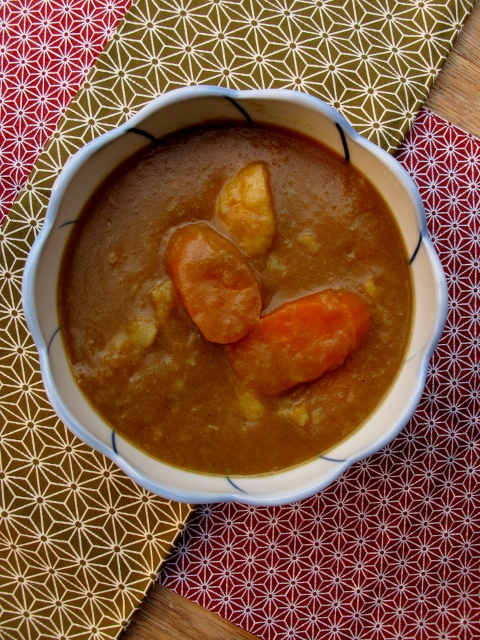
Karē Sōsu カレーソース (Japanese Curry Sauce)

Karē (Japanese Curry Sauce)Reminiscent of those dreadful British school-dinner curries of the 80s and akin to the sort of curry sauce that is poured over chips in the UK or currywurst in Germany, at first glance Japanese curry is mild, bland and, to some at least, inoffensive to the point of being offensive. That may all seem a tad harsh, but the comparison is far from unjustified, especially when you consider that curry was first introduced to Japan by the British (of all people) in the early 1900s! With that in mind however, it is all too easy to be unduly disparaging about Japanese curry and you shouldn’t, as it is actually quite delicious.

Generally speaking, in Japan karē is served as a sauce (sōsu) rather than a curry made with meat, so you are unlikely to find a chicken or beef curry per se. You are of course welcome to add some meat to the curry sauce as it cooks, but I prefer to pour it over a crisp crumbed cutlet (tonkatsu/chikenkatsu) or add it to a pile of gyūdon. Typically eaten with rice or udon noodles, karē is so popular it is considered one of Japan’s national dishes and is readily available throughout the country, both at specialist restaurants or as an option on menus at most gyūdon or noodle joints.

What sets karē apart from other curries is the fact that it is made with a roux, which enriches and thickens sauce. There are a wide range of Japanese curry/roux cubes available at most Asian supermarkets and these are well worth the expense as they are really the only specialist ingredient in the karē sōsu. Alternatively, you can use Japanese curry powder instead. If, however, neither of these are available you can just use a mild curry powder, but the flavour won’t be as authentic.

For more Japanese recipes, please click HERE or to find out more about how to stock a Japanese Pantry, please click HERE

Click here for the recipe

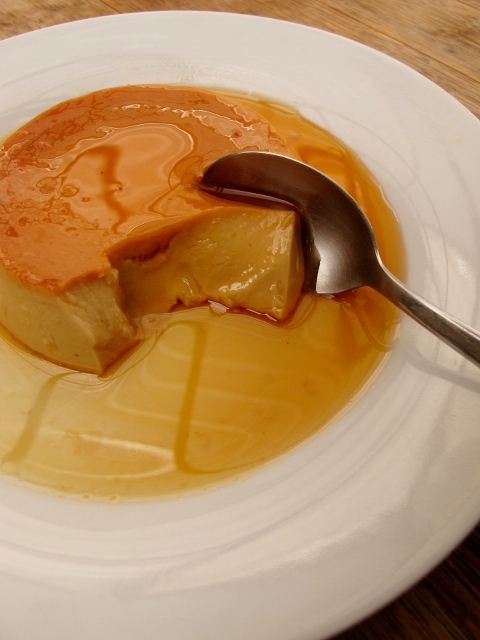
Dulce de Leche Creme Caramel

Dulce de Leche Creme CaramelThe epitome of 80s vogue, everybody over a certain age will remember when Creme Caramel was très chic and the dessert of choice at only the most discerning dinner parties. Sadly, along with the likes of Baked Alaska, Creme Caramel has gone the way of the Prawn Cocktail – largely relegated to dubious theme nights and the occasional bout of culinary nostalgia.

Thankfully though, Creme Caramel’s resurrection is at hand. These days there’s a fine line between passé and retro-revival and by simply adding a de rigueur ingredient like dulce de leche, suddenly Creme Caramel has renewed appeal and relevance. From tired to trending with one simple twist on a worn classic!

For a “classic” dessert, this recipe is surprisingly cheap to make. Other than the dulce de leche, most of the ingredients are pantry staples: milk, eggs and sugar. All in all, it’s a pretty impressive dessert for not a lot of money! A veritable institution in South America, dulce de leche isn’t always readily available in South Africa, but you can substitute it with something like Nestlé’s Caramel Treat instead.

Creme Caramel also has an undeserved reputation for being difficult to make, but this couldn’t be further from the truth! Okay, admittedly the recipe looks complicated, but other than the “tempering” the recipe is actually very straight forward. As much as I would love to completely dispel the myth of how tricky it is to make Creme Caramel, I don’t think it’s something we should be shouting from the rooftops. A good dose of culinary kudos is never a bad thing and there’s nothing better than hearing your guests exclaim, “Wait, you actually made this? It’s amazing!”.

Yes, did…and yes it is! Kudos indeed.

For more Sweet Treats from the Muddled Pantry, click here

Dulce de Leche Creme Caramel: Serves 4

  • 2/3 cup sugar
  • 1/4 cup water
  • 1.25 cups milk
  • 1/2 cup dulce de leche (or Nestlé Caramel Treat)
  • 1/4 tsp salt
  • 2 large eggs
  • 2 large egg yolks
  • 1 tsp vanilla extract (or essence)

Method:

  1. Preheat oven to 160C.
  2. In a small saucepan combine sugar and water
  3. Bring sugar to a boil and cook over medium heat until sugar turns a golden caramel color – this should take about 7-10 minutes
  4. Divide the caramel into four 180ml ramekins, coating the bottom of each ramekin – set ramekins aside
  5. In a saucepan, combine milk, dulce de leche and salt.
  6. Cook over medium heat, whisking until the mixture is smooth and just comes to a simmer
  7. Whisk the eggs, egg yolks and vanilla in a medium bowl
  8. When the milk reaches a simmer, take it off the heat and temper the eggs by very slowly pouring the milk into the eggs, all the while whisking furiously. If you are nervous about tempering, rather whisk in the milk, a few tablespoons at a time to ensure that the mixture doesn’t curdle
  9. Strain mixture into a large measuring cup or bowl with a pouring spout
  10. Put a kettle onto boil
  11. Arrange prepared ramekins in a 9×13-inch baking dish
  12. Divide custard mixture evenly into the ramekins
  13. Place baking dish into oven and carefully pour in the freshly boiled water until the water reaches about halfway up the sides of the ramekins
  14. Bake for 25-30 minutes, until just set
  15. Remove the ramekins from the water and allow to cool to room temperature
  16. Cover with cling wrap and refrigerate for at least 4 hours, or overnight

To Serve:

  1. Run a sharp knife around the edge of each ramekin
  2. Place the ramekins in the same baking tray from the day before, add some hot water and allow to stand for a minute
  3. Place a serving plate over the ramekin and invert so that the creme caramel will slide out

Pumpkin Fritters (Pampoenkoekies)

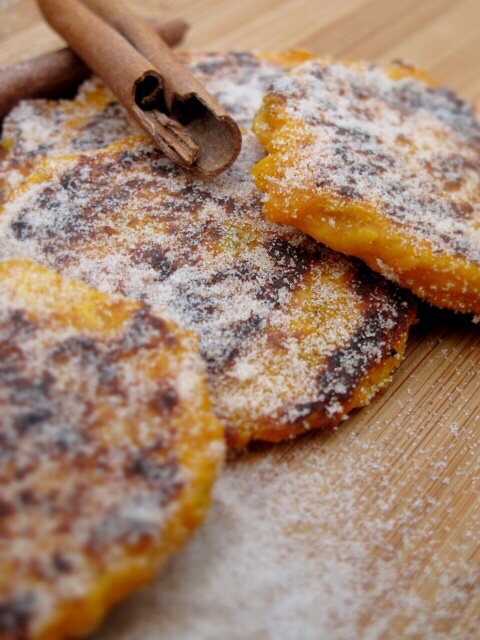
Pumpkin Fritters (Pampoenkoekies)I know they may sound a little weird to the uninitiated, but pumpkin fritters are absolutely delicious!

Enjoyed either as a light snack or side dish to a traditional boerekos spread, these little South African delights are very easy to make, are surprisingly healthy and always go down a treat.

Naturally sweet, they are a great way to dupe vegetable-phobic youngsters into eating one of their “5-a-day”. When lightly sprinkled with cinnamon sugar however, they make a great sweet treat that are impossible to resist!

For more Sweet Treats from The Muddled Pantry, please click here

If you would like to read more about South African food please follow this link or for more South African recipes, please click here

Click here for the recipe

Recipes by Cuisine


      CHINESE                      MOROCCAN                     MALAYSIAN                        THAI

      INDIAN                            KOREAN                   SOUTH AFRICAN                   ITALIAN

   VIETNAMESE                     JAPANESE                        SPANISH                          GLOBAL

Sichuan Chilli Oil 四川辣油

Sichuan Chilli Oil (makes 250ml)

  • 1 cup vegetable oil
  • 1 spring onion, cut into segments
  • 2 slices of ginger
  • 2 cloves of garlic, lightly crushed
  • 2 star anise pods
  • 1 small cinnamon stick, approximately 3cm long
  • 4 tbsp. Sichuan peppercorns, lightly toasted and crushed
  • 3 tbsp. chilli flakes (preferably Sichuan or Korean)
  • 1/8 tsp. ground coriander
  • 1/8 tsp. ground cumin

Method:

  1. Combine vegetable oil, spring onion, ginger, garlic, star anise, cinnamon and Sichuan peppercorn in a small sauce pot
  2. On a medium heat, let the ingredients fry in the oil for a couple of minutes, or until the garlic and spring onion just start to colour
  3. Add the chilli flakes, ground coriander and cumin
  4. Fry for another minute until the chilli flakes slightly darken in colour
  5. Turn off the heat and set it aside
  6. Pick out the spring onion, ginger, garlic, cinnamon and star anise

The chilli oil will last indefinitely; the longer it sits, the better the flavour

For more Chinese recipes, please click HERE or to find out more about how to stock a Chinese Pantry, please click HERE

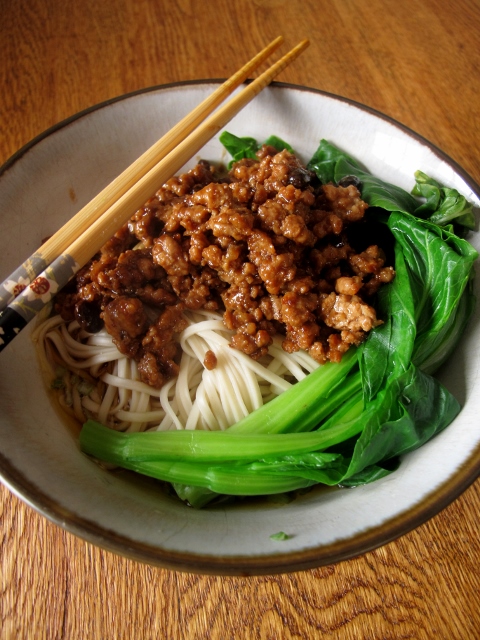
Dan-Dan Noodles 担担面

Dan-Dan Noodles 担担面Dan-Dan Noodles are a specialty of Sichuan cuisine and as a result they are not short on spice or flavour. Enjoyed all over China, there are perhaps a thousand versions of these classic noodles but they all have one of thing in common – they’re all ferociously fiery! Lip-numbing and sinus-clearing; these noodles are completely addictive!

Also known as dandanmian, “DanDan” refers to the shoulder-mounted pole that the street vendors would traditionally use to carry their wares; at one end would be the noodles and at the other, the sauce. In the literal sense, the name translates as “noodles carried on a pole”!

Traditionally minced pork is the protein of choice, but if you wanted to, you could always use minced chicken thighs instead. If you wanted to have a completely halal version you could also omit the Shaoxing rice wine.

One of the other main ingredients is chilli oil and whilst you can use one that is store-bought, I would strongly recommend taking the time to make your own – it isn’t at all difficult and it makes a world of difference! Once you’ve tasted the noodles made with your homemade chilli oil you’ll never bother with the store-bought version again. If you would like to make your own Sichuan chilli oil, follow the link.

For more Chinese recipes, please click HERE or to find out more about how to stock a Chinese Pantry, please click HERE

Click here for the recipe

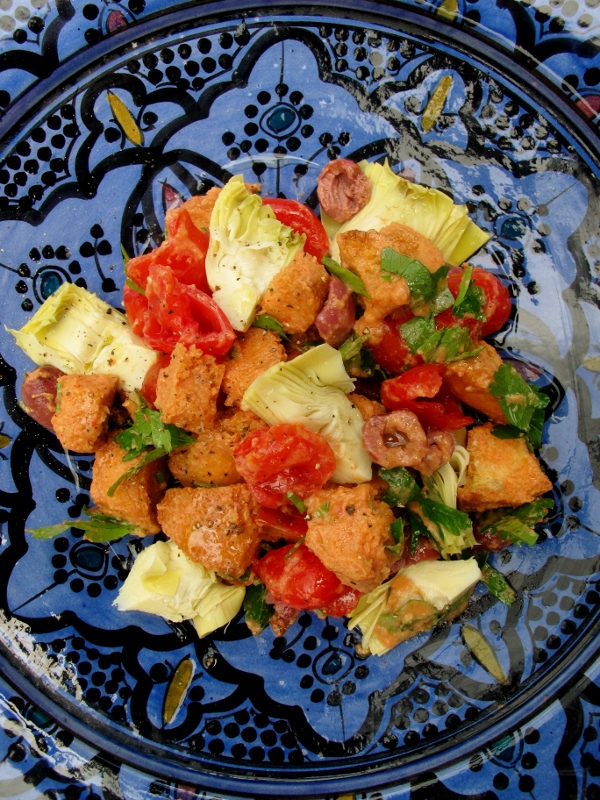
Fattoush (Moroccan Bread Salad)

Moroccan Bread SaladFar and away my favourite Moroccan salad, fattoush is both tasty and filling.

Popular throughout the Middle East, this bread salad is similar to an Italian panzanella. Not only is it a great way to use up old bread, it is also a great addition to any Moroccan meal. It even makes an interesting alternative to your typical “braai” salad and is a great option for any vegetarian guest you may have.

In this recipe I’ve used tinned artichoke hearts, but you can substitute these with any number of alternatives if you want – I would recommend using either some grilled green bell peppers or perhaps some grilled baby marrows (courgettes). Traditionally the recipe calls for oily black olives, but these aren’t always readily available so I would just use the tastiest black olives you can find instead.

For more delicious Moroccan recipes please click here or if you would like to read more about Moroccan food please click here

Click here for the recipe

Couscous (Plain and Cinnamon)

Plain CouscousCooking the perfect couscous may seem easy and generally it is, but it is also very easy for it to go very wrong. I should know, I’ve had enough couscous catastrophes to last me a lifetime; too wet, too dry, too clumpy – if there is a couscous calamity out there, I’ve suffered it!

In spite of my failings over the years, I’ve persevered with my mediocre attempts until I finally figured out the key to good couscous: olive oil…and your index finger. Sounds a bit strange? It’s really not. In fact, the key to my couscous conundrum is surprisingly simple – the trick is to lightly oil the grains before adding the boiling water. This simple act will produce clump free, fluffy couscous every time. I’ve been following this simple method for years now and I’ve been enjoying the perfect couscous ever since – now so can you.

For more delicious Moroccan recipes please click here, or if you would like to read on about Moroccan food, please click here

Click here for the recipe

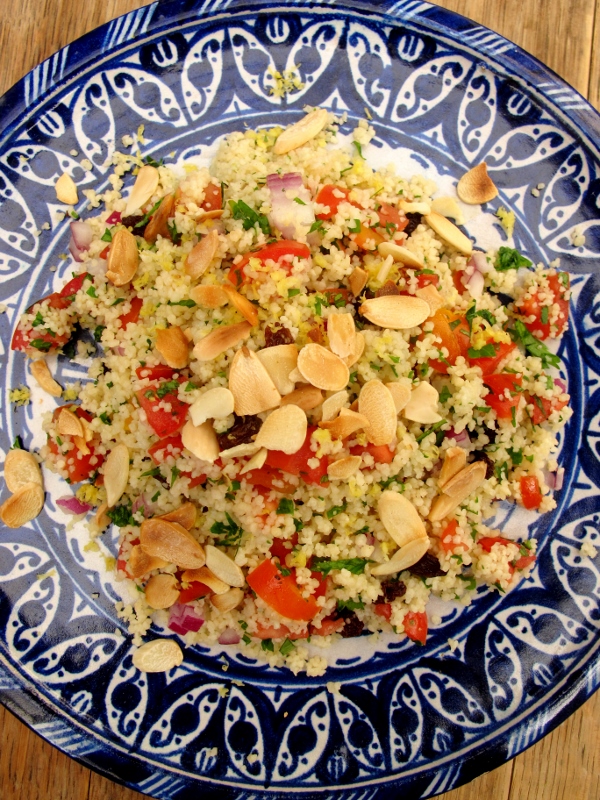
Couscous Tabbouleh

Couscous TabboulehOften mistaken as being Moroccan, tabbouleh is originally from the Middle East and is commonly served as part of a meze. Especially dear to the Lebanese – the dish is so loved, it has even been granted the honour of having its own celebration: National Tabbouleh Day! So widely popular is tabbouleh, this humble dish is seen as a common cultural link between the divided people of this once war-torn nation; reflecting the diversity of the Lebanese people through its diverse ingredients. Seemingly, for the Lebanese at least, this makes tabbouleh something worth celebrating.

For the rest of us, however, it is just a salad.

So whilst traditionally part of a meze, in Western convention it is more likely to be served as an accompaniment to a main meal such as a tagine, stew or even a barbeque. Typically made with bulgur wheat, tabbouleh can also be made using couscous. Whilst not entirely authentic, I prefer using couscous as I find bulgur wheat a little chewy and, to my mind, it can weigh a good tabbouleh down. I have also recently rediscovered the joys of quinoa, which would also make a great base for a tabbouleh.

The great thing about tabbouleh is its adaptability – provided you have some fresh herbs and lemon, you can virtually use any ingredients you have available. There’s really only one “rule” to consider when assembling your tabbouleh (and even that isn’t set in stone) and that’s the ratio of couscous to herbs. Traditionally the couscous is actually one of the secondary ingredients and not, as is common practice, the main ingredient – this honour actually falls to the fresh herbs. Traditionally the herbs should make up at least 70% of the overall tabbouleh, but this is rarely the case in Western interpretations of the dish, where the ratio is often reversed in favour of the couscous. In truth though, it is not really that important – all that really matters is making the dish to your own tastes and preference. After all, your tabbouleh doesn’t symbolise the aspirations of the Middle East, it is just dinner.

For the recipe of perfect couscous, please click here.

If you would like to serve tabbouleh with some delicious Moroccan dishes, please click here

Click here for the recipe