Recipes

Mushroom and Lemony Lentils

Sometimes all you need to produce culinary magic is a couple of tins of lentils, a few basic ingredients…and 24 hours.

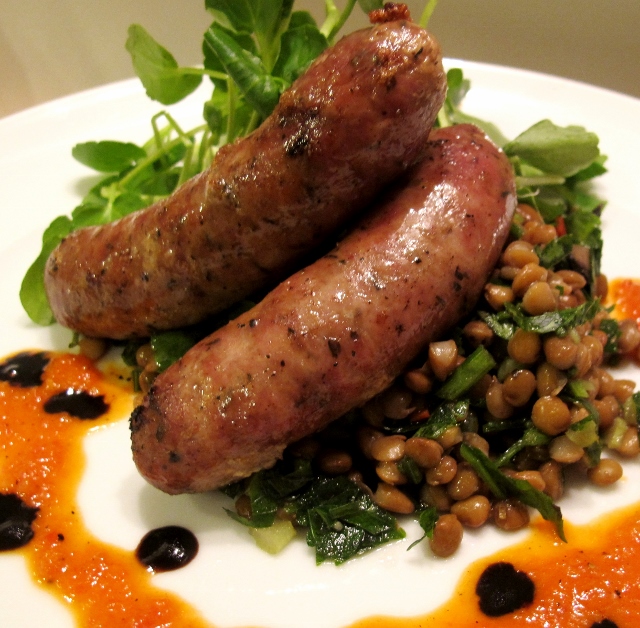
Mushroom & Lemon Lentils with Sausage and Roasted Red Pepper & Tabasco SauceThis recipe is store-cupboard alchemy at its best and is a great healthy alternative to the usual starch-demons that plague us all, like mash potatoes or rice. Infinitely adaptable, these lentils go well with just about anything; from grilled meats, to a stand-alone salad – this is healthy eating at its most appealing.

These lentils go particularly well with a piquant counterpoint, such as a Roasted Red Pepper and Tabasco Sauce, perhaps dotted with some Crema di Balsamico.

If you plan to serve it as a salad, top with some sliced avocado and perhaps some pomegranate seeds.

Most recently, I partnered these lentils some grilled Toulouse sausage from Rudi’s and it was simply delectable!

Click here for the recipe

Kimchi Pancakes (Kimchijeon)

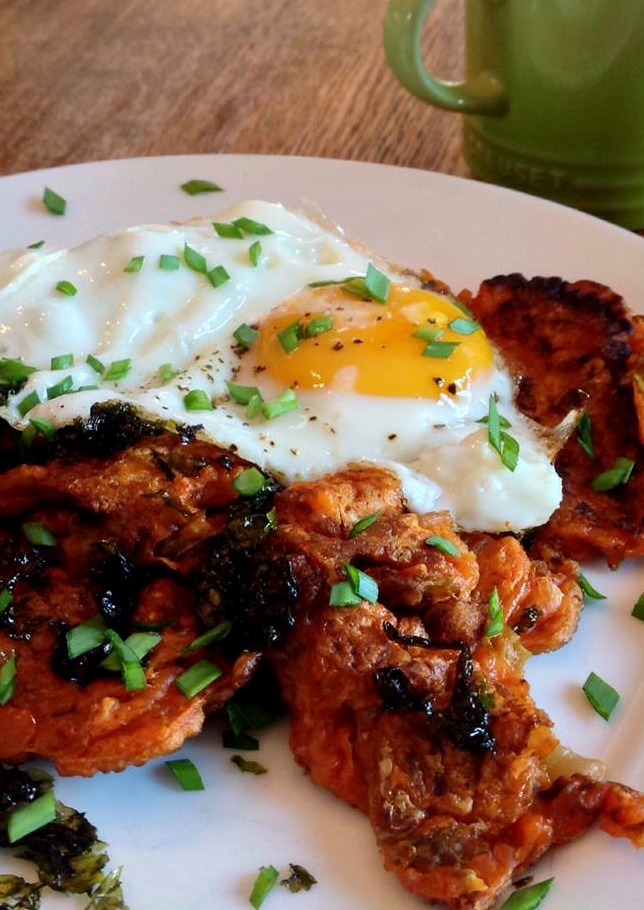
Kimchi PancakesSo great, you’ve made your first batch of mak kimchi and now you’re probably wondering what the heck to do with it? One word: pancakes.

I know it may sound strange, maybe even a little wrong, but relax, these aren’t pancakes of the sweet variety – these are spicy, savoury treats that make for the prefect snack or light meal. Simple and delicious, kimchi pancakes are a great way to get your kimchi-fix without having to go to the effort of making an elaborate Korean meal. Kimchijeon is perhaps my favourite way to eat kimchi; I love to eat mine with a fried egg, topped with some chopped spring onions, laver (Korean dried seaweed) and a dollop of chilli sauce! Kimchi-bliss

Click here for the recipe

Malaysia: Curry Paste Confidential

I’m going to tell you a secret no Western chef wants you to hear; Asians don’t make their own curry pastes. There, I’ve said it and I’m not going to take it back. It’s my blog and I’ll tell the truth if I want to. The notion that we Asians spend our time making wonderfully fragrant curry pastes from scratch is perhaps one of the most enduring culinary fallacies about The Far East, but the simple truth is we don’t. We, like rest of humanity, have busy lives and they are too short to be spent forever grinding away with a pestle and mortar, just to make a paste we can just as well buy ready-made from the local food market…or Tesco, yes you heard me right, Tesco.

Television chefs, in particular, seem to exalt the necessity of making your own curry paste and heaven forbid you suggest otherwise. I recall one famous British chef’s utter distain for such culinary shortcuts whilst filming a segment on Penang Fish Head Curry in Malaysia. The feisty young lady, who was demonstrating how to make this classic dish, unashamedly whipped out a pack of store-bought curry paste and duly added it to the curry. Mortified he asked her why she didn’t make her own, but I think her answer confounded him even further, “Heh? Who makes their own paste? Too busy. Everybody buys from the shop”. Undeterred, he pressed her further, “But wouldn’t it taste better if you made your own?”. Oblivious to his patronising tone, she replied, “No’lah, of course I’m using the best brand for you!”. He did not seem comforted by this; after all, this cavalier attitude towards authenticism just wouldn’t fly back in Cornwall! And anyhow, what did she really know about how Asian food should be prepared, in Asia…by actual Asians.

Now I’m not dissing freshly made curry pastes, far from it. They are utterly amazing and if you have the time (and the required ingredients) to make one then great, jolly good for you, but for the rest of us they are just not really practical or necessary. There are, of course, times you have to make your own, simply because there may not be a ready-made paste available, but this is out of necessity, not choice. Outside of Asia it is easy enough to find Thai or Indian pastes at your local supermarket, but looking to make a nice Sri Lankan curry? Best you get grinding…

Growing up in Malaysia, there was always a myriad of brands to choose from, but without doubt the best ready-made curry pastes were from the local produce market. As a child I would love going with my grandmother, Amah, to the market to get the ingredients for the night’s meal, and if curry was on the menu then we would always make a stop at her preferred curry paste vendor. We would pick our way through the market’s wet concrete aisles; pass the doomed squawking chickens, bypassing the acrid meat section, lingering by the perfumed blooms of the flower stalls; all the while bargaining and buying as we went. When we would eventually make it to the curry paste vendor he would ask us what type of curry we wanted to make, for how many people, hot or not? Our dining plans duly divulged and assessed, the vendor would set about his alchemy, combining various glistening pastes to produce the required finished article. It would be paste-perfection, but this was never in doubt – making curry paste was his life’s work and he did it well.

The curry Amah would dish up that night would, of course, be delicious but nobody ever attributed its success to the quality of the curry paste; great cooking isn’t always about your ingredients but rather what you do with them. I believe that it is far more important that you learn to make a curry well, rather than worry about the provenance of your curry’s paste. Amah was an incredible cook but she, like most good Asian home cooks, would never bother themselves with something as labourious as making their own curry pastes. Such things should rather be left to the professionals…and television chefs.

To discover delicious Malaysian recipes from The Muddled Pantry, please click here
Thai Mussaman Beef Curry

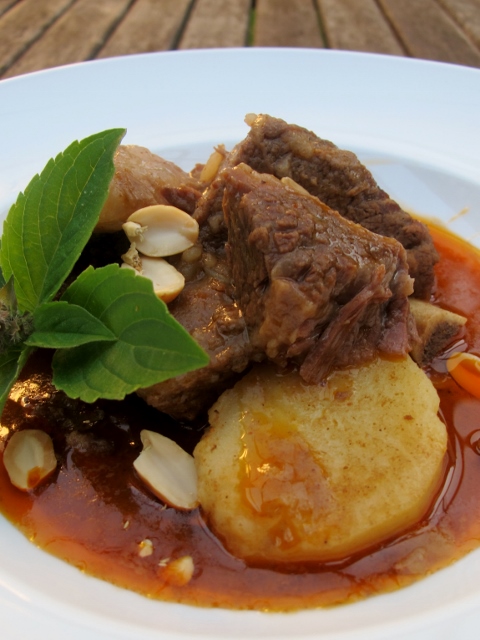
Thai Mussaman Beef CurryMussaman Beef Curry is my personal favourite of all the conventional Thai curries that we know and love; I find it has a depth of flavour that is sometimes absent in other Thai curries. In particular, the aromatics in this recipe give a smoky edge to the sauce that takes the curry to a whole new level.

The irony about this particular mussaman curry recipe is that it’s actually adapted from one by a television chef who thoroughly irked me for turning his nose up at ready-made pastes, but I must confess that I found his technique for making of this curry surprisingly authentic. Nevertheless, I still felt the need to tweak it here and there. Of course his version requires the “essential” homemade paste made out of 14 additional ingredients, my does not. Both versions taste wonderful, but only one takes half the effort and expense. I’m Asian and I know which one I’m calling my own.

For more delicious Thai recipes please click here, or if you need tips on stocking your Thai Pantry please click here.

Click here for the recipe

Passionfruit Curd

Prior to moving to Cape Town I had only ever eaten passionfruit once before, at great expense, while living in the London. I chanced upon these purple piquant wonders in an up-market Food Hall and I just had to know what passionfruit really tasted like. At £1.50 a fruit my knees buckled at the price, but I just had to know. Gripped by curiosity, I dug deep and bought two. At the time it was money I could ill-afford to spend, especially on luxury fruit, but to my mind it was money well spent! Eating my first passionfruit was a moment my taste buds will never forget, it was as if they had awoken for the first time. In a word: electric.

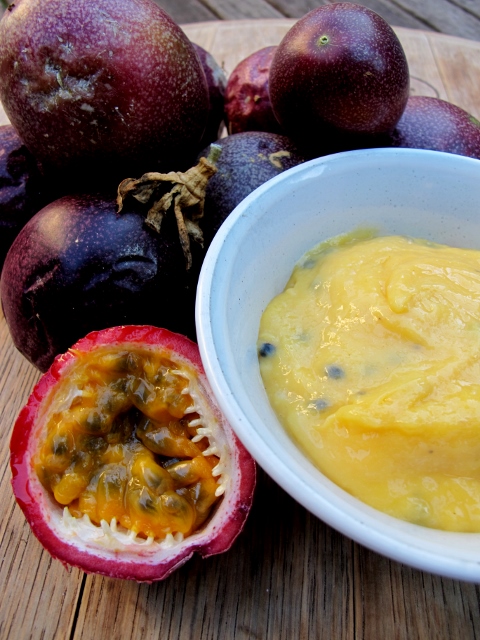
Passionfruit CurdSo it was with much excitement that I discovered that my new garden came with its very own granadilla (passionfruit) plant. I tried to grow one in my old garden in Cape Town but without much success. So, our expectations were high as we eagerly waited the start of the fruiting season. I had hoped to get a couple of fruit a day, enough for the two of us to enjoy as a daily tangy treat. Little did I know what a prolific season awaited us, within weeks it began to rain granadillas! At the peak of the season, we were collecting between 10 and 15 granadillas a day and I soon found myself with a glut of these purple delights. It didn’t take long before I had run out of ideas of what to do with them.

With my granadillas mounting, I trawled through my cookbooks for ideas and found a recipe in Nigella’s “How to be a Domestic Goddess”. It was prefect, it combined two of my favourite things; curd and passionfruit! I had never tried passionfruit curd before, but being an avid childhood fan of the lemon variety, I figured “Why not?”. The curd took a while to make, but the results were sensational. Not since my first taste of passionfruit had my taste buds experienced such a wake up call. These days they may not cost me a dime, but made into a curd, passionfruit still makes me curl my toes and roll my eyes in delight. After all these years, it still tastes electric.

For more Sweet Treats from The Muddled Pantry, please click here

Click here for the recipe

Carrot Cake

This carrot cake recipe means a lot to me, allow me to explain why.

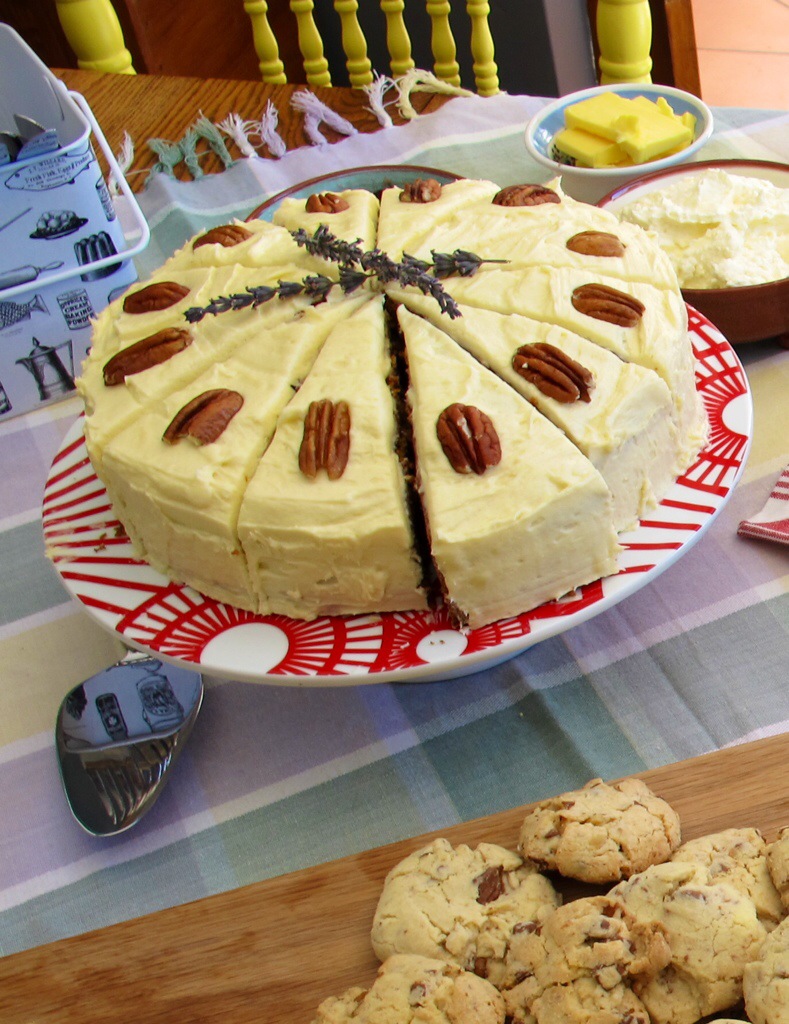
I had never even heard of carrot cake before arriving in Cape Town, much less eaten it. Arguably South Africa’s favourite cake, it is such a massive part of South African baking-lore you’d be forgiven for thinking that it had actually been invented here, but in spite of being on virtually every cake menu I was unconvinced. A cake made out of carrots? It just seemed wrong on so many levels. My taste-buds screamed, “Culinary heresy!” and for a long while I steadfast refused to even consider ordering this baked abomination. But like all sweet temptations, carrot cake was everywhere and it wasn’t long till I gave in and tried it for myself. Oh what a revelation, one slice and I was hooked! Moist and delicious with undertones of pecans and festive cinnamon, all offset by the sweet cream cheese frosting, I had been wrong; this was no aberration, this was baked genius.

20140625-195546-71746728.jpgAnd so my love affair with carrot cake began. I have since tried countless carrot cakes, some more delicious than others. However my absolute favourite was from the Tibetan Tea House just outside Simon’s Town. It was a long way to go for a slice of cake but it always felt worth the drive. I loved sitting on their peaceful verandah; sipping some green tea, admiring the exquisite Nepalese thangkas and tucking into the carrot cake. Uncomplicated, classic and without the unnecessary additions that seem to find their way into carrot cakes these days, this cake was a thing of simplistic beauty. We would make the journey so often for our slice of baked-Nirvana, and bought so many of those beautiful thangkas, the owner of the Tea House, Anna, kindly gave us the recipe. Sadly, shortly after she had entrusted us with her recipe, the Tibetan Tea House went vegan and the carrot cake disappeared from the menu altogether. This amazing cake was simply no more, except in my house where I still use her recipe to this very day.

We don’t drive out to the Tibetan Tea House as often anymore, however we still get to enjoy our carrot cake bliss; but now we do so from the comfort of our own verandah, sipping our own green tea, surrounded by some of the same exquisite Nepalese thangkas. I like to tell myself that Anna knew her recipe wasn’t going to survive the impending Vegan Cull and that she wanted us to continue enjoying the cake we loved so much, I like to think she was really just that nice. Buddha would be pleased.

For more Sweet Treats from The Muddled Pantry, please click here

Click here for the recipe

Cape Malay Tomato Bredie

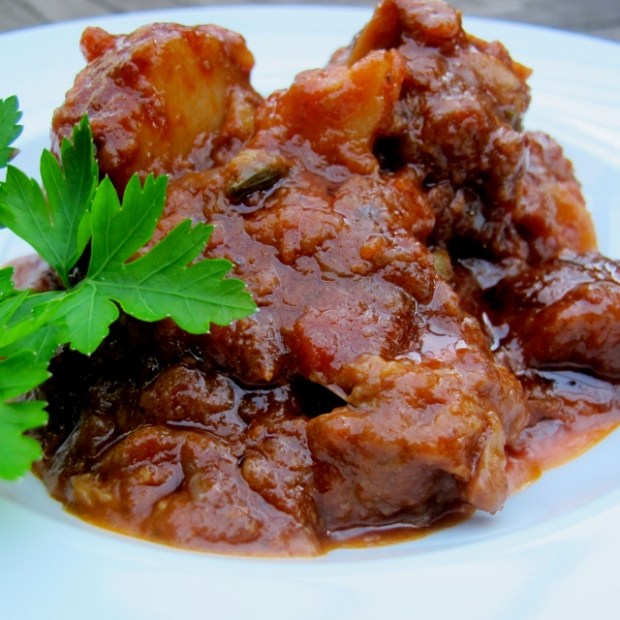
A tomato bredie is the ultimate manifestation of South African home cooking.

Ostensibly a stew, bredies form an integral part of South African huiskos (home cooking), and whilst there are a number of different types of bredies, tomato bredie seems to be the most cherished of them all. At a glance, a bredie looks like a very basic stew, but there is a key element that differentiates it from being a regular stew. Instead of simmering in a liquid like a conventional stew, a bredie is self-saucing. Absolutely no water is added to a bredie and the sauce is formed from the rendered juices and fat from the lamb, which when combined with the reduced tomato, results in an intensely flavoured gravy which transcends its humble basic ingredients.

There are quite a few tomato bredie recipes out there but I’ve always stuck with Cass Abrahams‘s recipe, albeit with some unorthodox additions of my own. Cass Abrahams is widely regarded as the incumbent mother of Cape Malay cooking and her recipes are often the starting point for many of my own.

When I initially attempted to make a tomato bredie I found the results were a bit watery and that the meat would sometimes be a little tough. I got around this by first dredging the meat in flour before browning it thoroughly and then by cooking the entire thing in the oven and not on the stove as it is usually done. Bredie traditionalists would be mortified by my preferred cooking method, but I find that cooking it in the oven helps the tomatoes break-down and creates an intensity in the gravy that you wouldn’t otherwise get when cooking it in the conventional way. I have been making my tomato bredie in this way for a number of years and they have always been a success, the meat is invariably melt-in-your-mouth tender and the sauce is thick and bursting with flavour.

If you would like to read more about South African food please follow this link or for more South African recipes, please click here

Click here for the recipe

Cape Malay Bobotie

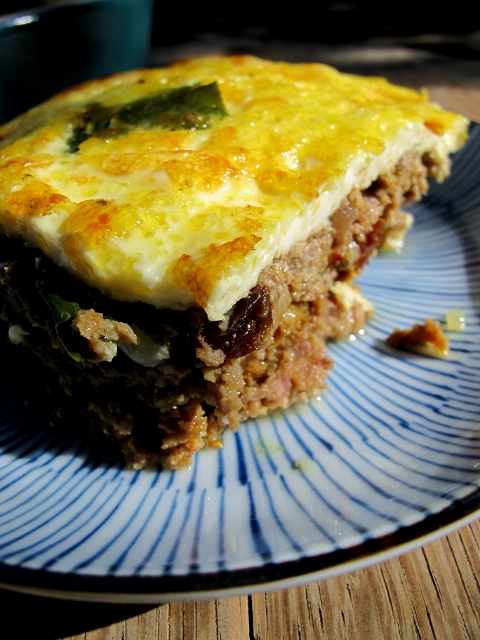
BobotieUnique to South Africa, bobotie is the platypus of international cuisine. Neither a pie nor a meatloaf, both sweet and savoury, bobotie is a hybrid dish that speaks to South Africa’s many cultures and tastes. Robustly spiced, spiked with sweet raisins and topped with a soothing savory custard, bobotie is deliciously complex whilst being reassuringly rustic.

Almost always served with yellow rice and blatjangs, bobotie is typically most people’s first introduction to traditional South African food. For this reason bobotie has become synonymous with South Africa and is instantly recognisable as being an African favourite.

If you would like to read more about South African food please follow this link or for more South African recipes, please click here

Click here for the recipe

Mak Kimchi 막김치 (Napa Cabbage Kimchi)

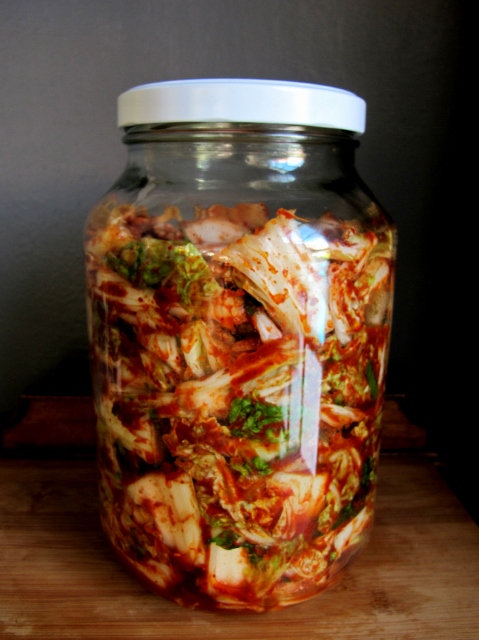
When most people think of kimchi they usually have Mak Kinchi in mind. Made with napa (Chinese) cabbage it is perhaps the most commonly found variety of kimchi, especially outside Korea. Of all the kimchi out there (and there are many) Mak Kimchi is still my personal favourite; it is versatile, its ingredients readily available, and most importantly, it is easy to make.

I used to buy my kimchi ready made from my local Asian supermarket, but it wasn’t really spicy enough for my palette and that it often went off very quickly. I found the latter odd, given that kimchi is by its very definition preserved and therefore shouldn’t go moldy after just a couple of weeks in the fridge.

Determined to make my own, I bought various kimchi making contraptions on my last visit to Japan. I scoured the internet looking for recipes and I stocked up on an obscene amount of Korean Chilli Powder. My first few attempts were a bit disappointing but eventually, through trial and error, I started to make passable Mak Kimchi. I must confess that I no longer use any of those weird and wonderful kimchi contraptions that I hauled all the way back from Japan. All you really need is a large glass jar, a little patience and you too can make your own kimchi!

I have no doubt that my attempts would be a mockery compared to kimchi in Korea itself; but thankfully I’m not in Korea. I live in Cape Town and here my kimchi is pretty damn good!

For more Korean recipes from The Muddled Pantry, please click here.

For tips on stocking a Korean Pantry, please click here

Click here for the recipe

Beef Phở Noodles (Phở Bò)

When it comes to noodles in Vietnam, Phở is the undisputed king of the Land.

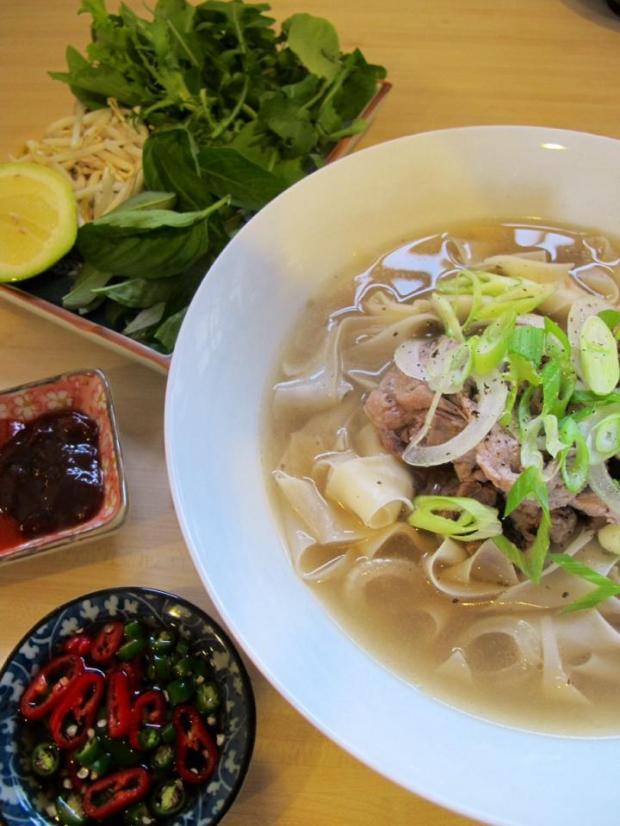
From Hanoi in the North to the Delta in the South, phở is ubiquitous and with good reason; it is utterly delicious. At first glance phở may seem like a simple dish of beef broth, rice noodles and herbs, but don’t be fooled. Complex, alluring and fragrant, when it comes to aromatics, phở’s beef broth is legion. The ingredient list for phở is intimidatingly long, but with the exception of a couple of items, most of the aromatics are quite common. Some phở recipes require over 25 ingredients just for the broth alone, so in comparison my recipe is quite accessible.

There are a couple of things to keep in mind when making beef phở:

  1. This isn’t a dish for the impatient; the broth takes time, a lot of time.
  2. The correct type of noodle is vital, this being a wide, flat rice noodle. Use fresh if possible, if not use the best dried noodles you can find.
  3. A good selection of herbs is essential
  4. Phở must be served piping hot, there is no waiting on ceremony with phở – dig in the moment it is ready!

If you are interested in reading more about phở and my travels in Vietnam, please click here

For more delicious Vietnamese recipes from The Muddled Pantry, please click here

For more great noodle recipes from The Muddled Pantry, please click here

Click here for the recipe