Recipes

Sichuan Chilli Oil 四川辣油

Sichuan Chilli Oil (makes 250ml)

  • 1 cup vegetable oil
  • 1 spring onion, cut into segments
  • 2 slices of ginger
  • 2 cloves of garlic, lightly crushed
  • 2 star anise pods
  • 1 small cinnamon stick, approximately 3cm long
  • 4 tbsp. Sichuan peppercorns, lightly toasted and crushed
  • 3 tbsp. chilli flakes (preferably Sichuan or Korean)
  • 1/8 tsp. ground coriander
  • 1/8 tsp. ground cumin

Method:

  1. Combine vegetable oil, spring onion, ginger, garlic, star anise, cinnamon and Sichuan peppercorn in a small sauce pot
  2. On a medium heat, let the ingredients fry in the oil for a couple of minutes, or until the garlic and spring onion just start to colour
  3. Add the chilli flakes, ground coriander and cumin
  4. Fry for another minute until the chilli flakes slightly darken in colour
  5. Turn off the heat and set it aside
  6. Pick out the spring onion, ginger, garlic, cinnamon and star anise

The chilli oil will last indefinitely; the longer it sits, the better the flavour

For more Chinese recipes, please click HERE or to find out more about how to stock a Chinese Pantry, please click HERE

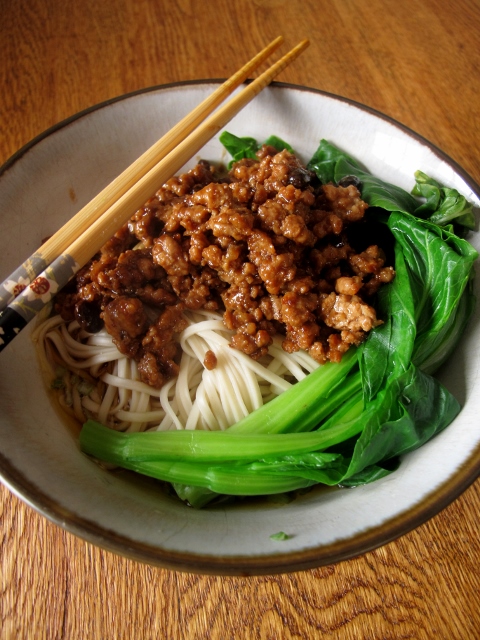
Dan-Dan Noodles 担担面

Dan-Dan Noodles 担担面Dan-Dan Noodles are a specialty of Sichuan cuisine and as a result they are not short on spice or flavour. Enjoyed all over China, there are perhaps a thousand versions of these classic noodles but they all have one of thing in common – they’re all ferociously fiery! Lip-numbing and sinus-clearing; these noodles are completely addictive!

Also known as dandanmian, “DanDan” refers to the shoulder-mounted pole that the street vendors would traditionally use to carry their wares; at one end would be the noodles and at the other, the sauce. In the literal sense, the name translates as “noodles carried on a pole”!

Traditionally minced pork is the protein of choice, but if you wanted to, you could always use minced chicken thighs instead. If you wanted to have a completely halal version you could also omit the Shaoxing rice wine.

One of the other main ingredients is chilli oil and whilst you can use one that is store-bought, I would strongly recommend taking the time to make your own – it isn’t at all difficult and it makes a world of difference! Once you’ve tasted the noodles made with your homemade chilli oil you’ll never bother with the store-bought version again. If you would like to make your own Sichuan chilli oil, follow the link.

For more Chinese recipes, please click HERE or to find out more about how to stock a Chinese Pantry, please click HERE

Click here for the recipe

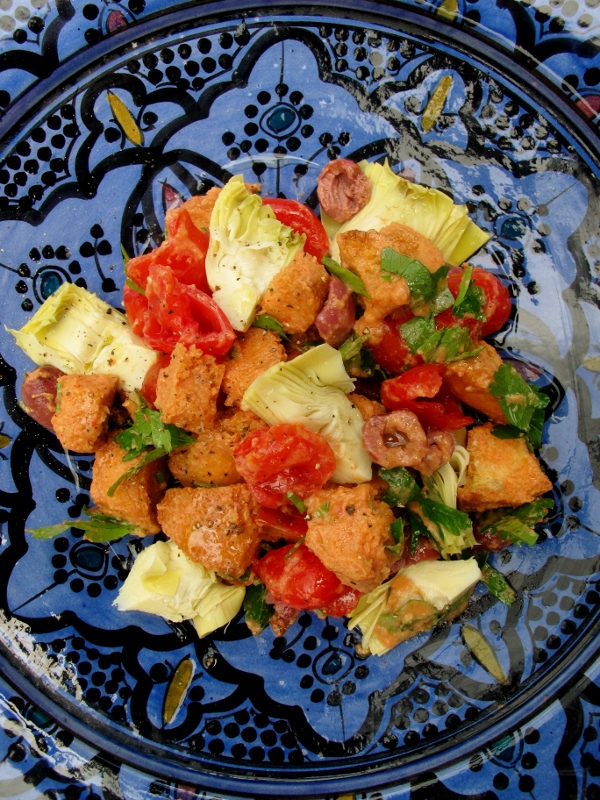
Fattoush (Moroccan Bread Salad)

Moroccan Bread SaladFar and away my favourite Moroccan salad, fattoush is both tasty and filling.

Popular throughout the Middle East, this bread salad is similar to an Italian panzanella. Not only is it a great way to use up old bread, it is also a great addition to any Moroccan meal. It even makes an interesting alternative to your typical “braai” salad and is a great option for any vegetarian guest you may have.

In this recipe I’ve used tinned artichoke hearts, but you can substitute these with any number of alternatives if you want – I would recommend using either some grilled green bell peppers or perhaps some grilled baby marrows (courgettes). Traditionally the recipe calls for oily black olives, but these aren’t always readily available so I would just use the tastiest black olives you can find instead.

For more delicious Moroccan recipes please click here or if you would like to read more about Moroccan food please click here

Click here for the recipe

Couscous (Plain and Cinnamon)

Plain CouscousCooking the perfect couscous may seem easy and generally it is, but it is also very easy for it to go very wrong. I should know, I’ve had enough couscous catastrophes to last me a lifetime; too wet, too dry, too clumpy – if there is a couscous calamity out there, I’ve suffered it!

In spite of my failings over the years, I’ve persevered with my mediocre attempts until I finally figured out the key to good couscous: olive oil…and your index finger. Sounds a bit strange? It’s really not. In fact, the key to my couscous conundrum is surprisingly simple – the trick is to lightly oil the grains before adding the boiling water. This simple act will produce clump free, fluffy couscous every time. I’ve been following this simple method for years now and I’ve been enjoying the perfect couscous ever since – now so can you.

For more delicious Moroccan recipes please click here, or if you would like to read on about Moroccan food, please click here

Click here for the recipe

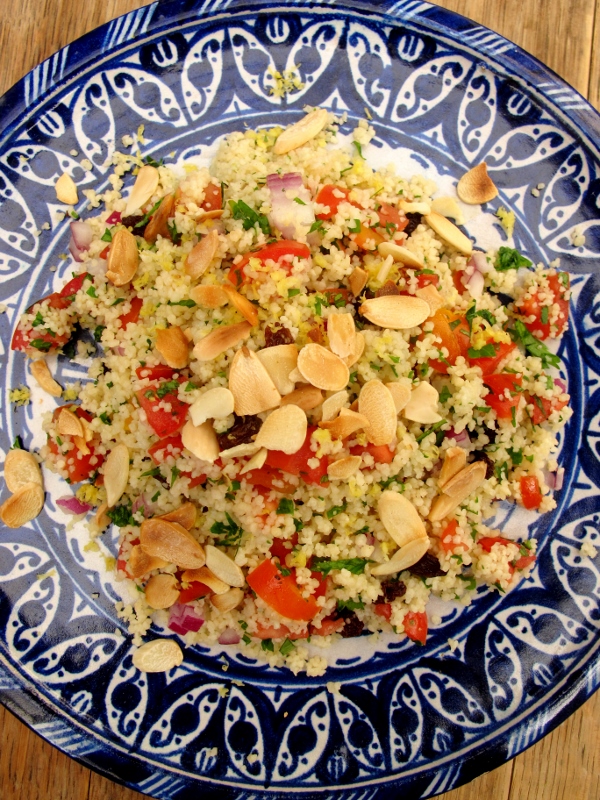
Couscous Tabbouleh

Couscous TabboulehOften mistaken as being Moroccan, tabbouleh is originally from the Middle East and is commonly served as part of a meze. Especially dear to the Lebanese – the dish is so loved, it has even been granted the honour of having its own celebration: National Tabbouleh Day! So widely popular is tabbouleh, this humble dish is seen as a common cultural link between the divided people of this once war-torn nation; reflecting the diversity of the Lebanese people through its diverse ingredients. Seemingly, for the Lebanese at least, this makes tabbouleh something worth celebrating.

For the rest of us, however, it is just a salad.

So whilst traditionally part of a meze, in Western convention it is more likely to be served as an accompaniment to a main meal such as a tagine, stew or even a barbeque. Typically made with bulgur wheat, tabbouleh can also be made using couscous. Whilst not entirely authentic, I prefer using couscous as I find bulgur wheat a little chewy and, to my mind, it can weigh a good tabbouleh down. I have also recently rediscovered the joys of quinoa, which would also make a great base for a tabbouleh.

The great thing about tabbouleh is its adaptability – provided you have some fresh herbs and lemon, you can virtually use any ingredients you have available. There’s really only one “rule” to consider when assembling your tabbouleh (and even that isn’t set in stone) and that’s the ratio of couscous to herbs. Traditionally the couscous is actually one of the secondary ingredients and not, as is common practice, the main ingredient – this honour actually falls to the fresh herbs. Traditionally the herbs should make up at least 70% of the overall tabbouleh, but this is rarely the case in Western interpretations of the dish, where the ratio is often reversed in favour of the couscous. In truth though, it is not really that important – all that really matters is making the dish to your own tastes and preference. After all, your tabbouleh doesn’t symbolise the aspirations of the Middle East, it is just dinner.

For the recipe of perfect couscous, please click here.

If you would like to serve tabbouleh with some delicious Moroccan dishes, please click here

Click here for the recipe
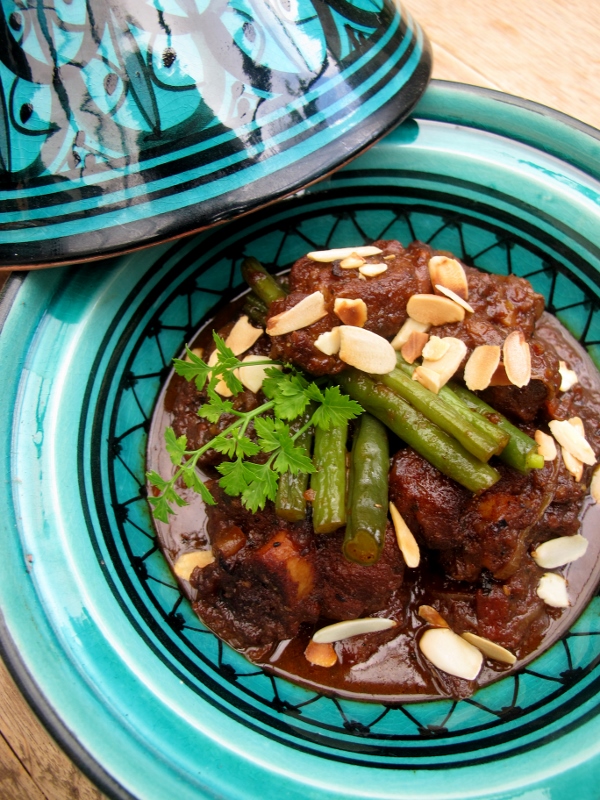
Lamb Tagine with Dates

Lamb Tagine with DatesA firm family favourite, this tagine is sweet and intensely spiced.

So much so, I rarely make this dish for anybody else other than my partner. Not because it isn’t utterly delicious, but because it is almost bludgeoning in its intensity and is not for the fainthearted; this is real stick-to-your-ribs type cooking!

On the few occasions I have served it to others it has always gone down a treat, I just make sure that the friends I make it for like this style of cooking. The trick to getting away with serving a dish packed with this much flavour is to pair it with a simple side dish like plain couscous or a zingy lemon-soaked tabbouleh…or, if you are my partner, some plain white rice! And whilst I despair at the latter, it is a miracle that my partner likes this dish at all so I don’t push the matter, but I normally discourage such pandering and recommend couscous as the appropriate accompaniment.

For more delicious Moroccan recipes please click here or if you would like to read more about tagines please click here

Click here for the recipe
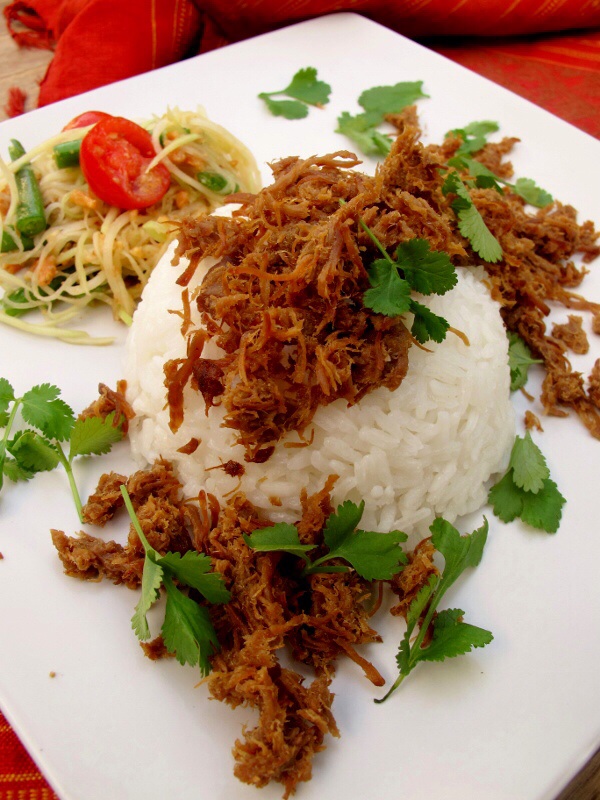
Thai Candied Pork (Moo Wan), Green Papaya Salad (Som Tam) & Coconut Rice

There are some dishes that are just meant to be eaten together, their combined flavours amounting to something akin to culinary kismet – this is such a meal. Eaten on its own Moo Wan is almost unpalatably sweet, but when served with som tam (green papaya salad) the results are nothing short of stellar! Add coconut rice to the mix and you simply have heaven-on-a-plate.

imageAs with so many Thai classics, the key to the success of the overall meal is the balance each individual element strikes when combined. The sweet moo wan counters the tang of the salad, the coconut rice envelopes the fierce chilli kick of the som tam, whilst the salad adds texture and bite; every element has its own role to play in creating the perfect balance, resulting in an almost perfect Thai meal.

Whilst the idea of making the three separate dishes for this meal may seem daunting, the truth is that individually they are actually pretty easy. The trick to preparing multiple dishes for any Asian meal is preparation and timing. The moo wan will keep in the fridge for a good few days, so I would make this in advance if possible. You should start cooking the coconut rice at least 40 to 50 minutes before serving, as it will benefit from being allowed to stand for half an hour after cooking. The som tam must be prepared just before serving, so I recommend prepping your ingredients in advance. However, the papaya should only be shredded just before using. To find out how to make som tam (green papaya salad), please click here to find the recipe.

For more delicious Thai recipes please click here, or if you need tips on stocking your Thai Pantry please click here.

Click here for the recipe

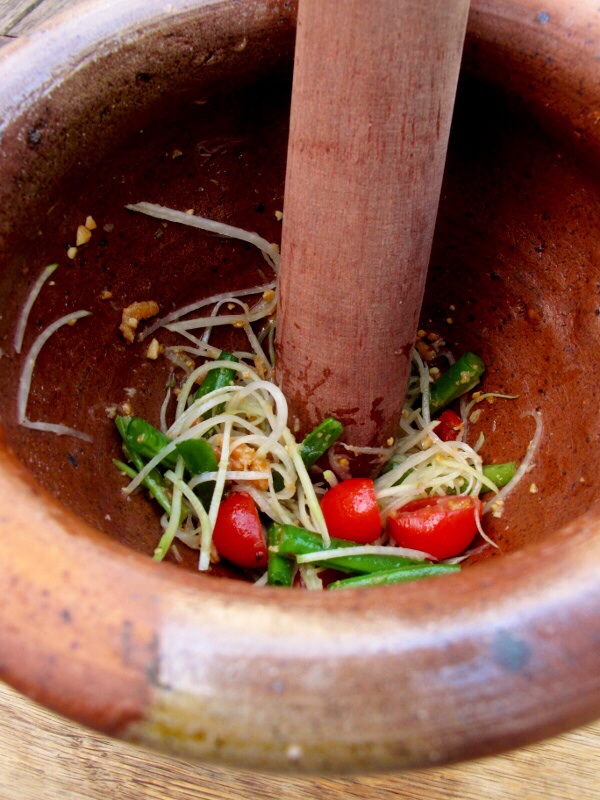
Som Tam (Green Papaya Salad)

I’ve always loved Thai Green Papaya Salad (Som Tam), but I’ve had to set aside my cravings for the simple reason that you couldn’t source green papaya in Cape Town…that is, until now! Having spotted a gap in the market, the New Asian Spice Supermarket in Sea Point has thankfully started stocking them. Supply is often erratic, as there’s only one farm in the whole of South Africa that produces these under-ripened gems, but regardless of sporadic supply at least they are finally available locally. And so, in an instant, an obsession was reborn!

Other than sourcing green papaya, there are two key elements essential to making the salad. The first is the need for a large pestle and mortar, the second is shredding the papaya correctly. The latter can either be done by hand, using a sharp knife to cut into the papaya and then using a vegetable peeler to shred the flesh; or with a mandolin, using a fine shredding attachment. Personally I use a mandolin; while less authentic, it gets the job done in half the time!

The epitome of the classic Thai sweet vs. sour dish, Som Tam delivers a tangy, sweet punch with a texture and crunch that is incredibly refreshing. Hot, fragrant and balanced, for many this is Thailand on a plate. Although delicious served with just some plain rice, or as part of a larger Thai banquet, if you want to partner the som tam with something really authentic, try it with Candied Pork and Coconut Rice – spectacular!

For more delicious Thai recipes please click here, or if you need tips on stocking your Thai Pantry please click here.

Click here for the recipe

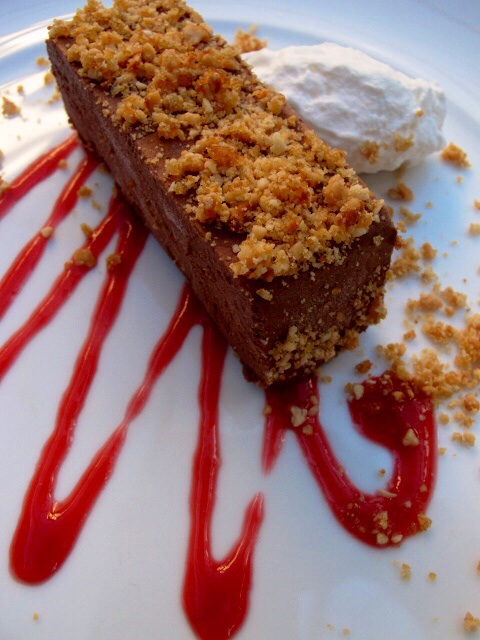
Chocolate Parfait with Pecan Crumbs

Chocolate Parfait I have had more than my fair share of doomed desserts. In fact given the choice, I would happily forgo them completely, or buy-in something instead. I am, however, not a dessert person: never have been, never will be. I would rather have a starter for a “pudding” than a crème brûlée, but I’m in the minority; understandably most dinner guests expect a sweet treat to end their meal, not another bowl of French onion soup! Like any good host I like to give my guests what they want, so I’ve taught myself a few special desserts to cater to their not-unreasonable dining expectations.

Which brings me to this particular recipe – chocolate parfait. In my relatively limited arsenal of dessert recipes, this is possibly my favourite. Part ice-cream, part semifreddo; chocolate parfait is entirely appealing but without the hassle of either. Unlike ice-cream, parfait requires no churning or special equipment. Elegant enough to impress, virtually impossible to stuff-up and always deliciously moreish; chocolate parfait is a dessert coup!

Paired with pecan crumbs, whipped cream and a coulis, this dessert is so delicious even I am tempted to scoff a slice!

For more Sweet Treats from The Muddled Pantry, please click here

Click here for the recipe

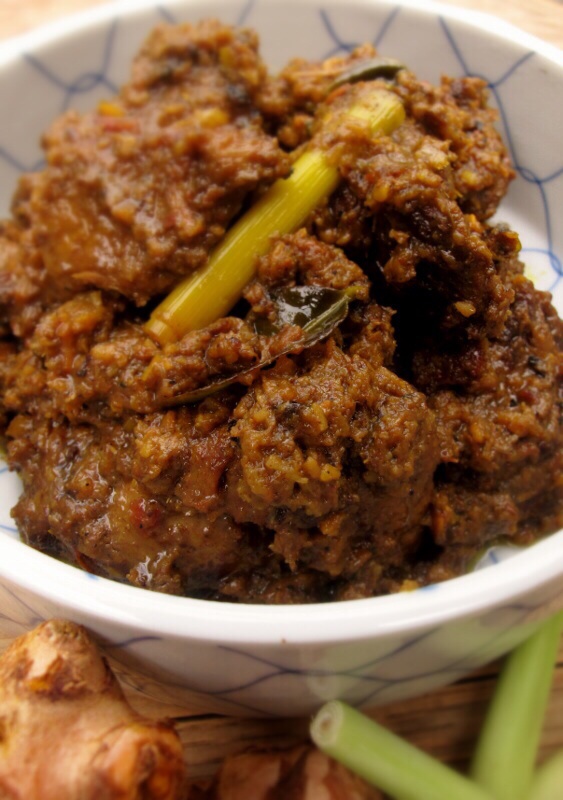
Rendang Daging (Beef Rendang)

Beef RendangSome mornings I wake up with one word in mind: “rendang!”. I think it’s probably just a Malaysian thing, but this is a dish I literally dream about.

Beef Rendang is perhaps the most beloved Malay meal and is often the go-to main dish for many a family feast or special occasion. With its origins rooted in Indonesia, rendang is popluar throughout South East Asia, especially amongst the Malays in Malaysia and Singapore. Although not widely known outside the region, a 2011 online poll by CNN International chose rendang as the number one dish of their ‘World’s 50 Most Delicious Foods’. Yes, rendang really is that good!

Rendang, however, seems to appeal the most to expat Malaysians. In spite of its long cooking time, rendang is relatively easy to make and can withstand a certain degree of adaptation – something that is vital given the inherent difficulties in stocking a Malay pantry abroad. On a deeper level, though, cooking up a batch of rendang can sometimes feel like an affirmation of our shared cultural identity; a reconnection to our collective culinary memories, through taste. This is the real reason for rendang’s enduring popularity; for many of us it, quite simply, tastes of home.

Ostensibly a curry, rendang is in fact what is known as a dry-curry. Cooked over an extended period, the aromatic coconut sauce is reduced to the point until it clings to the tender beef. This prolonged reduction creates an intensity of flavour that can only be described as explosive. As with all curries, a rendang benefits immensely from being made the day before serving; a night in the fridge gives the flavours time to develop and mellow. Your rendang will be all the better for your patience.

To discover other delicious Malaysian recipes from The Muddled Pantry, please click here

Click here for the recipe