Malaysian

Bak Kwa 肉干 (Chinese Pork Jerky)

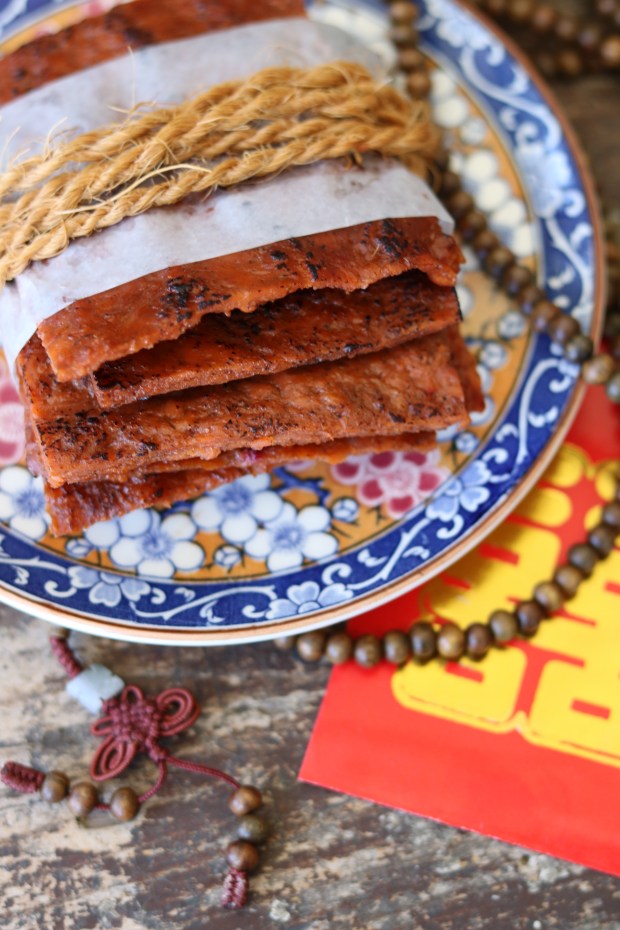
There are two things in this world that sum up Chinese New Year for me – ang pow (red money envelopes) and bak kwa. Alas these days I’m precluded from receiving ang pow as I have the misfortune of being all grown up (and married), but that doesn’t stop me celebrating the New Year by stuffing my face with ill-advised quantities of bak kwa!

Sweet, sticky and bordering on the addictive, bak kwa is a very Chinese take on jerky. Available all year round, bak kwa is, however, largely considered a Chinese New Year must-have. I’m not sure if bak kwa‘s prosperous red hues ramp up its appeal for the New Year or whether the festivities are simply an excuse to indulge in copious amounts of this gooey treat. Either way, the queues at Bee Cheng Hiang stores in the build-up to the holiday are daunting and are a testament to bak kwa‘s enduring popularity as a Chinese New Year staple.

Now I’m not going to lie to you, making your own bak kwa isn’t something you’d do if you didn’t have to – it would be much easier to just join the long queues and buy yourself some. However, for those of us who find themselves far from home on Chinese New Year, we have little choice but to roll up our sleeves and make our own. After all, those bak kwa cravings are not going to quell themselves! Thankfully the recipe for making bak kwa isn’t actually that difficult, but it is quite involved; wire racks, rolling pins, wax paper and a blowtorch – I like to think of this as real Blue Peter-style cooking!

Click here for the recipe

Penang Char Kuey Teow 炒粿條

Universally the Noodle-World is typically divided into two distinct camps: soupy or fried. Every great noodle-eating culture has its own unique fried classics – in Thailand the ubiquitous pad thai reigns supreme, whilst yakisoba proudly flies the flag for Japan, but in both Malaysia and Singapore the undisputed king of fried noodles has to be Char Kuey Teow.

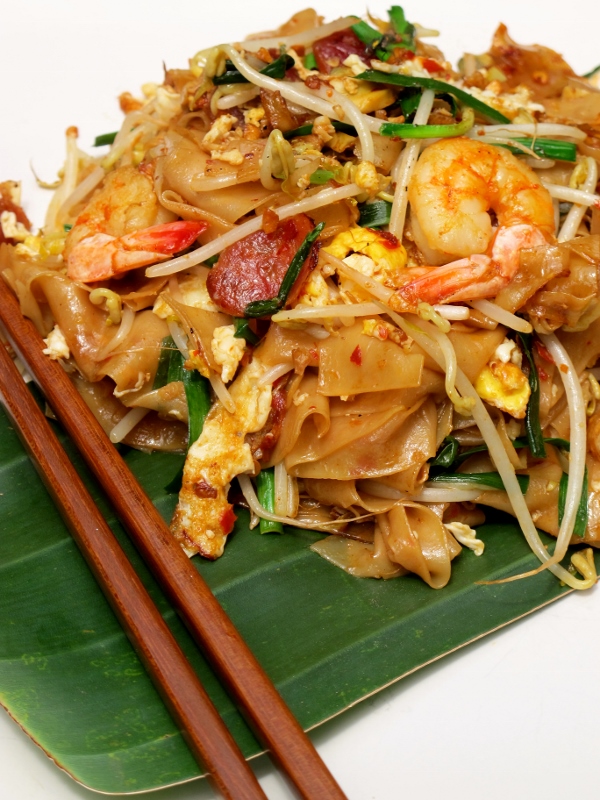
Penang Char Kuey Teow 炒粿條Literally meaning “fried flat rice-noodle”, Char Kuey Teow enjoys enduring popularity through-out both Malaysia and Singapore, manifesting in many delicious guises, accommodating a variety of tastes and dietary restrictions. Sliced fish-cake and bean-curd are popular variations, especially with halal interpretations of the dish, but Char Kuey Teow is at its best when eaten in its most authentic form – Penang-style! Like all hawker-fare in Penang, everyone has their favourite Char Kuey Teow stall, the most popular of these can immediately be identified by the snaking queues that lead to them. In Malaysia one should never be put off by a queue for food – invariably they end in a tasty delight that is always well worth the wait!

Stripped back, Penang Char Kuey Teow is a very simple dish made with just a few well chosen ingredients. With the exception of the noodles, the dish is made up of just 6 vital ingredients: prawns, beansprouts, Chinese chives (garlic chives), egg, Chinese sausage (lap cheong) and blood cockles (see hum), although the latter is often omitted locally due to health concerns (and many a runny tummy!). Lap cheong is an acquired taste and is therefore sometimes left out at the request of the customer. Whilst some of the ingredients may sound intimidatingly exotic, they are easily found at most well-stocked Asian supermarkets, although the blood cockles can be trickier to source. These can be left out altogether or substituted with a less exotic mollusc! I often use tinned clams as a substitute.

Another important component of the dish is the cooking sauce. Even though only a few teaspoons are added to the noodles, the sauce can make or break the dish. Given that Char Kuey Teow is classic hawker-fare, authentic recipes for its soya-based sauce are hard to come by, as the exact quantities and ingredients are often a fiercely guarded secret! I have tried a myriad of recipes over the years, but the nearest I have found to the real thing is from Rasa Malaysia, although I prefer to use slightly less dark soya sauce. Although the below recipe’s quantities are for a single serving, the sauce recipe will yield enough to make at least 10 plates of Char Kuey Teow and can be kept in the fridge until needed.

Ingredients aside, the key to making a decent Char Kuey Teow is technique and a hot, hot wok. A wide, well-seasoned wok needs to be kept searing hot throughout and as a result, only individual portions can be cooked at a time. Given the dish’s ferociously short cooking time (just a few minutes per portion), preparation of all the required components is vital – everything needs to be ready and to-hand when you start cooking. A moment’s hesitation can be the difference between success and ultimate noodle-failure!

Click here for the recipe

Sambal Kangkong

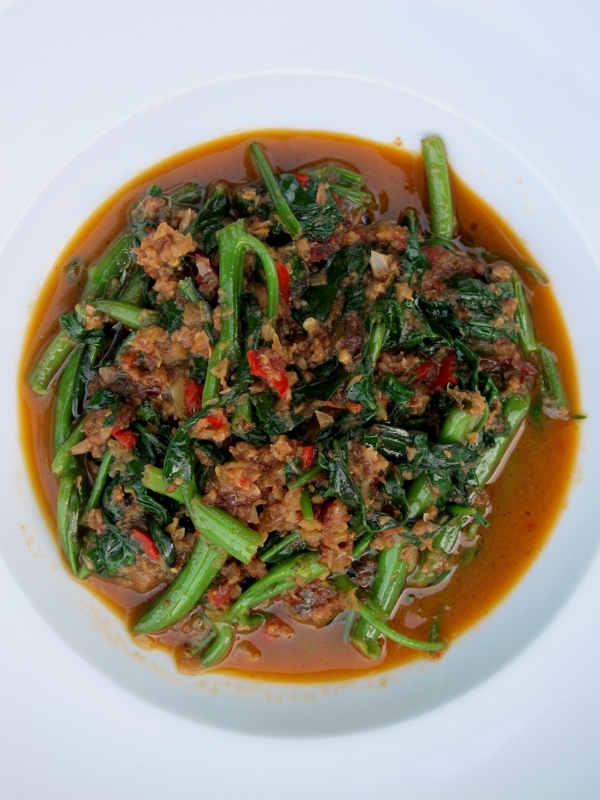
Sambal KangkongIn a cuisine not known for its prominent use of vegetables, there are few other Malaysian vegetable dishes that are so revered and cherished as this classic Nyonya dish! In fact, ask any Malaysian’s what their favourite vegetable dish is and most would probably lick their lips and tell you that it’s sambal kangkong! Made with lots of chillies, dried shrimps and a good dollop of belacan, this dish is as fragrant as it is hot and is not for the fainthearted or the nasally sensitive!

Sambal kangkong is a dish that has always reminded me of home – its heady fragrance and robust flavours are irrepressibly Malaysian and just the thought of it makes my mouth water in anticipation! Indeed, this is a dish that elicits passionate cravings in many of my fellow countrymen, myself included. Since leaving Malaysia, I’ve been slightly obsessed with recreating sambal kangkong, but it has always been a dish that was out of reach for the simple reason that I couldn’t source the key ingredient – kangkong. Also known as water spinach, water morning glory or water convolvulus, kangkong is readily available throughout South East Asia where it grows within the local waterways with an almost weed-like voracity. In spite of its endemic abundance regionally, it remains stubbornly difficult to find in the rest of the world. Whilst you can make a similar dish with green beans, sadly it is a poor substitute and there really isn’t any alternative vegetable that comes close to replacing kangkong.

Like all Malaysian expats, when I first moved to Cape Town I had a mental list of all the food items that I prayed would eventually find their way onto the local shelves. Mostly made up of Asian staples and childhood favourites, the list was extensive and largely amounted to wishful thinking! I’m happy to report, however, that over the years I have managed to find almost everything on that list, kangkong included! Along with finding IndoMee and Lingham’s Chilli Sauce in Cape Town, I was delighted to be able to cross this exotic leafy green off my list!

Now I just need to find petai locally and I’ll be, culinarily speaking, complete. 

As with most other Asian cuisines, it is virtually impossible to find a definitive recipe for any Malaysian dish and sambal kangkong is no different. Generally speaking most sambal kangkong recipes list the same basic ingredients, but in varying quantities. How much you decide to use of any particular item is entirely down to your own preference and tolerances, so feel free to play around with the quantities.

Click here for the recipe

Hainanese Chicken Rice 海南雞飯

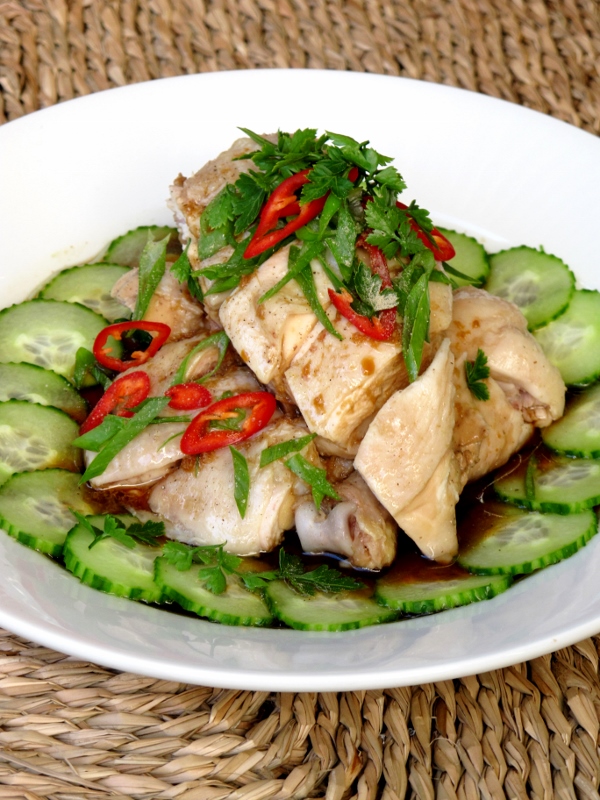
As macabre as it may sound, the sight of cooked chickens and ducks dangling from gruesome hooks typifies the South East Asian food experience for many of us; often eliciting sympathy and hunger in equal measure. For me though, it gives me pangs of nostalgia for what is, perhaps, one of my favourite Malaysian dishes – Hainanese Chicken Rice. Unsurprisingly, I’m not alone in my love for this dish either, as it appeared at number 45 on CNN’s World’s 50 Most Delicious Foods. Hainanese Chicken Rice’s enduring popularity is testament to the appeal of its uncomplicated nuances and its surprising depth of flavour.

IMG_6853 (600x800)Typically there are two types of chicken on offer at any given Chicken Rice stall in South East Asia; poached (white) or roasted (brown). Growing up, I always preferred the latter, as I was a bit put off by the opaque appearance of the poached variety – if only I’d been a more adventurous child! Whilst the roasted version is undoubtedly very tasty, the poached version is in fact superior in both flavour and texture. Not only does the poaching process have a transformative effect on the meat and skin of the chicken (making it impossibly silky), it also imparts a subtle depth of flavour that enhances the chicken, rather than overpowering it. In addition to being tastier than its roasted counterpart, the white version is also much easier to make!

With a name like Chicken Rice, it should come as no surprise that the rice plays an equally important role in the dish! The good news is that the chicken’s poaching broth doubles-up as the stock used in making the rice. So getting the rice just right isn’t much of a chore – simply use the stock instead of water when making your rice. The stock can also be frozen and reused indefinitely, creating a depth of flavour that only gets better with each chicken poached.

A third, and equally important, element to Chicken Rice is its unique chilli sauce. This light, zesty sauce is both fragrant and hot – the prefect accompaniment to the “clean-tasting” chicken; it is an absolute must!

For more delicious Malaysian recipes, please click here

Click here for the recipe

Rendang Daging (Beef Rendang)

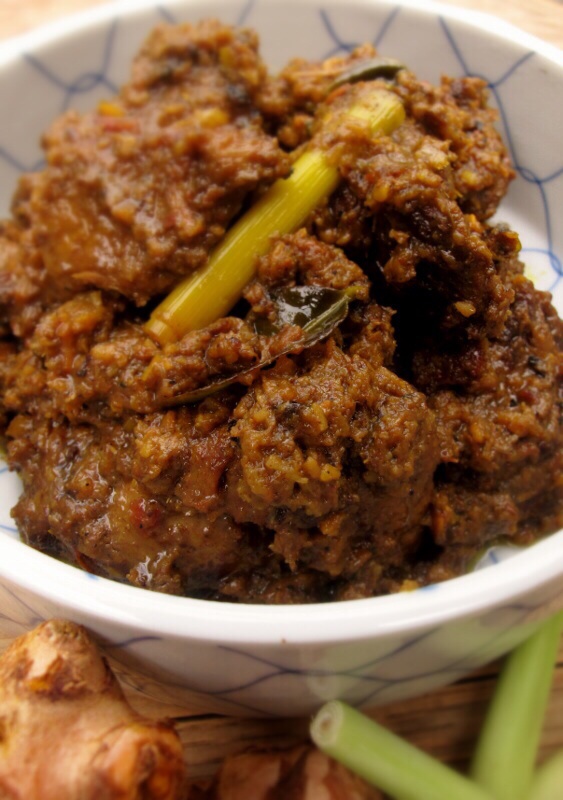
Beef RendangSome mornings I wake up with one word in mind: “rendang!”. I think it’s probably just a Malaysian thing, but this is a dish I literally dream about.

Beef Rendang is perhaps the most beloved Malay meal and is often the go-to main dish for many a family feast or special occasion. With its origins rooted in Indonesia, rendang is popluar throughout South East Asia, especially amongst the Malays in Malaysia and Singapore. Although not widely known outside the region, a 2011 online poll by CNN International chose rendang as the number one dish of their ‘World’s 50 Most Delicious Foods’. Yes, rendang really is that good!

Rendang, however, seems to appeal the most to expat Malaysians. In spite of its long cooking time, rendang is relatively easy to make and can withstand a certain degree of adaptation – something that is vital given the inherent difficulties in stocking a Malay pantry abroad. On a deeper level, though, cooking up a batch of rendang can sometimes feel like an affirmation of our shared cultural identity; a reconnection to our collective culinary memories, through taste. This is the real reason for rendang’s enduring popularity; for many of us it, quite simply, tastes of home.

Ostensibly a curry, rendang is in fact what is known as a dry-curry. Cooked over an extended period, the aromatic coconut sauce is reduced to the point until it clings to the tender beef. This prolonged reduction creates an intensity of flavour that can only be described as explosive. As with all curries, a rendang benefits immensely from being made the day before serving; a night in the fridge gives the flavours time to develop and mellow. Your rendang will be all the better for your patience.

To discover other delicious Malaysian recipes from The Muddled Pantry, please click here

Click here for the recipe

Kari Kapitan (Nyonya Chicken Curry Kapitan)

This Malaysian Classic was my late father’s favourite curry and with good reason, it is simply delectable!

The überkind of Nyonya cuisine, Kari Kapitan is the prefect confluence of traditional Malay and Chinese flavours. My version of this curry is a loose adaptation of that of the reigning queen of Nyonya food, Pearly Kee. Nyonya cuisine is the epitome of what makes Malaysian food great; inclusivity, and Pearly is a true vanguard of this culinary heritage. The result of a marriage of Malay and Chinese ingredients and flavours, Nyonya style cooking is unique to Malaysia and is, perhaps, one of the most underrated cuisines in the World.

A Malaysian take on a traditional Indian Chicken Curry, Kari Kapitan is the result of a thorough Nyonya makeover. Along with the classic additions of lemongrass, lime and galangal, the chief Nyonya element is belachan. Ubiquitous to Malaysian cuisine, belachan is a fermented shrimp paste and is one of the hallmarks of Nyonya cooking. Whilst best described as ‘pungent’, belachan mellows when added to a curry, imparting a depth of flavour to the finished dish like no other.

One of my happiest childhood memories is going on a family outing to the local waterfalls; virtually the entire Clan was there – grandparents, aunts, uncles and a full gaggle of cousins. After hours of slip-sliding through the falls, it was finally lunchtime! As we gathered for our picnic, my grandmother presented us with a massive white Tupperware, filled to the brim with leftover Kari Kapitan. Armed with anticipation and slices of fresh white bread, we all tucked in; what bliss! Perched on those boulders, surrounded by my army of screaming cousins, with the cool waters rushing between my toes and my fingers stained yellow from the Kari Kapitan; it was the perfect childhood memory, matched with the perfect meal.

Universally, all curries benefit from a day of rest before being served, but this is especially true of Kari Kapitan. Whilst still delicious when eaten on the day of cooking, a bit of patience reaps its own reward. Such is its plethora of flavours, Kari Kapitan needs time to find its balance, to develop and mature. As a result, Kari Kapitan makes for amazing leftovers…and memories.

To discover other delicious Malaysian recipes from The Muddled Pantry, please click here

Click here for the recipe

Malaysia: Curry Paste Confidential

I’m going to tell you a secret no Western chef wants you to hear; Asians don’t make their own curry pastes. There, I’ve said it and I’m not going to take it back. It’s my blog and I’ll tell the truth if I want to. The notion that we Asians spend our time making wonderfully fragrant curry pastes from scratch is perhaps one of the most enduring culinary fallacies about The Far East, but the simple truth is we don’t. We, like rest of humanity, have busy lives and they are too short to be spent forever grinding away with a pestle and mortar, just to make a paste we can just as well buy ready-made from the local food market…or Tesco, yes you heard me right, Tesco.

Television chefs, in particular, seem to exalt the necessity of making your own curry paste and heaven forbid you suggest otherwise. I recall one famous British chef’s utter distain for such culinary shortcuts whilst filming a segment on Penang Fish Head Curry in Malaysia. The feisty young lady, who was demonstrating how to make this classic dish, unashamedly whipped out a pack of store-bought curry paste and duly added it to the curry. Mortified he asked her why she didn’t make her own, but I think her answer confounded him even further, “Heh? Who makes their own paste? Too busy. Everybody buys from the shop”. Undeterred, he pressed her further, “But wouldn’t it taste better if you made your own?”. Oblivious to his patronising tone, she replied, “No’lah, of course I’m using the best brand for you!”. He did not seem comforted by this; after all, this cavalier attitude towards authenticism just wouldn’t fly back in Cornwall! And anyhow, what did she really know about how Asian food should be prepared, in Asia…by actual Asians.

Now I’m not dissing freshly made curry pastes, far from it. They are utterly amazing and if you have the time (and the required ingredients) to make one then great, jolly good for you, but for the rest of us they are just not really practical or necessary. There are, of course, times you have to make your own, simply because there may not be a ready-made paste available, but this is out of necessity, not choice. Outside of Asia it is easy enough to find Thai or Indian pastes at your local supermarket, but looking to make a nice Sri Lankan curry? Best you get grinding…

Growing up in Malaysia, there was always a myriad of brands to choose from, but without doubt the best ready-made curry pastes were from the local produce market. As a child I would love going with my grandmother, Amah, to the market to get the ingredients for the night’s meal, and if curry was on the menu then we would always make a stop at her preferred curry paste vendor. We would pick our way through the market’s wet concrete aisles; pass the doomed squawking chickens, bypassing the acrid meat section, lingering by the perfumed blooms of the flower stalls; all the while bargaining and buying as we went. When we would eventually make it to the curry paste vendor he would ask us what type of curry we wanted to make, for how many people, hot or not? Our dining plans duly divulged and assessed, the vendor would set about his alchemy, combining various glistening pastes to produce the required finished article. It would be paste-perfection, but this was never in doubt – making curry paste was his life’s work and he did it well.

The curry Amah would dish up that night would, of course, be delicious but nobody ever attributed its success to the quality of the curry paste; great cooking isn’t always about your ingredients but rather what you do with them. I believe that it is far more important that you learn to make a curry well, rather than worry about the provenance of your curry’s paste. Amah was an incredible cook but she, like most good Asian home cooks, would never bother themselves with something as labourious as making their own curry pastes. Such things should rather be left to the professionals…and television chefs.

To discover delicious Malaysian recipes from The Muddled Pantry, please click here
Chicken Congee (Moi) 滑雞粥

Let me be clear from the start; growing up I simply loathed moi.

Much like chicken noodle soup is the ultimate convalescence food for Americans, throughout Asia moi/jook/congee/budur is a dish that is inextricably associated with being sick. As a child, its characteristic blandness always seemed like an additional punishment to the misery of feeling unwell – especially when it was being forced upon you by an otherwise well-meaning grandmother. The moment you announced you were feeling under the weather, my grandmother (Amah) would invariably say, “You sick, ah? OK so you must eat moi ‘eh. Good for your throat one. Make you better, fast”. There was simply no arguing with Amah on this, you were on the moi diet until you were deemed healthy enough to eat something else. Admittedly, I was an overly dramatic child, but it felt like flavour purgatory!

Now, many years on and much to my surprise, in my most fevered moments I find myself craving a wholesome bowl of chicken moi. It is an irony of a maturing palette, and the fondness of memories, that gives you a renewed appreciation for some unpalatable dishes from the our past.

I’ve always thought the force-feeding of moi was a genius Asian parenting ploy to discourage kids from dragging out their convalescence. The moment I felt better I would immediately pronounce that I was cured and that it was safe for me to once again scoff down some deliciously oily char kway teow! The Moi Diet: Machiavellian parenting at its best or a grandmother’s love? Either way, Amah was right – it DID make me better, faster.

To discover other delicious Malaysian recipes from The Muddled Pantry, please click here
For more Chinese recipes, please click HERE or to find out more about how to stock a Chinese Pantry, please click HERE

Click here for the recipe

Beef Hor Fun 滑蛋牛肉河

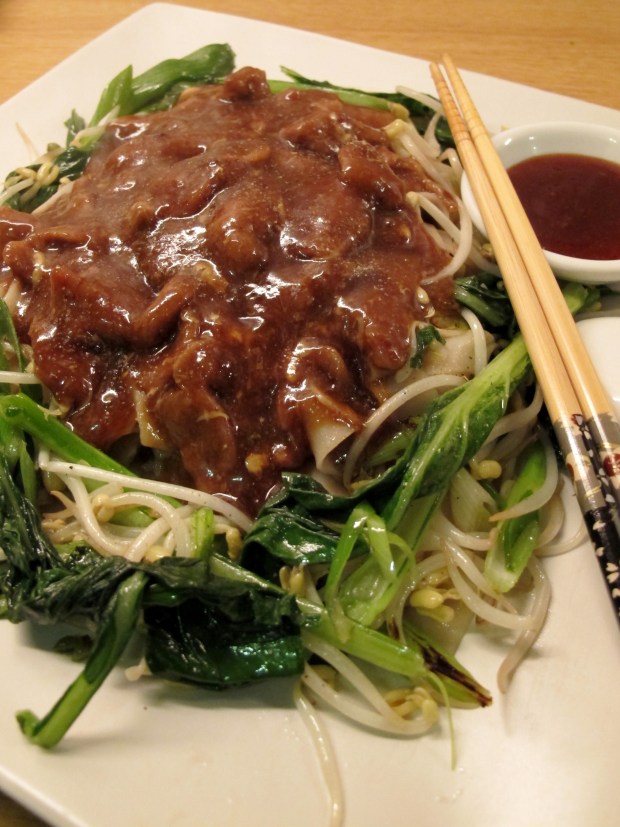
Some times in life you’re just haunted by glorious ghosts of noodles-past and beef hor fun has haunted me more than most. These luscious noodles truly rate as one of my all time childhood favourites. That said, even in Noodle Nirvana of Penang a good beef hor fun is hard to come by, but when you do find a place that does it right you’ll be hooked!

There are two vital components to the success of this dish: super tender beef and silky soft noodles. After trawling the internet I discovered the secret to the tender beef, but I just couldn’t source fresh noodles in Cape Town. Undeterred and determined to feed my hor fun cravings, I tried for many years to replicate this dish with dried flat rice noodles but it was always well short of the mark. That’s until I chanced upon this particular brand of dried noodles at the Mun Fong Chinese Supermarket in Goodwood. Don’t ask me what they are called, my Mandarin is non-existent – all I know is that they’re the closet I’ve come to finding the texture of fresh rice noodles in their dried form. Buy them, buy a lot of them.

Anyway, armed with my eureka-noodles I once again attempted to make my version of Beef Hor Fun and I can safely say that I can put this particular ghost of noodles past to rest. Enjoy.

To discover other delicious Malaysian recipes from The Muddled Pantry, please click here
For more great noodle recipes from The Muddled Pantry, please click here
Click here for the recipe