Noodles

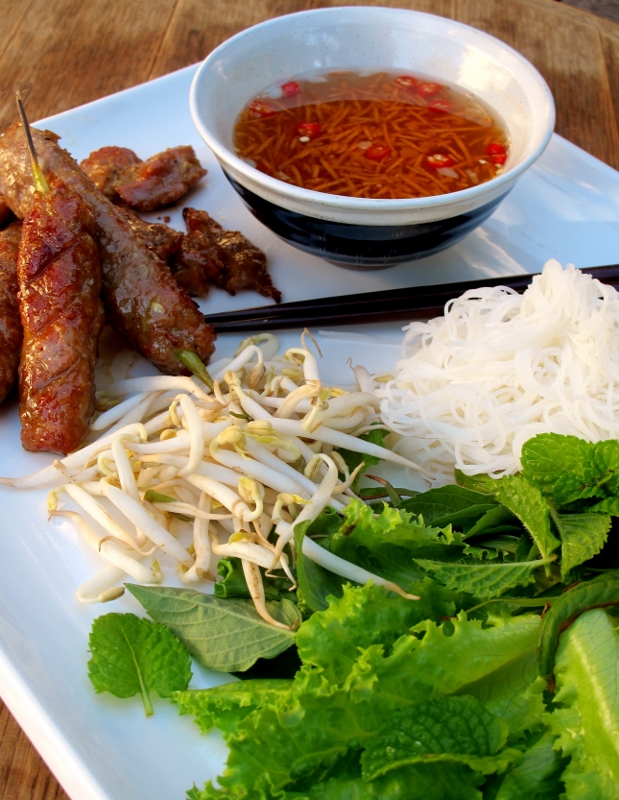
Bún Chả (Vietnamese Grilled Pork, Salad & Noodles)

Bún Chả (Vietnamese Grilled Pork, Salad & Noodles)As I have mentioned previously, I found eating in Vietnam a very frustrating affair, with the best Vietnamese food largely inaccessible to the average tourist. Sadly most tourists (who find themselves on the almost inescapable tourist trail that runs from Hồ Chí Minh City to Hạ Long Bay) leave the country with a scant appreciation of the full potential of Vietnamese cuisine, having being fed on an uninspired diet of spring rolls and, if you were lucky, some mediocre phở. These lacklustre experiences are especially tragic to those tourists who seek out new food experiences. Considering authentic Vietnamese food has such a wealth of flavour, it is a shame that there isn’t more of it on offer to the willing tourist! Coming from a South East Asian food culture where authentic street-food is accessible and transparent, I found the Vietnamese surprisingly guarded about their food – often openly discouraging you from joining them for a simple bowl of noodles on the side of the road, preferring to usher you back to the tourist cafés with their English menus and homogenised Vietnamese food.

Which is why I love Bún Chả! Tasty, cheap and satisfying, Bún Chả makes for a great meal, but above all, Bún Chả is relatively accessible to foreigners on the prowl for some authentic street-food. It has been said that on the streets of Hanoi, “where there is smoke, there is Bún Chả!” and even if you only end up ordering it in a tourist café, it is still tasty and fun to eat!

Second only to the almighty and omnipresent Phở Bò, Bún Chả is perhaps one of Vietnam’s most popular dishes, especially in the North of the country where it is thought to have originated from. Made up of a plate of grilled pork, salad, a dipping sauce and bún noodles (rice vermicelli), Bún Chả is a complete meal in itself. Traditionally the meat takes the form of patties made up of pork mince, but I like to add some sliced pork to the dish as it adds an extra dimension to the overall meal.

Whilst I am unsure of the exact etiquette for eating Bún Chả, I have taken to soaking the meat in the dipping sauce, adding a bit of the noodles, followed by some of the salad. Then, using chopsticks, everything gets shoved into my mouth. It certainly isn’t elegant, but it is damn tasty!

For more braai/barbecue recipes from The Muddled Pantry, please click HERE
Click here for the recipe

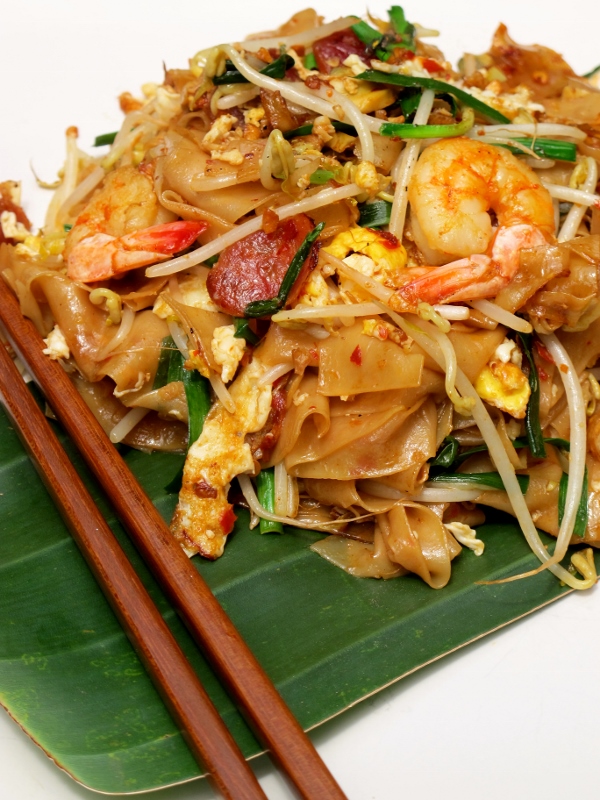
Penang Char Kuey Teow 炒粿條

Universally the Noodle-World is typically divided into two distinct camps: soupy or fried. Every great noodle-eating culture has its own unique fried classics – in Thailand the ubiquitous pad thai reigns supreme, whilst yakisoba proudly flies the flag for Japan, but in both Malaysia and Singapore the undisputed king of fried noodles has to be Char Kuey Teow.

Penang Char Kuey Teow 炒粿條Literally meaning “fried flat rice-noodle”, Char Kuey Teow enjoys enduring popularity through-out both Malaysia and Singapore, manifesting in many delicious guises, accommodating a variety of tastes and dietary restrictions. Sliced fish-cake and bean-curd are popular variations, especially with halal interpretations of the dish, but Char Kuey Teow is at its best when eaten in its most authentic form – Penang-style! Like all hawker-fare in Penang, everyone has their favourite Char Kuey Teow stall, the most popular of these can immediately be identified by the snaking queues that lead to them. In Malaysia one should never be put off by a queue for food – invariably they end in a tasty delight that is always well worth the wait!

Stripped back, Penang Char Kuey Teow is a very simple dish made with just a few well chosen ingredients. With the exception of the noodles, the dish is made up of just 6 vital ingredients: prawns, beansprouts, Chinese chives (garlic chives), egg, Chinese sausage (lap cheong) and blood cockles (see hum), although the latter is often omitted locally due to health concerns (and many a runny tummy!). Lap cheong is an acquired taste and is therefore sometimes left out at the request of the customer. Whilst some of the ingredients may sound intimidatingly exotic, they are easily found at most well-stocked Asian supermarkets, although the blood cockles can be trickier to source. These can be left out altogether or substituted with a less exotic mollusc! I often use tinned clams as a substitute.

Another important component of the dish is the cooking sauce. Even though only a few teaspoons are added to the noodles, the sauce can make or break the dish. Given that Char Kuey Teow is classic hawker-fare, authentic recipes for its soya-based sauce are hard to come by, as the exact quantities and ingredients are often a fiercely guarded secret! I have tried a myriad of recipes over the years, but the nearest I have found to the real thing is from Rasa Malaysia, although I prefer to use slightly less dark soya sauce. Although the below recipe’s quantities are for a single serving, the sauce recipe will yield enough to make at least 10 plates of Char Kuey Teow and can be kept in the fridge until needed.

Ingredients aside, the key to making a decent Char Kuey Teow is technique and a hot, hot wok. A wide, well-seasoned wok needs to be kept searing hot throughout and as a result, only individual portions can be cooked at a time. Given the dish’s ferociously short cooking time (just a few minutes per portion), preparation of all the required components is vital – everything needs to be ready and to-hand when you start cooking. A moment’s hesitation can be the difference between success and ultimate noodle-failure!

Click here for the recipe

Dan-Dan Noodles 担担面

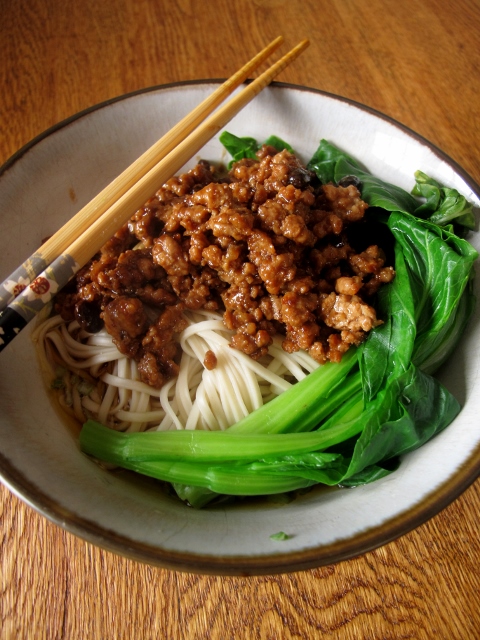
Dan-Dan Noodles 担担面Dan-Dan Noodles are a specialty of Sichuan cuisine and as a result they are not short on spice or flavour. Enjoyed all over China, there are perhaps a thousand versions of these classic noodles but they all have one of thing in common – they’re all ferociously fiery! Lip-numbing and sinus-clearing; these noodles are completely addictive!

Also known as dandanmian, “DanDan” refers to the shoulder-mounted pole that the street vendors would traditionally use to carry their wares; at one end would be the noodles and at the other, the sauce. In the literal sense, the name translates as “noodles carried on a pole”!

Traditionally minced pork is the protein of choice, but if you wanted to, you could always use minced chicken thighs instead. If you wanted to have a completely halal version you could also omit the Shaoxing rice wine.

One of the other main ingredients is chilli oil and whilst you can use one that is store-bought, I would strongly recommend taking the time to make your own – it isn’t at all difficult and it makes a world of difference! Once you’ve tasted the noodles made with your homemade chilli oil you’ll never bother with the store-bought version again. If you would like to make your own Sichuan chilli oil, follow the link.

For more Chinese recipes, please click HERE or to find out more about how to stock a Chinese Pantry, please click HERE

Click here for the recipe

Beef Phở Noodles (Phở Bò)

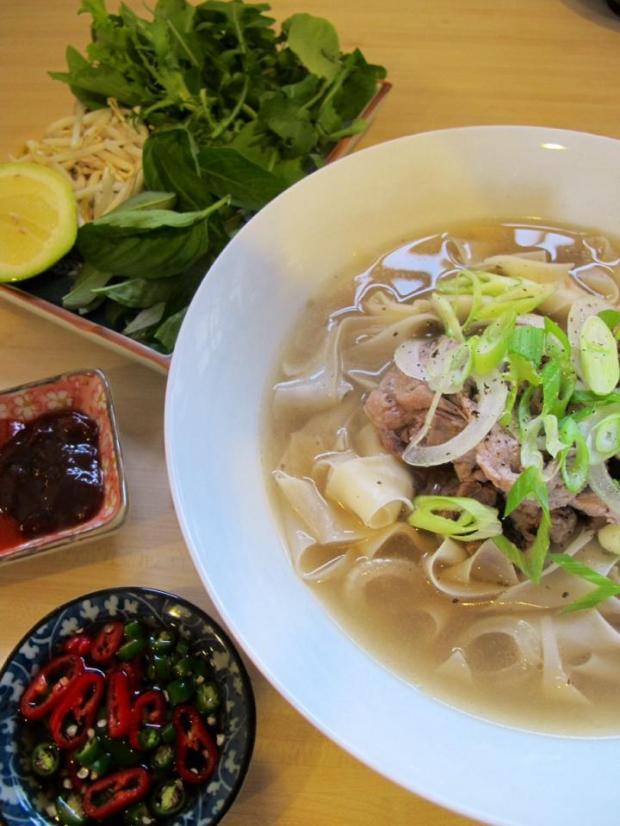
When it comes to noodles in Vietnam, Phở is the undisputed king of the Land.

From Hanoi in the North to the Delta in the South, phở is ubiquitous and with good reason; it is utterly delicious. At first glance phở may seem like a simple dish of beef broth, rice noodles and herbs, but don’t be fooled. Complex, alluring and fragrant, when it comes to aromatics, phở’s beef broth is legion. The ingredient list for phở is intimidatingly long, but with the exception of a couple of items, most of the aromatics are quite common. Some phở recipes require over 25 ingredients just for the broth alone, so in comparison my recipe is quite accessible.

There are a couple of things to keep in mind when making beef phở:

  1. This isn’t a dish for the impatient; the broth takes time, a lot of time.
  2. The correct type of noodle is vital, this being a wide, flat rice noodle. Use fresh if possible, if not use the best dried noodles you can find.
  3. A good selection of herbs is essential
  4. Phở must be served piping hot, there is no waiting on ceremony with phở – dig in the moment it is ready!

If you are interested in reading more about phở and my travels in Vietnam, please click here

For more delicious Vietnamese recipes from The Muddled Pantry, please click here

For more great noodle recipes from The Muddled Pantry, please click here

Click here for the recipe

Phad Thai (Gai or Goong)

Phad Thai Gai

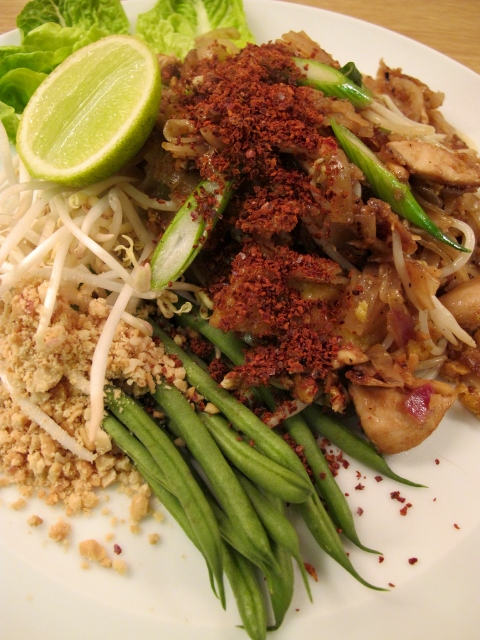
The origins of Phad Thai are both fascinating and insidious in equal measure and are a testament to the power of food. Firstly, it may surprise most to learn that this ubiquitous Thai dish is relatively new to Thai cuisine. Conceived as a solution to a national rice shortage during World War II, the then fascist Thai government created and promoted Phad Thai as a symbol of Thai national pride and actively encouraged street vendors to sell it en masses – a government campaign with the dual objective of both reigniting a flagging sense of Thai Nationalism and addressing a crippling food shortage. In essence, Phad Thai is culinary propaganda at its tastiest.

Sadly, Phad Thai has to be one of the most corrupted Asian dishes in the World. Outside of it’s native Thailand, this wonderful noodle dish has been bastardised beyond recognition by dubious Thai takeaway joints in an ill-advised attempt to make it appealing to a non-Thai palette. I can only imagine the shock that must befall so many tourists who order Phad Thai in the back streets of Bangkok only to end up wondering what on earth they’ve been eating all these years! My version is by no means truly authentic but I’ve tried to replicate the original as best I can – the main difference between my version and the usual takeaway fare is that the only vegetables that are cooked are the bean sprouts and spring onions – the rest are served raw on the side. You can decide if you want to add chicken or prawns, the latter being the more authentic version, but the recipe works well without either.

For more delicious Thai recipes please click here, or if you need tips on stocking your Thai Pantry please click here.

For more great noodle recipes from The Muddled Pantry, please click here

Click here for the recipe

Beef Hor Fun 滑蛋牛肉河

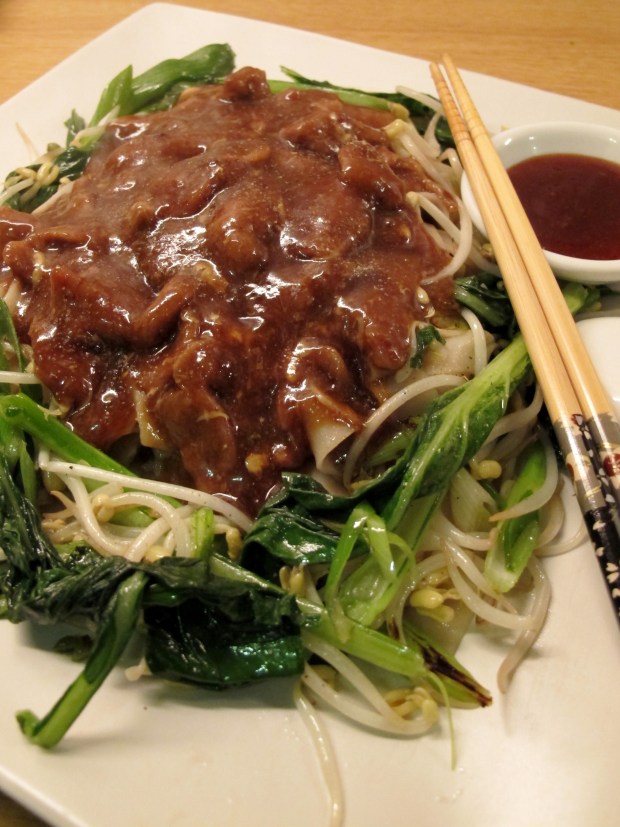
Some times in life you’re just haunted by glorious ghosts of noodles-past and beef hor fun has haunted me more than most. These luscious noodles truly rate as one of my all time childhood favourites. That said, even in Noodle Nirvana of Penang a good beef hor fun is hard to come by, but when you do find a place that does it right you’ll be hooked!

There are two vital components to the success of this dish: super tender beef and silky soft noodles. After trawling the internet I discovered the secret to the tender beef, but I just couldn’t source fresh noodles in Cape Town. Undeterred and determined to feed my hor fun cravings, I tried for many years to replicate this dish with dried flat rice noodles but it was always well short of the mark. That’s until I chanced upon this particular brand of dried noodles at the Mun Fong Chinese Supermarket in Goodwood. Don’t ask me what they are called, my Mandarin is non-existent – all I know is that they’re the closet I’ve come to finding the texture of fresh rice noodles in their dried form. Buy them, buy a lot of them.

Anyway, armed with my eureka-noodles I once again attempted to make my version of Beef Hor Fun and I can safely say that I can put this particular ghost of noodles past to rest. Enjoy.

To discover other delicious Malaysian recipes from The Muddled Pantry, please click here

For more great noodle recipes from The Muddled Pantry, please click here

Click here for the recipe