Braises

Ossobuco

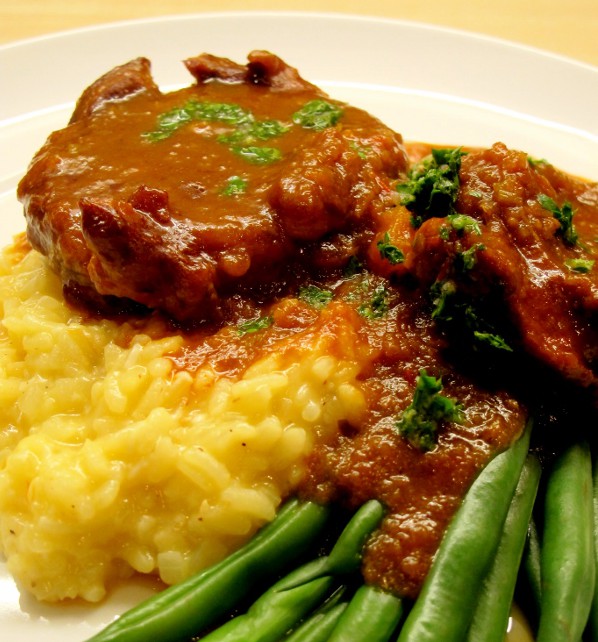
OssobucoArguably the figlio preferito of Lombardy’s regional cuisine, ossobuco is, perhaps, the ultimate Italian braise. This is not a dish for the fainthearted, this is real stick-to-your-ribs fare! I would categorise ossobuco as lick-your-plate food, something that, even in the politest of company, I cannot help but do!

Sadly though, like many other Italian classics, ossobuco has suffered more than its fair share of well intended culinary-meddling and is, more often than not, worse off for it. Of course, there is never a definitive version of any Italian recipe. Familial traditions and regional variations are the norm throughout Italy and, as a result, there are countless interpretations of how to cook ossobuco. But as with all culinary classics, there are always rules and whilst none are ever truly set in stone, these are the three “ossobuco rules” that I recommend adhering to:

  1. Meat: Ossobuco should only ever be made with veal shanks. Unfortunately this isn’t really negotiable, as it simply would not be ossobuco if it was made with beef shanks, or perish the thought, lamb. Whilst the braise still works well with either beef or lamb shanks, you could not in good conscious call the dish ossobuco if you used either of these.
  2. Bone-marrow: Ossobuco literally translates as bone-hole, so it should come as no surprise that bone-marrow is an inescapable part of the dish. In fact, sucking out the tender veal-marrow is integral to the joy of eating ossobuco. If you are still haunted by Mad Cow disease, then this most definitely isn’t the dish for you!
  3. Accompaniments: In truth, ossobuco can be served with just about anything; whether it be with a crisp potato rosti or with buttery mash, it will be delicious. But just because it tastes good, doesn’t make it right! Traditionally ossobuco is always served with risotto alla Milanese and is typically garnished with a sprinkling of gremolata. Sometimes tradition knows best and this is such a time, the combination of all three elements is simply stellar! Even if you don’t serve it with the risotto, I would urge you not to skip the gremolata – it is very easy to make and elevates the ossobuco to an entirely different level.

For aficionados there are, of course, a myriad of other do’s and don’ts: should tomato be added, red wine or white? To be honest, our pantries and situations do not always allow us the luxury of perfection so, rules or no rules, we have to make do with what we have available.

As much as I absolutely love ossobuco, I usually have mixed emotions whenever I see it on a menu and I never order it lightly. Despite my mind being awash with those pesky “rules”, provided the basic tenets are adhered to, my leap of faith is invariable justified and I still enjoy my dining choice irrespective of my skepticism. Testament, perhaps, to ossobuco’s infinite variability and appeal. I guess you just can’t keep a good dish down!

For more Italian Classics from The Muddled Pantry, please click here

Click here for the recipe

Vietnamese Braised Pork in Coconut Water (Thịt Kho Tàu)

Thịt Kho Tàu (Braised Pork in Coconut Water)This venerable Vietnamese classic is traditionally made to celebrate Tết, the Vietnamese Lunar New Year, but is popular all year round. Packed full of flavour, this sweet and tender braise of pork is simmered in coconut water and is a firm favourite throughout Việt Nam, especially in the South.

The first time I encountered this dish was in a restaurant in Hồ Chí Minh City. My uncle, who was working in Việt Nam at the time, took us out for a lavish Vietnamese dinner and this dish was the undisputed star of the meal. After simmering away for hours in its delicious coconut broth, the pork was achingly tender and sweet, but the real revelation was the generous layer of fat. Soft and rich, yet surprisingly light on the tongue – the fat had been transformed into the true master-stroke of the entire dish. This was pork fat in all its gelatinous glory!

Whilst I’ve always made this dish with pork belly, in truth you can actually use any number of cuts of pork, as long as the meat isn’t too lean. Personally, though, I prefer sticking with pork belly for this dish as it doesn’t dry out from the extended cooking time and the fat imparts a wonderful flavour into the broth.

Traditionally eaten with rice and often accompanied with a simple daikon & carrot pickle (Đồ Chua), I also love to pair this dish with some water spinach stir-fried with garlic.

Click here for the recipe

Lamb Tagine with Dates

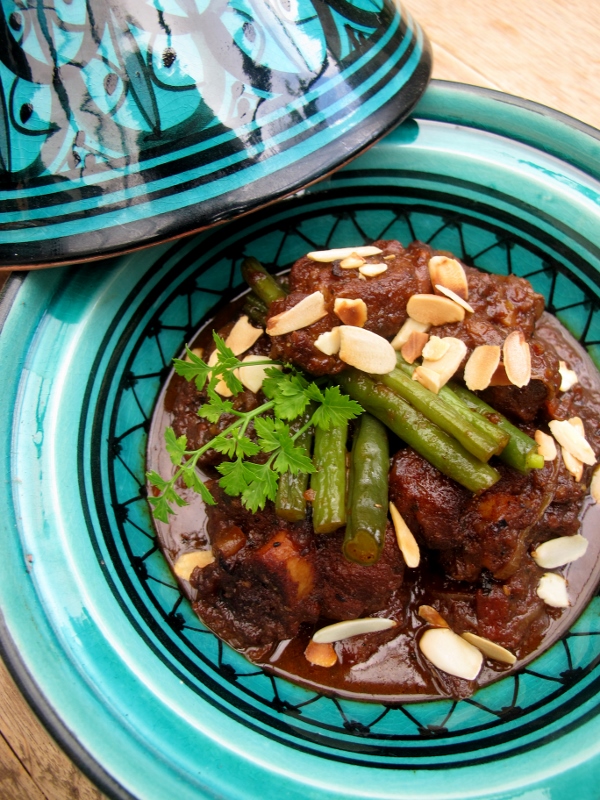
Lamb Tagine with DatesA firm family favourite, this tagine is sweet and intensely spiced.

So much so, I rarely make this dish for anybody else other than my partner. Not because it isn’t utterly delicious, but because it is almost bludgeoning in its intensity and is not for the fainthearted; this is real stick-to-your-ribs type cooking!

On the few occasions I have served it to others it has always gone down a treat, I just make sure that the friends I make it for like this style of cooking. The trick to getting away with serving a dish packed with this much flavour is to pair it with a simple side dish like plain couscous or a zingy lemon-soaked tabbouleh…or, if you are my partner, some plain white rice! And whilst I despair at the latter, it is a miracle that my partner likes this dish at all so I don’t push the matter, but I normally discourage such pandering and recommend couscous as the appropriate accompaniment.

For more delicious Moroccan recipes please click here or if you would like to read more about tagines please click here

Click here for the recipe

Cape Malay Tomato Bredie

A tomato bredie is the ultimate manifestation of South African home cooking.

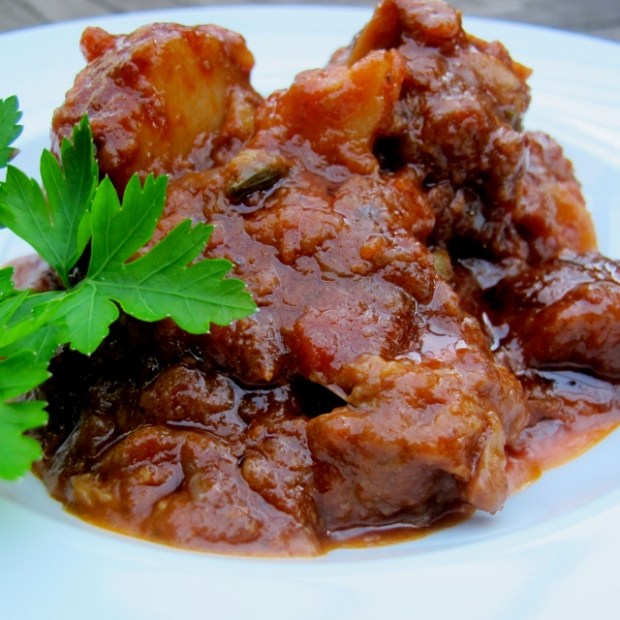
Ostensibly a stew, bredies form an integral part of South African huiskos (home cooking), and whilst there are a number of different types of bredies, tomato bredie seems to be the most cherished of them all. At a glance, a bredie looks like a very basic stew, but there is a key element that differentiates it from being a regular stew. Instead of simmering in a liquid like a conventional stew, a bredie is self-saucing. Absolutely no water is added to a bredie and the sauce is formed from the rendered juices and fat from the lamb, which when combined with the reduced tomato, results in an intensely flavoured gravy which transcends its humble basic ingredients.

There are quite a few tomato bredie recipes out there but I’ve always stuck with Cass Abrahams‘s recipe, albeit with some unorthodox additions of my own. Cass Abrahams is widely regarded as the incumbent mother of Cape Malay cooking and her recipes are often the starting point for many of my own.

When I initially attempted to make a tomato bredie I found the results were a bit watery and that the meat would sometimes be a little tough. I got around this by first dredging the meat in flour before browning it thoroughly and then by cooking the entire thing in the oven and not on the stove as it is usually done. Bredie traditionalists would be mortified by my preferred cooking method, but I find that cooking it in the oven helps the tomatoes break-down and creates an intensity in the gravy that you wouldn’t otherwise get when cooking it in the conventional way. I have been making my tomato bredie in this way for a number of years and they have always been a success, the meat is invariably melt-in-your-mouth tender and the sauce is thick and bursting with flavour.

If you would like to read more about South African food please follow this link or for more South African recipes, please click here

Click here for the recipe