Chinese

Mapo Tofu 麻婆豆腐

With the exception of the most amazing Peking Duck I’ve ever eaten, I was disappointed to discover that Chinese food in China is a rather dull affair. Roasted locust and the occasional snake-on-a-stick not withstanding, bland soups and mediocore dumplings seem to be the order of the day on the streets of Beijing.

After spending the best part of a week eating possibly the dullest Asian food on earth, we chanced upon a massive subterranean food-court that specialized in regional food from all over China. It was here, in this overcrowded and windowless basement, that we finally discovered some of that allusive “Chinese flavour” in China – we had found Sichuanese food or more specifically, mapo tofu! Little did I know that I stumbled upon what would possible become one of my favourite Chinese dishes of all time.
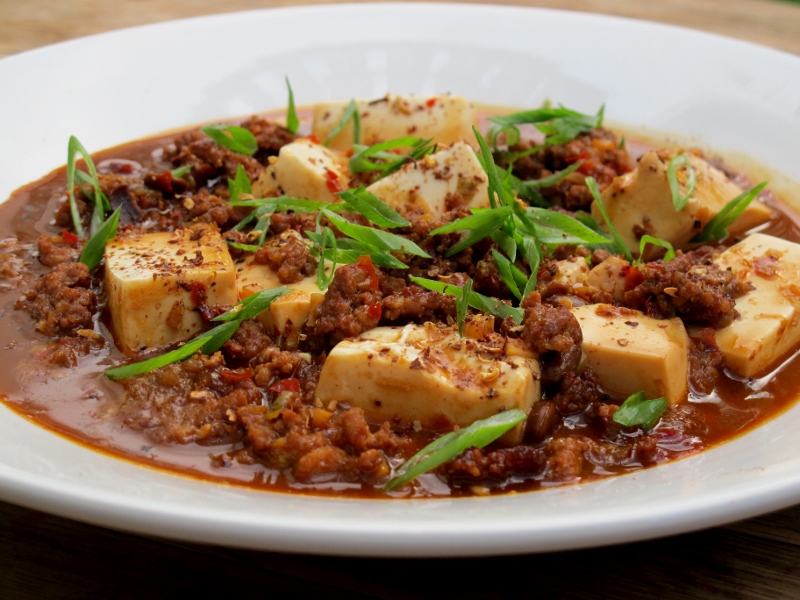
Mapo Tofu 麻婆豆腐

Loosely translating to “grandmother’s pockmarked tofu”, this colorfully named dish has all the hallmarks of a true Sichuanese classic. Spicy, stastifiying and, above all, “numbing”, mapo tofu has got it all! Packed full of flavour, it is a great dish to introduce the uninitiated to the unsung delights of tofu. The soft, silky texture of the tofu plays beautifully against the fiery sauce, resulting in a “cooling” contrast to the intensity of the dish.

Easy to make and always tasty, mapo tofu is the epitome of Chinese home-style cooking and makes for fantastic meal on its own with just some rice. Equally, though, mapo tofu makes a great addition to a larger Chinese banquet as it can be made ahead of time and then gently reheated before serving (something of a rarity in Chinese cooking).
Click here for the recipe

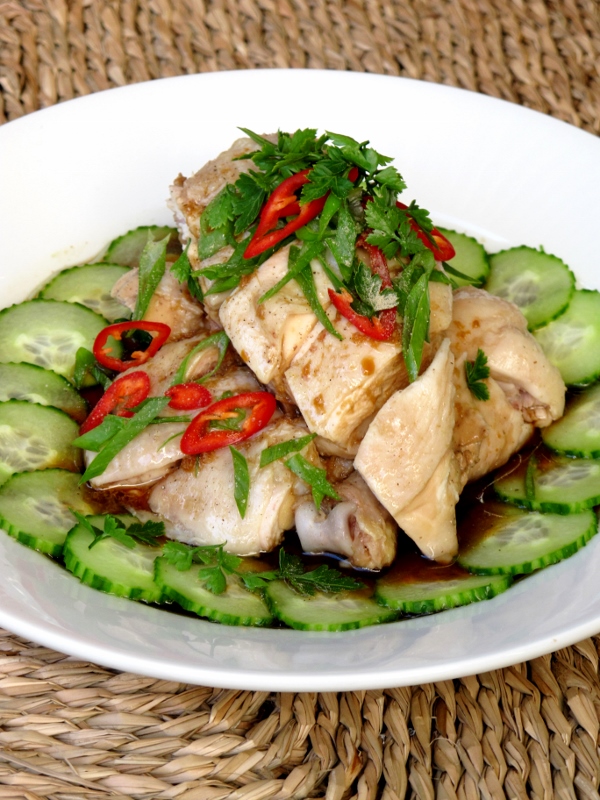
Hainanese Chicken Rice 海南雞飯

As macabre as it may sound, the sight of cooked chickens and ducks dangling from gruesome hooks typifies the South East Asian food experience for many of us; often eliciting sympathy and hunger in equal measure. For me though, it gives me pangs of nostalgia for what is, perhaps, one of my favourite Malaysian dishes – Hainanese Chicken Rice. Unsurprisingly, I’m not alone in my love for this dish either, as it appeared at number 45 on CNN’s World’s 50 Most Delicious Foods. Hainanese Chicken Rice’s enduring popularity is testament to the appeal of its uncomplicated nuances and its surprising depth of flavour.

IMG_6853 (600x800)Typically there are two types of chicken on offer at any given Chicken Rice stall in South East Asia; poached (white) or roasted (brown). Growing up, I always preferred the latter, as I was a bit put off by the opaque appearance of the poached variety – if only I’d been a more adventurous child! Whilst the roasted version is undoubtedly very tasty, the poached version is in fact superior in both flavour and texture. Not only does the poaching process have a transformative effect on the meat and skin of the chicken (making it impossibly silky), it also imparts a subtle depth of flavour that enhances the chicken, rather than overpowering it. In addition to being tastier than its roasted counterpart, the white version is also much easier to make!

With a name like Chicken Rice, it should come as no surprise that the rice plays an equally important role in the dish! The good news is that the chicken’s poaching broth doubles-up as the stock used in making the rice. So getting the rice just right isn’t much of a chore – simply use the stock instead of water when making your rice. The stock can also be frozen and reused indefinitely, creating a depth of flavour that only gets better with each chicken poached.

A third, and equally important, element to Chicken Rice is its unique chilli sauce. This light, zesty sauce is both fragrant and hot – the prefect accompaniment to the “clean-tasting” chicken; it is an absolute must!

For more delicious Malaysian recipes, please click here

Click here for the recipe

Steamed Pork Ribs with Black Beans 豉汁蒸排骨

An omnipresent dim sum classic, Steamed Pork Ribs with Black Beans is surprisingly easy enough recreate at home. Whether served with other dim sum, or as part of a larger Chinese meal, this dish is always a crowd pleaser!

Sourcing the right kind of pork rib is essential when making this dish, you want to buy ribs that have plenty of meat on the bone and you don’t want them larger than 3cm (the ribs should be small enough so that they’re chopstick-friendly). Cutting through rib bones at home is always a nightmare, so I would ask your butcher to cut them to size for you.

There are a couple of elements in this dish that come down to personal preference. Firstly, the amount of chilli added. Whilst this always comes down to your own personal tolerance, but even if you don’t have a Teflon gullet like me, a subtle hint of chilli is an absolute must for this dish. Secondly, the consistency of the sauce. My recipe calls for the sauce to be thicken with cornflour however, it is not uncommon for this ingredient to be omitted, resulting in a lighter sauce. I prefer a thicker sauce as it binds to the ribs, giving each bite an extra punch of flavour, but it’s entirely up to you.

Whilst this recipe makes enough for two people (eating it as part of a larger meal), it would probably stretch to feed another – if not for the fact that they are simply irresistible! I must confess that I cannot help but scoff down my “chef’s share” before it leaves the kitchen! So if you are weak-willed like me, please consider your own susceptibility to temptation when making this dish. Otherwise, your guests may go home hungry.

For more Chinese recipes, please click HERE or to find out more about how to stock a Chinese Pantry, please click HERE

Click here for the recipe

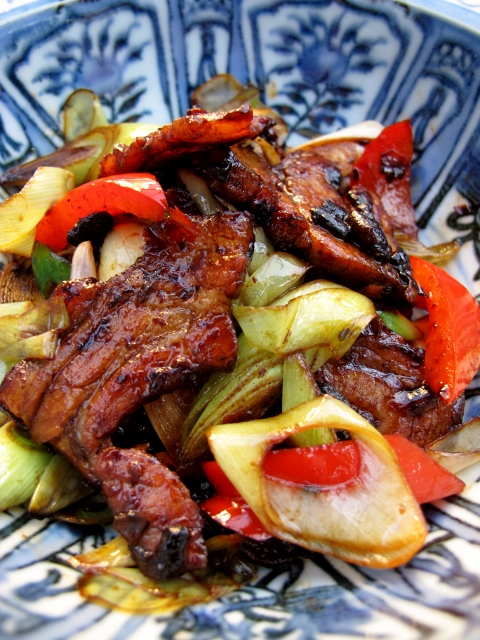
Twice-Cooked Pork 回鍋肉

Twice-Cooked Pork 回鍋肉A true classic, Twice-Cooked Pork is everything you’d expect from Sichuanese cuisine: fragrant, spicy and utterly moreish! Served as part of a banquet or with just some plain rice and a fried egg, this is simple Chinese cooking at its best.

Pre-cooking the pork may initially seem like a bit of a faf, but don’t let this put you off. It’s definitely worth the effort, as the resulting pork is meltingly tender! Once the pork has been cooked and cooled, the dish takes mere minutes to put together – from wok to mouth in a matter of minutes!

For more Chinese recipes, please click HERE or to find out more about how to stock a Chinese Pantry, please click HERE

Click here for the recipe

Sichuan Chilli Oil 四川辣油

Sichuan Chilli Oil (makes 250ml)

  • 1 cup vegetable oil
  • 1 spring onion, cut into segments
  • 2 slices of ginger
  • 2 cloves of garlic, lightly crushed
  • 2 star anise pods
  • 1 small cinnamon stick, approximately 3cm long
  • 4 tbsp. Sichuan peppercorns, lightly toasted and crushed
  • 3 tbsp. chilli flakes (preferably Sichuan or Korean)
  • 1/8 tsp. ground coriander
  • 1/8 tsp. ground cumin

Method:

  1. Combine vegetable oil, spring onion, ginger, garlic, star anise, cinnamon and Sichuan peppercorn in a small sauce pot
  2. On a medium heat, let the ingredients fry in the oil for a couple of minutes, or until the garlic and spring onion just start to colour
  3. Add the chilli flakes, ground coriander and cumin
  4. Fry for another minute until the chilli flakes slightly darken in colour
  5. Turn off the heat and set it aside
  6. Pick out the spring onion, ginger, garlic, cinnamon and star anise

The chilli oil will last indefinitely; the longer it sits, the better the flavour

For more Chinese recipes, please click HERE or to find out more about how to stock a Chinese Pantry, please click HERE

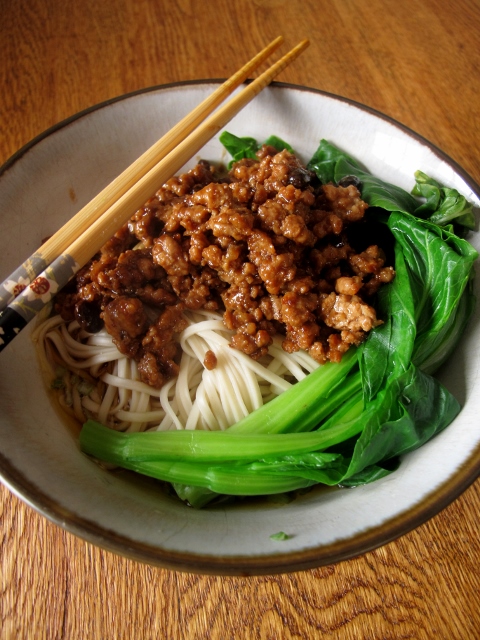
Dan-Dan Noodles 担担面

Dan-Dan Noodles 担担面Dan-Dan Noodles are a specialty of Sichuan cuisine and as a result they are not short on spice or flavour. Enjoyed all over China, there are perhaps a thousand versions of these classic noodles but they all have one of thing in common – they’re all ferociously fiery! Lip-numbing and sinus-clearing; these noodles are completely addictive!

Also known as dandanmian, “DanDan” refers to the shoulder-mounted pole that the street vendors would traditionally use to carry their wares; at one end would be the noodles and at the other, the sauce. In the literal sense, the name translates as “noodles carried on a pole”!

Traditionally minced pork is the protein of choice, but if you wanted to, you could always use minced chicken thighs instead. If you wanted to have a completely halal version you could also omit the Shaoxing rice wine.

One of the other main ingredients is chilli oil and whilst you can use one that is store-bought, I would strongly recommend taking the time to make your own – it isn’t at all difficult and it makes a world of difference! Once you’ve tasted the noodles made with your homemade chilli oil you’ll never bother with the store-bought version again. If you would like to make your own Sichuan chilli oil, follow the link.

For more Chinese recipes, please click HERE or to find out more about how to stock a Chinese Pantry, please click HERE

Click here for the recipe

Chicken Congee (Moi) 滑雞粥

Let me be clear from the start; growing up I simply loathed moi.

Much like chicken noodle soup is the ultimate convalescence food for Americans, throughout Asia moi/jook/congee/budur is a dish that is inextricably associated with being sick. As a child, its characteristic blandness always seemed like an additional punishment to the misery of feeling unwell – especially when it was being forced upon you by an otherwise well-meaning grandmother. The moment you announced you were feeling under the weather, my grandmother (Amah) would invariably say, “You sick, ah? OK so you must eat moi ‘eh. Good for your throat one. Make you better, fast”. There was simply no arguing with Amah on this, you were on the moi diet until you were deemed healthy enough to eat something else. Admittedly, I was an overly dramatic child, but it felt like flavour purgatory!

Now, many years on and much to my surprise, in my most fevered moments I find myself craving a wholesome bowl of chicken moi. It is an irony of a maturing palette, and the fondness of memories, that gives you a renewed appreciation for some unpalatable dishes from the our past.

I’ve always thought the force-feeding of moi was a genius Asian parenting ploy to discourage kids from dragging out their convalescence. The moment I felt better I would immediately pronounce that I was cured and that it was safe for me to once again scoff down some deliciously oily char kway teow! The Moi Diet: Machiavellian parenting at its best or a grandmother’s love? Either way, Amah was right – it DID make me better, faster.

To discover other delicious Malaysian recipes from The Muddled Pantry, please click here

For more Chinese recipes, please click HERE or to find out more about how to stock a Chinese Pantry, please click HERE

Click here for the recipe