Author: The Muddled Pantry

Born out of a passion for the food I love to eat, feed and share, The Muddled Pantry is about satisfying a global palette with limited ingredients

Kimchi Pancakes (Kimchijeon)

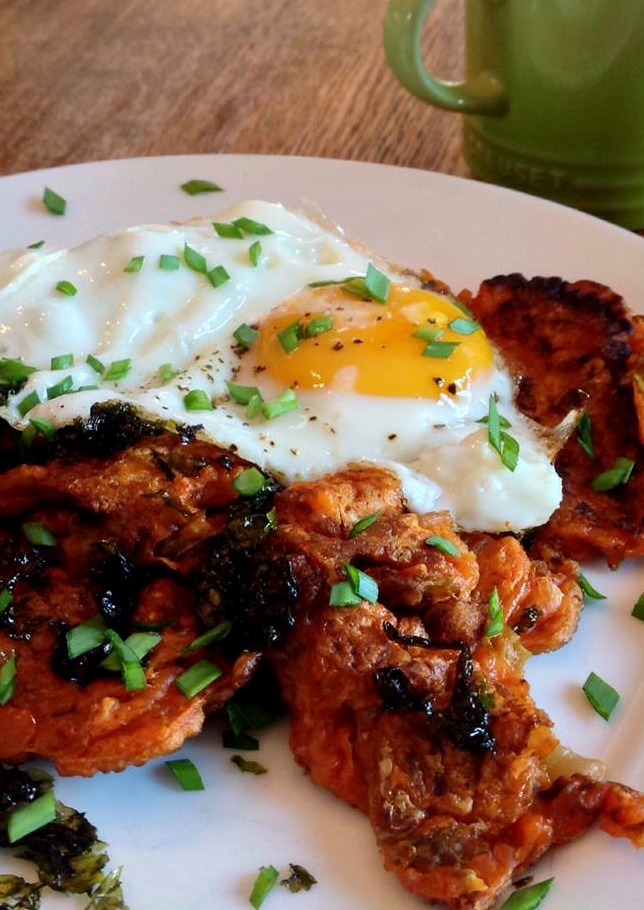
Kimchi PancakesSo great, you’ve made your first batch of mak kimchi and now you’re probably wondering what the heck to do with it? One word: pancakes.

I know it may sound strange, maybe even a little wrong, but relax, these aren’t pancakes of the sweet variety – these are spicy, savoury treats that make for the prefect snack or light meal. Simple and delicious, kimchi pancakes are a great way to get your kimchi-fix without having to go to the effort of making an elaborate Korean meal. Kimchijeon is perhaps my favourite way to eat kimchi; I love to eat mine with a fried egg, topped with some chopped spring onions, laver (Korean dried seaweed) and a dollop of chilli sauce! Kimchi-bliss

Click here for the recipe

Malaysia: Curry Paste Confidential

I’m going to tell you a secret no Western chef wants you to hear; Asians don’t make their own curry pastes. There, I’ve said it and I’m not going to take it back. It’s my blog and I’ll tell the truth if I want to. The notion that we Asians spend our time making wonderfully fragrant curry pastes from scratch is perhaps one of the most enduring culinary fallacies about The Far East, but the simple truth is we don’t. We, like rest of humanity, have busy lives and they are too short to be spent forever grinding away with a pestle and mortar, just to make a paste we can just as well buy ready-made from the local food market…or Tesco, yes you heard me right, Tesco.

Television chefs, in particular, seem to exalt the necessity of making your own curry paste and heaven forbid you suggest otherwise. I recall one famous British chef’s utter distain for such culinary shortcuts whilst filming a segment on Penang Fish Head Curry in Malaysia. The feisty young lady, who was demonstrating how to make this classic dish, unashamedly whipped out a pack of store-bought curry paste and duly added it to the curry. Mortified he asked her why she didn’t make her own, but I think her answer confounded him even further, “Heh? Who makes their own paste? Too busy. Everybody buys from the shop”. Undeterred, he pressed her further, “But wouldn’t it taste better if you made your own?”. Oblivious to his patronising tone, she replied, “No’lah, of course I’m using the best brand for you!”. He did not seem comforted by this; after all, this cavalier attitude towards authenticism just wouldn’t fly back in Cornwall! And anyhow, what did she really know about how Asian food should be prepared, in Asia…by actual Asians.

Now I’m not dissing freshly made curry pastes, far from it. They are utterly amazing and if you have the time (and the required ingredients) to make one then great, jolly good for you, but for the rest of us they are just not really practical or necessary. There are, of course, times you have to make your own, simply because there may not be a ready-made paste available, but this is out of necessity, not choice. Outside of Asia it is easy enough to find Thai or Indian pastes at your local supermarket, but looking to make a nice Sri Lankan curry? Best you get grinding…

Growing up in Malaysia, there was always a myriad of brands to choose from, but without doubt the best ready-made curry pastes were from the local produce market. As a child I would love going with my grandmother, Amah, to the market to get the ingredients for the night’s meal, and if curry was on the menu then we would always make a stop at her preferred curry paste vendor. We would pick our way through the market’s wet concrete aisles; pass the doomed squawking chickens, bypassing the acrid meat section, lingering by the perfumed blooms of the flower stalls; all the while bargaining and buying as we went. When we would eventually make it to the curry paste vendor he would ask us what type of curry we wanted to make, for how many people, hot or not? Our dining plans duly divulged and assessed, the vendor would set about his alchemy, combining various glistening pastes to produce the required finished article. It would be paste-perfection, but this was never in doubt – making curry paste was his life’s work and he did it well.

The curry Amah would dish up that night would, of course, be delicious but nobody ever attributed its success to the quality of the curry paste; great cooking isn’t always about your ingredients but rather what you do with them. I believe that it is far more important that you learn to make a curry well, rather than worry about the provenance of your curry’s paste. Amah was an incredible cook but she, like most good Asian home cooks, would never bother themselves with something as labourious as making their own curry pastes. Such things should rather be left to the professionals…and television chefs.

To discover delicious Malaysian recipes from The Muddled Pantry, please click here

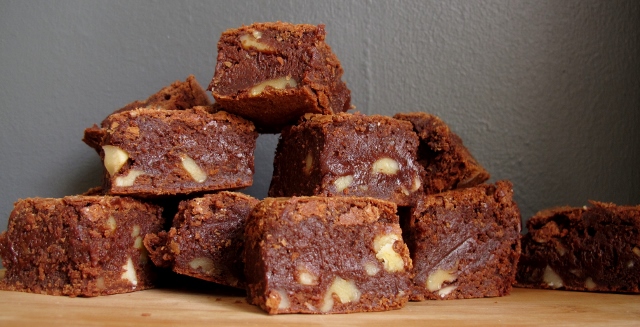
Chocolate Brownies

Chocolate Brownies

These brownies have served me well over the years; gooey and ridiculously rich, they’re irresistibly moreish! Frankly, I don’t understand why people don’t make brownies more often; they are so easy to throw together and always go down a treat, especially with kids.

Utterly delicious but devastating on the hips, this recipes makes quite a few brownies and invariably I end up giving most of them away to friends and random neighbours. I do this not out of generosity, but out of fear of my expanding waistline! Normally I can exercise admirable control when resisting sweet temptations, but with these, I turn into a brownie munchin’ fiend!

There is nothing pretentious about this recipe; this is easy-baking, that makes for great eating.

For more Sweet Treats from The Muddled Pantry, please click here

Click here for the recipe

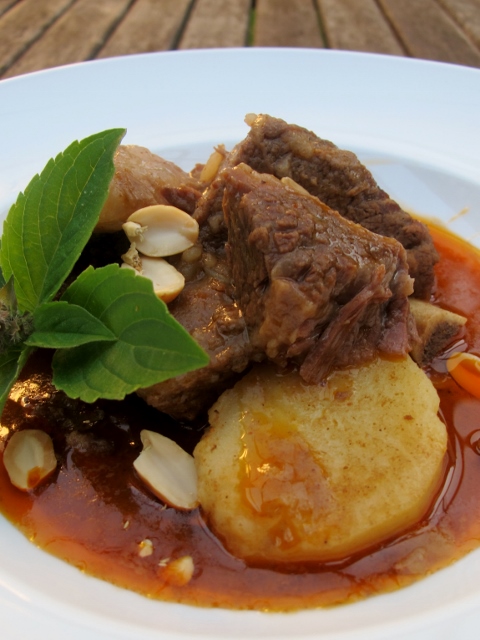
Thai Mussaman Beef Curry

Thai Mussaman Beef CurryMussaman Beef Curry is my personal favourite of all the conventional Thai curries that we know and love; I find it has a depth of flavour that is sometimes absent in other Thai curries. In particular, the aromatics in this recipe give a smoky edge to the sauce that takes the curry to a whole new level.

The irony about this particular mussaman curry recipe is that it’s actually adapted from one by a television chef who thoroughly irked me for turning his nose up at ready-made pastes, but I must confess that I found his technique for making of this curry surprisingly authentic. Nevertheless, I still felt the need to tweak it here and there. Of course his version requires the “essential” homemade paste made out of 14 additional ingredients, my does not. Both versions taste wonderful, but only one takes half the effort and expense. I’m Asian and I know which one I’m calling my own.

For more delicious Thai recipes please click here, or if you need tips on stocking your Thai Pantry please click here.

Click here for the recipe

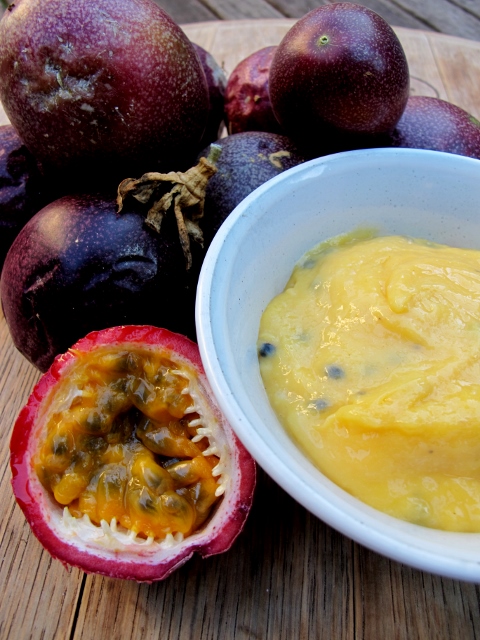
Passionfruit Curd

Prior to moving to Cape Town I had only ever eaten passionfruit once before, at great expense, while living in the London. I chanced upon these purple piquant wonders in an up-market Food Hall and I just had to know what passionfruit really tasted like. At £1.50 a fruit my knees buckled at the price, but I just had to know. Gripped by curiosity, I dug deep and bought two. At the time it was money I could ill-afford to spend, especially on luxury fruit, but to my mind it was money well spent! Eating my first passionfruit was a moment my taste buds will never forget, it was as if they had awoken for the first time. In a word: electric.

Passionfruit CurdSo it was with much excitement that I discovered that my new garden came with its very own granadilla (passionfruit) plant. I tried to grow one in my old garden in Cape Town but without much success. So, our expectations were high as we eagerly waited the start of the fruiting season. I had hoped to get a couple of fruit a day, enough for the two of us to enjoy as a daily tangy treat. Little did I know what a prolific season awaited us, within weeks it began to rain granadillas! At the peak of the season, we were collecting between 10 and 15 granadillas a day and I soon found myself with a glut of these purple delights. It didn’t take long before I had run out of ideas of what to do with them.

With my granadillas mounting, I trawled through my cookbooks for ideas and found a recipe in Nigella’s “How to be a Domestic Goddess”. It was prefect, it combined two of my favourite things; curd and passionfruit! I had never tried passionfruit curd before, but being an avid childhood fan of the lemon variety, I figured “Why not?”. The curd took a while to make, but the results were sensational. Not since my first taste of passionfruit had my taste buds experienced such a wake up call. These days they may not cost me a dime, but made into a curd, passionfruit still makes me curl my toes and roll my eyes in delight. After all these years, it still tastes electric.

For more Sweet Treats from The Muddled Pantry, please click here

Click here for the recipe

South Africa: A Land of Braais, Huiskos and Sushi

When I arrived in South Africa way back in 2000, I took it upon myself to learn about the cuisine of my newly adopted home, so of course I set about interrogating my new-found friends. I would ask, “What is South African food?” For the most part people would immediately say, “A braai!”. Okay, but that’s a barbeque, not really a cuisine. Lets try this again, “What do you braai that makes it South African?”. “Wors!” would come the answer. Okay, that’s a sausage, again not really a stand-alone cuisine. Let’s try a different tack, “When you’re not braaing sausages, what else do you like to eat?”. “Sushi!”.

For a long while I struggled to get a real sense of South Africa’s culinary identity. Given its past struggles, surely this disparately diverse nation found some sort of cultural common ground through its food? Then it hit me, ask the one person whose tastes were uncluttered by the latest food fads, whose tastes stilled lingered in the 80s; before the outside world confused the collective South African palette. Much to my dismay, I turned to my flavour’phobic partner for insight into my South African food conundrum. And so I asked, “What is South African food to you?”. The response was almost instant, “A braai…but without any of that yucky basting sauce”. Okay, not a good start but I wasn’t going to stumble at the first hurdle. Time for a different angle. “What did you like to eat when you were a child?”. “Oooh, my Aunt in Milnerton made the most delicious tomato bredie, she put lots of sugar in it”. Finally I was getting somewhere, but he wasn’t finished, “Tomato bredie with rice. Not your funny foreign rice, normal Tastic rice”. Okay thanks for that, now shut up about tomato bredie. “What else did you like to eat?”, I ventured. “Sweet potato, glazed sweet potato. With tomato bredie and rice!”. Anything else? “Oh, and bobotie…and frikkadels, with glazed sweet potato…and pumpkin fritters with cinnamon sugar! And there’s melktert and malva pudding, hmm malva pudding”. Okay, I knew he had a sweet tooth, but at this point I was amazed he had any teeth left! Deciding that I had better wrap this up I asked, “Do most South Africans like these dishes too?”. “I guess so, everyone loves malva pudding, especially with cold custard!”. Cold custard?!? I had delved enough for one day.

Armed with my new found in-sight, I set about searching out these exotic sounding dishes but they proved elusive, forgotten in amongst the pseudo-Mediterranean fare and generic offerings that cluttered the local menus of the time. Sure, bobotie was relatively commonplace, as was melktert and malva pudding, but these felt like culinary tokenism, a lazy nod to the flavours of the past. Undeterred, I took it upon myself to learn to cook the dishes that were so dear to my partner’s heart, but I gave up trying to answer the question of what South African food was. A country’s food culture is something that must be born from the current tastes of its people, it is not something that can be defined by the antiquated tastes of a passing generation. In the past when I had visitors from overseas they usually ask me to cook them an authentic South African meal which typically resulted in the obligatory bobotie and malva pudding. Afterwards my friends inevitable ask the question, “So this is South African food, what else is there?”. Defeated, my stock answer had become, “They like to braai”.

However, as the years rolled by and my glimpses into the South African psyche expanded, I discovered that these elusive dishes had been there all along, but I had been looking in the wrong places. The food I had been searching for wasn’t the sort you’d order at a restaurant, it was food that was made for you by the people who loved you the most, your family – it was huiskos. I had wrongly assumed that South Africans would want to eat the same food they loved, the food that they would feed their families, when they went out to restaurants to eat but they don’t. I asked a friend once about this South African culinary bi-polarism and her response was simple, “Hell, why would I want to eat my food when I can go out and order sushi!”. Why, indeed. After that, I stopped looking for local cuisine on the menus of fancy restaurants because real South African food can only be found where is belongs, at home…or on a braai.  

If you would like to view my South African recipes, please follow this link: https://themuddledpantry.wordpress.com/category/south-african/

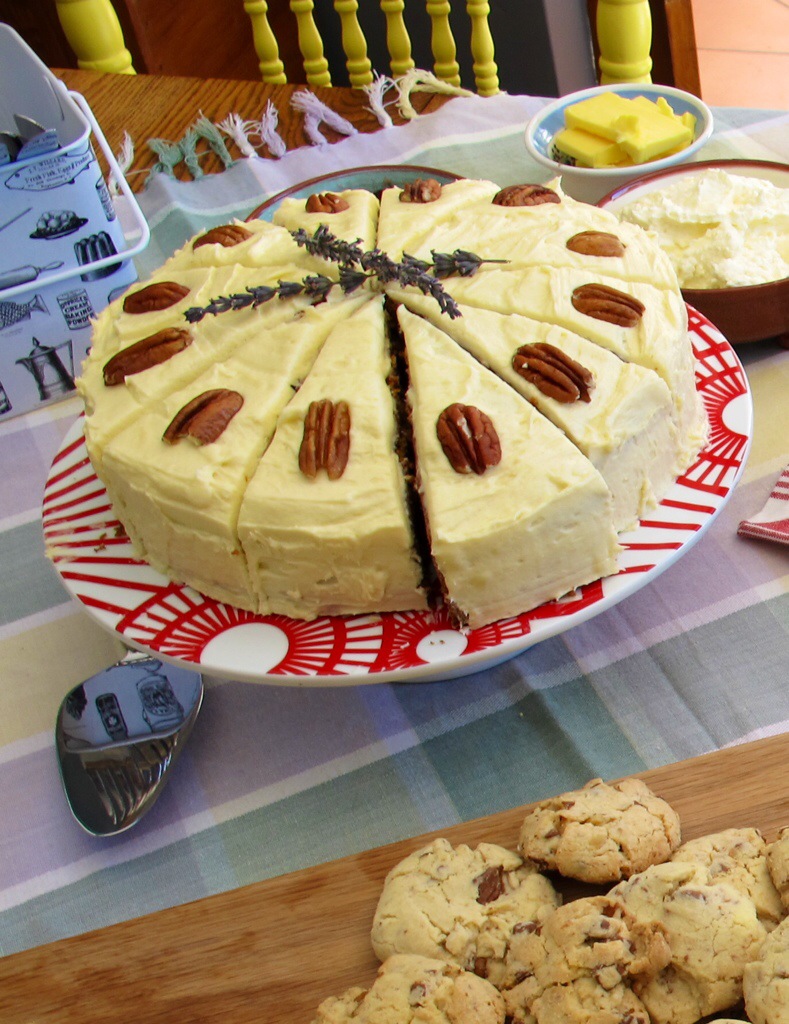
Carrot Cake

This carrot cake recipe means a lot to me, allow me to explain why.

I had never even heard of carrot cake before arriving in Cape Town, much less eaten it. Arguably South Africa’s favourite cake, it is such a massive part of South African baking-lore you’d be forgiven for thinking that it had actually been invented here, but in spite of being on virtually every cake menu I was unconvinced. A cake made out of carrots? It just seemed wrong on so many levels. My taste-buds screamed, “Culinary heresy!” and for a long while I steadfast refused to even consider ordering this baked abomination. But like all sweet temptations, carrot cake was everywhere and it wasn’t long till I gave in and tried it for myself. Oh what a revelation, one slice and I was hooked! Moist and delicious with undertones of pecans and festive cinnamon, all offset by the sweet cream cheese frosting, I had been wrong; this was no aberration, this was baked genius.

20140625-195546-71746728.jpgAnd so my love affair with carrot cake began. I have since tried countless carrot cakes, some more delicious than others. However my absolute favourite was from the Tibetan Tea House just outside Simon’s Town. It was a long way to go for a slice of cake but it always felt worth the drive. I loved sitting on their peaceful verandah; sipping some green tea, admiring the exquisite Nepalese thangkas and tucking into the carrot cake. Uncomplicated, classic and without the unnecessary additions that seem to find their way into carrot cakes these days, this cake was a thing of simplistic beauty. We would make the journey so often for our slice of baked-Nirvana, and bought so many of those beautiful thangkas, the owner of the Tea House, Anna, kindly gave us the recipe. Sadly, shortly after she had entrusted us with her recipe, the Tibetan Tea House went vegan and the carrot cake disappeared from the menu altogether. This amazing cake was simply no more, except in my house where I still use her recipe to this very day.

We don’t drive out to the Tibetan Tea House as often anymore, however we still get to enjoy our carrot cake bliss; but now we do so from the comfort of our own verandah, sipping our own green tea, surrounded by some of the same exquisite Nepalese thangkas. I like to tell myself that Anna knew her recipe wasn’t going to survive the impending Vegan Cull and that she wanted us to continue enjoying the cake we loved so much, I like to think she was really just that nice. Buddha would be pleased.

For more Sweet Treats from The Muddled Pantry, please click here

Click here for the recipe

Vietnam: Discovering Phở

At first glance you’d be forgiven for thinking Vietnam is a country powered by phở. Phở is simply everywhere, from Hanoi in the North to the Mekong Delta in the South, phở is king.

When we decided to visit Vietnam in 2008 I was very excited about finally getting to sample its legendary cuisine first-hand. Vietnamese food was very much in vogue at the time, so my expectations were high. I had, of course, heard of phở but not being a great fan of clear soupy noodles, it wasn’t high on my list of things to try. It wasn’t until I arrived in Hồ Chí Minh City that I realized that phở was such an integral part of Vietnam’s food culture that I just had to try it. As with most countries in Asia, I figured the best food would be found in and around the local markets, so off I headed to lose my phở’ginity.
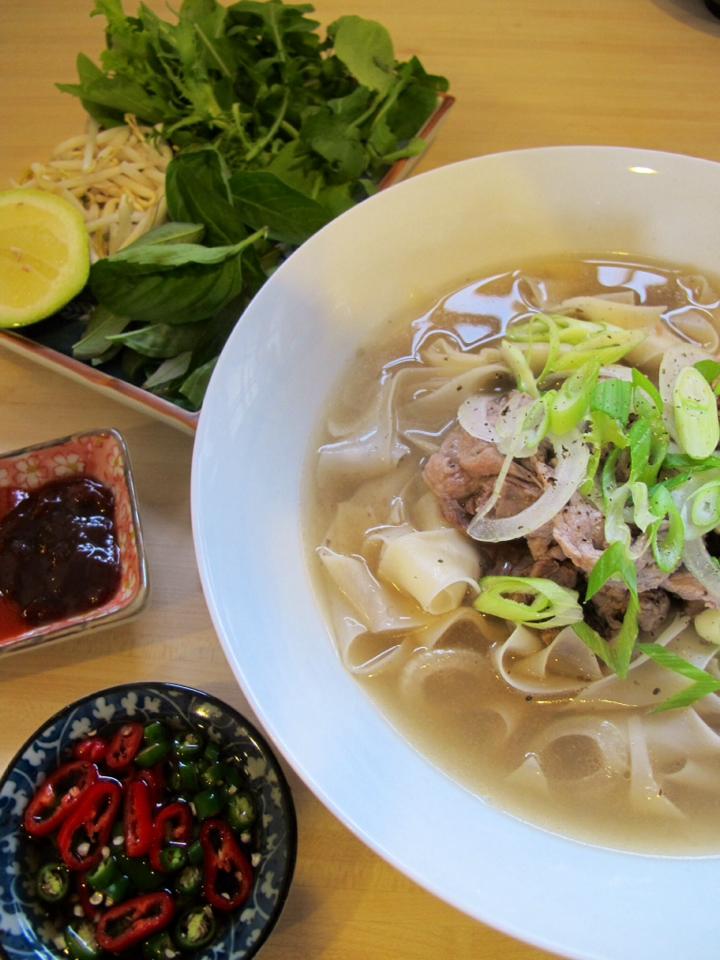
Beef PhoWell, the first thing I learnt about beef phở (Phở ) was that there are differing grades of the dish when ordering: there’s what I would term “classy phở” with thinly sliced raw fillet heaped on top and then ladled over with scorching broth to instantly poach the beef. Then there’s “poor man’s phở” which is topped with the shredded meat from the stewed beef and finally there’s my personal favourite, the “I want it all! phở”, which is a combination of the two.

The other thing I learnt about phở is that it isn’t pronounced like you’d think it would be – the ở is silent resulting in soft phonetic “frrr”. Locals seem to find particular mirth in watching tourists grapple with the simple act of ordering; you would say, “One bowl of beef frrrr, please”. And nothing. Their eyes would blink, mine would roll. A few seconds would pass and the phở vendor would flash their resplendent betel-nut smile and invariably say, “Phở? You want phở?”. Yes damn it, I want phở! Why else would I be sitting at your damn frrrr stall! Eating local food locally, isn’t always fun.

Anyway I digress. Back to the noodles. Phở wasn’t what I expected. Almost offensively fragrant, the broth was a deluge of flavours, contrasted by the silky ribbons of wide rice noodles. Adding to the heady mix, you have the zesty fresh herbs and zing of lime and then the bite of the chilli – it was a lot to process in a single bowl of noodles. I ate my noodles, paid my inflated tourist price and left feeling a little befuddled. Did I like it? I just didn’t know.

Much to my surprise, the next morning I woke up with just one thing on my mind, phở. I can only assume that during the night, my taste buds made sense of the bludgeoning they’d received. I woke up, hooked. I didn’t have to go far before finding my next phở fix. I ordered, I slurped, I sweated, I scoffed and before I knew it, I had the bowl to my mouth, gulping down the last of the fragrant beefy broth. I eventually emerged from the depths of the bowl to my partner (who had since returned from McDonalds) watching me. Bemused, he asked “I’m guessing it was good, then?” but he already knew the answer. Knowing all too well the warning signs of yet another of my food obsessions, he knew this was just the beginning.

By the end of our time in Vietnam, I had eaten my way from the South, all the way to the North. Some of it was good, occasionally it was excellent, but I found the best Vietnamese food inaccessible to your average tourist. Glimpsed in back alleys and ferociously protected by guarded vendors; this is where the really good food hides, all the rest felt like tourist fodder. Access to really good Vietnamese food takes time, certainly more time than a two week holiday; the good stuff is there, you just need to know where to find it, how to pronounce it and be brave enough to order it. And that’s what I loved about phở, it was everywhere, it was for everyone. As I slurped my noodles at one of the many phở chain restaurants, shoulder to shoulder with neatly dressed teenagers with their cellphones in one hand, chopsticks in the other and their flimsy motorcycle helmets perched on their knees; I felt accepted. Here I was just another person eating his phở.

If you are interested in making beef phở noodles at home, please follow this link to my Recipe Posts http://wp.me/p4JqRl-4h
 

Cape Malay Tomato Bredie

A tomato bredie is the ultimate manifestation of South African home cooking.

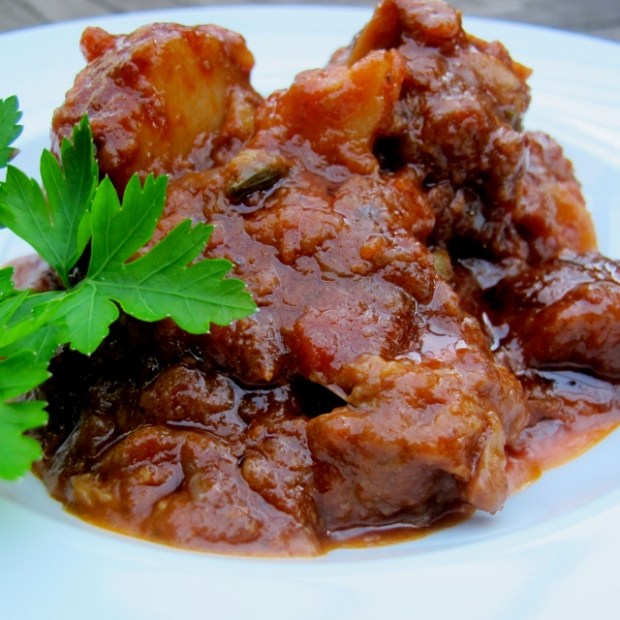
Ostensibly a stew, bredies form an integral part of South African huiskos (home cooking), and whilst there are a number of different types of bredies, tomato bredie seems to be the most cherished of them all. At a glance, a bredie looks like a very basic stew, but there is a key element that differentiates it from being a regular stew. Instead of simmering in a liquid like a conventional stew, a bredie is self-saucing. Absolutely no water is added to a bredie and the sauce is formed from the rendered juices and fat from the lamb, which when combined with the reduced tomato, results in an intensely flavoured gravy which transcends its humble basic ingredients.

There are quite a few tomato bredie recipes out there but I’ve always stuck with Cass Abrahams‘s recipe, albeit with some unorthodox additions of my own. Cass Abrahams is widely regarded as the incumbent mother of Cape Malay cooking and her recipes are often the starting point for many of my own.

When I initially attempted to make a tomato bredie I found the results were a bit watery and that the meat would sometimes be a little tough. I got around this by first dredging the meat in flour before browning it thoroughly and then by cooking the entire thing in the oven and not on the stove as it is usually done. Bredie traditionalists would be mortified by my preferred cooking method, but I find that cooking it in the oven helps the tomatoes break-down and creates an intensity in the gravy that you wouldn’t otherwise get when cooking it in the conventional way. I have been making my tomato bredie in this way for a number of years and they have always been a success, the meat is invariably melt-in-your-mouth tender and the sauce is thick and bursting with flavour.

If you would like to read more about South African food please follow this link or for more South African recipes, please click here

Click here for the recipe

Cape Malay Bobotie

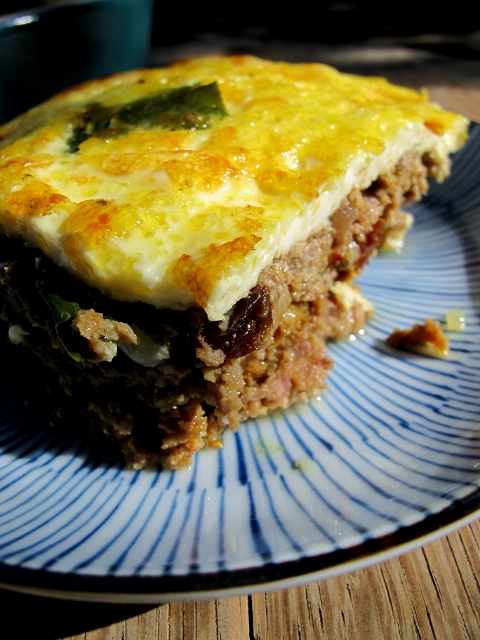
BobotieUnique to South Africa, bobotie is the platypus of international cuisine. Neither a pie nor a meatloaf, both sweet and savoury, bobotie is a hybrid dish that speaks to South Africa’s many cultures and tastes. Robustly spiced, spiked with sweet raisins and topped with a soothing savory custard, bobotie is deliciously complex whilst being reassuringly rustic.

Almost always served with yellow rice and blatjangs, bobotie is typically most people’s first introduction to traditional South African food. For this reason bobotie has become synonymous with South Africa and is instantly recognisable as being an African favourite.

If you would like to read more about South African food please follow this link or for more South African recipes, please click here

Click here for the recipe